
What are boarding schools really like anyway?
Even if you're just starting your boarding school research, there's a good chance you already have an impression of what boarding schools are like. Perhaps you have read The Catcher in the Rye or A Separate Peace. Or maybe you saw Dead Poets Society or School Ties.
These stories, while entertaining, take place in boarding school settings which are quite different from what you will actually find today. An excerpt from an article about college-preparatory boarding schools in The New York Times summarizes these differences well:
"To generations of students whose syllabuses include J.D. Salinger's "Catcher in the Rye," boarding school represents the winter of their adolescent discontent; a cold, distant place where parents threaten to send their children if they don't measure up. Parents dropped their children off in September, picked them up again in June and let the schoolmasters worry about what went on in between.
If Holden Caulfield were to return to school for Alumni Day 2001, he would find that the world of proctors and prefects, dorm teas and Mr. Chips has undergone a millennial thaw. Most of the approximately 36,000 students at boarding schools packed their bags willingly and are in daily e-mail contact with mom and dad. The ivy is no longer one shade of green. Students are as likely to room with a real prince of Thailand as with the fresh prince of Bel Air, as the schools reach farther into the public high schools for the majority of their students, making admissions more competitive than ever.
The monastic life of formal dinners, daily chapel and cold showers has given way to international theme meals, contemporary ecumenism and interdorm dances." - Less Austerity, More Diversity at Prep School Today - By VICTORIA GOLDMAN and CATHERINE HAUSMAN, November 12, 2000, New York Times
Just as universities and colleges in the United States have evolved in the past several decades, so have boarding schools. And while the perception of boarding school is changing, there are still some lingering myths that can make you mistakenly think that you wouldn't fit in at boarding school:
Myth 1: You must be very wealthy to go to boarding school.
Today, approximately a third of all boarding school students receive financial aid. Financial aid grants can represent a significant portion of tuition, depending on the school and your family's situation. Boarding school students now increasingly come from public schools and a wider range of family income levels. In general, boarding schools do their best to make their programs accessible to your family through financial aid grants, loan programs, and merit awards/scholarships. In the past ten years, the emergence of K-12 private school loans has also made boarding school education more accessible.
This video describes life at Middlesex School in Concord, Massachusetts.
Families that send their kids to boarding school today represent a much wider demographic - geographically, socio-economically, and ethnically (see "Myth 2" below). What hasn't changed is the rigorous academic approach and emphasis on students' personal growth.
Myth 2: Diversity is rare at boarding school.
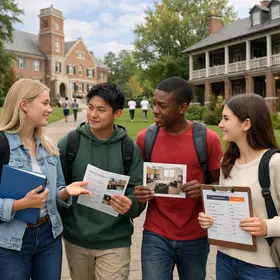
More than a quarter of all boarding students are either students of color or international students. Boarding schools are generally more diverse than public schools - they actively seek diversity and draw from many geographic areas. In contrast, local schooling options are dependent on neighborhood living patterns where populations tend to concentrate along ethnic or socio-economic lines. Also, boarding schools create more meaningful opportunities for different students to interact with one another. Whether in the dorms, classrooms or playing fields, you'll always be surrounded by a diverse population you'll inevitably get to know throughout the year.
Myth 3: Kids don't have fun at boarding school.
Curfews and rules will be part of life at any boarding school - no big news here. But depending on your impression of boarding school, you might be surprised to learn that boarding school can also be a lot of fun. If you talk to boarding school students or alumni today, most will tell you the same thing - it's an environment that's conducive to making incredible friends and having fun in the process.
This video describes Appleby College’s Outdoor Education program.
Remember that while solid academics are a crucial focus for boarding schools, they also strive to foster student independence. Boarding schools give you choices in how you spend your time and what activities to pursue so that you can determine your experience at school and grow as a person, not just academically. This process - of growth in independence, meeting new people, and pursuing your interests - is often fun and very rewarding.
Myth 4: Boarding school is for kids with trouble at home or school.
There are two types of boarding schools - college-preparatory boarding schools and therapeutic boarding schools. The two are sometimes confused and can cause misperceptions that boarding schools are only for kids with trouble at home or school.
College-preparatory boarding schools are geared toward motivating students looking to explore new opportunities. College-preparatory boarding schools are often ideal choices for students who are already doing generally well at school and home but would simply like to find new challenges. These types of boarding schools are not appropriate choices for students with drug, alcohol, or behavioral problems. The key objective of these boarding schools is to prepare students for college through rigorous academics. All the schools profiled in Boarding School Review are exclusively college-preparatory boarding schools.
Therapeutic boarding schools are aimed at students having difficulty at home or in a traditional school setting. While preparing students for college can also be a goal for these schools, these schools are equipped to handle students who are facing challenges such as behavioral/emotional problems, substance abuse, or significant learning differences. Boarding School Review does not list therapeutic boarding schools.
College-preparatory and therapeutic boarding schools have different missions and serve different audiences. It's helpful to know this when looking at different schools. That way, you can avoid common misperceptions about college-preparatory boarding schools.
Myth 5: It will be hard to keep in touch with my family.
Boarding school students and their families are fortunate in that staying connected is easier than ever. The Internet, in particular, is redefining how boarders and their families communicate. Boarding schools offer Internet access for their students, with most schools having access in each boarding house and some in each bedroom. While Internet access is regulated for use between certain hours, students can often be in daily contact with their parents. Cell phones can also help keep families connected, depending on the school's policies.
Keep an open mind about what you think boarding school might be like. The best way to learn about boarding schools is to visit one - you can learn the most about boarding school life by simply being on campus and talking to current students about their experiences. Start researching schools!
Questions? Contact us on Facebook and Instagram. @boardingschoolreview
#BoardingSchoolMyths #PrivateEducation #SchoolDiversity #FinancialAid #CollegePrep