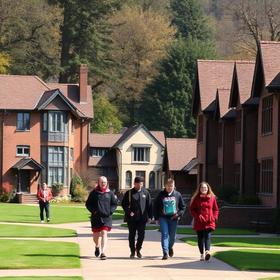

Choosing a boarding school is one of the most significant educational decisions a family will make. Campus tours offer an excellent introduction to a school's academics, facilities, and community, but they are only one piece of the puzzle. Every tour is carefully planned to highlight the school's strengths, giving prospective families a positive first impression.
To gain a fuller understanding of what life at a school is really like, many experienced parents recommend going one step further: talking with families whose children already attend.
Current parents have experienced the excitement of enrollment, the challenges of the first semester, and the day-to-day realities of boarding school life. Their firsthand experiences can reveal details that are difficult to capture during a scheduled tour or admissions presentation. Conducting your own "Parent Reference Test" can help you determine whether a school's culture, communication style, and student support truly match your family's expectations.
Why Current Parents Are One of Your Best Resources
Admissions officers are knowledgeable about every aspect of their schools, but current parents provide a different perspective. They have lived through the transition from applicant to enrolled family and can explain how the school's promises compare with everyday reality.
Many parents are willing to share what surprised them after enrollment, how quickly their child settled into residential life, how faculty communicated during the school year, and whether the experience met or exceeded their expectations. These conversations often provide practical information that cannot be found on a website or during a campus visit.
If you are preparing for school visits, Boarding School Review's guide to "Questions to Ask When Visiting a Boarding School (2026 Guide)" offers an excellent starting point for developing meaningful conversations with both admissions staff and current families.
Looking Beyond the Campus Tour
A campus tour showcases classrooms, athletic facilities, arts spaces, and residence halls, but it rarely answers questions about what daily life feels like once students settle into their routines.
Current parents can explain whether teachers are responsive to emails, how accessible advisors are, and how effectively the school communicates throughout the year. They can also describe whether residential staff is engaged with students outside the classroom and how easy it is to reach school leadership when questions arise.
These experiences often have a much greater impact on long-term family satisfaction than the appearance of a campus or the size of a science laboratory.
How Schools Respond When Students Need Support
Every student experiences challenges at some point, whether academic, social, or emotional. What often distinguishes outstanding boarding schools is not whether problems occur, but how quickly they respond.
Ask current parents about their experiences when their child struggled. Did teachers identify concerns early? Were advisors proactive? Was tutoring available when needed? Did the school communicate regularly with parents?
Answers to these questions provide valuable insight into the school's overall support system.
The National Association of Independent Schools highlights the importance of strong partnerships between schools and families, emphasizing communication and student well-being as essential components of successful independent school communities.
Understanding Residential Life Beyond the Brochure
Residence halls often make a strong impression during campus visits, but parents can provide a much richer picture of what living there actually feels like.
Ask about evening routines, weekend activities, faculty involvement, study expectations, and how students build friendships during their first months away from home. These conversations often reveal how well the school balances independence with supervision.
Boarding School Review explores this topic further in "The Dorm Parent Interview: 15 Questions Families Should Ask", which examines many aspects of residential education that families frequently overlook.
Learning About the Transition to Boarding School
Even students who are excited about boarding school typically experience an adjustment period. Current parents are often the best people to explain how long that transition lasted and what helped their children succeed.
Rather than asking whether the adjustment was difficult, encourage parents to describe the experience. What surprised them? How did homesickness evolve? When did their child begin to feel comfortable? What support did the school provide during those first few weeks?
The Association of Boarding Schools (TABS) also provides resources that help families understand the transition to residential education and the long-term benefits of boarding school life.
Ask Questions That Encourage Honest Conversations
The most valuable conversations usually begin with open-ended questions rather than simple yes-or-no inquiries.
Instead of asking whether they like the school, ask what surprised them after enrollment, what they wish they had known beforehand, or what has exceeded their expectations. Parents are often happy to discuss both the strengths of the school and the areas they found more challenging.
Listening carefully is just as important as asking good questions. Often, parents will naturally begin talking about the issues that have mattered most to their family, whether those involve faculty relationships, advisor support, student independence, or the school's overall sense of community.
Look for Patterns Rather Than Individual Opinions
One parent's experience offers useful perspective, but several conversations together provide a much more reliable picture.
If multiple families independently praise the school's advising system, faculty accessibility, or residential culture, those strengths are likely part of the school's identity. Likewise, if several parents mention similar concerns about communication or student support, those patterns deserve additional questions during the admissions process.
At the same time, remember that every family approaches boarding school with different expectations. A school that perfectly matches one student's personality may not be the ideal environment for another.
Pay Attention to the Small Details
Sometimes the most revealing observations are the simplest ones.
Parents may mention that teachers regularly greet students by name, advisors routinely check in with families, or faculty attend athletic competitions and performing arts events outside their teaching responsibilities. Others might describe how students naturally spend weekends together or how older students mentor younger classmates.
These seemingly minor details often reveal far more about a school's culture than statistics or marketing materials.
Families interested in evaluating schools more broadly may also find Boarding School Review's article, "Choosing the Best Boarding School: 10 Key Factors (2025)" helpful when comparing schools with different educational philosophies and residential programs.
Communication Matters Most During Difficult Moments
Every school experiences unexpected situations, from student illnesses to academic concerns or campus emergencies. Current parents can explain how effectively the school communicated during those moments.
Did administrators provide timely updates? Were advisors available to answer questions? Did families feel informed throughout the process?
The answers often reveal more about a school's leadership than routine communications ever could.
The U.S. Department of Education provides additional guidance and resources related to school safety, student support, and family engagement that can help parents evaluate educational environments.
One Final Question That Says It All
As each conversation comes to a close, ask one final question:
"If you were making this decision again today, would you still choose this school?"
The answer is almost always revealing.
Parents who enthusiastically say yes usually explain why with specific examples of their child's academic growth, confidence, friendships, or personal development. Parents with more mixed experiences often offer balanced reflections that can help prospective families understand whether the school's culture aligns with their own priorities.
Conclusion
A boarding school tour introduces families to classrooms, residence halls, faculty members, and campus traditions, but current parents provide something equally valuable: perspective gained through experience.
The Parent Reference Test encourages families to move beyond polished presentations and learn what everyday life at a boarding school is truly like. Conversations with current parents can reveal how schools communicate, respond to challenges, support students, and foster personal growth over time.
Combined with thoughtful campus visits, conversations with students, and independent research, these firsthand insights create a far more complete picture than a tour alone. The schools that consistently earn enthusiastic recommendations from current families are often those where the daily experience reflects the values presented during the admissions process, making the Parent Reference Test one of the most valuable tools available to prospective boarding school families.