
Perhaps you are thinking about teaching in a boarding school in the future, or maybe you just started teaching in a boarding school during the current academic year. If you come from a public school, you will find several differences between teaching in a public school and teaching in a boarding school. If you are a new teacher, we will raise several points and issues for you to consider.
Students Who Want to Be There
Teachers want to teach. We love our subject. We want to share it with our students. Unfortunately, it can be difficult to teach when you are more concerned about maintaining order in your classroom than you are with actually teaching. Maintaining order is an ever-present issue when you have a large class of 30 or 40 students.
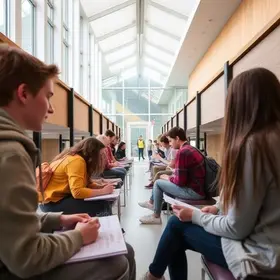
On the other hand, teaching a small class of 12 to 15 students allows you to engage your students more or less constantly. It is very difficult for students not to be engaged when the size of the class is small. There really is no place for them to hide.
Students attend boarding school for many reasons. Most of all, their parents want them to get a first-rate education in a well-supervised environment. Parents often have demanding careers that do not permit them to be available when their high school-age children are not in school. It is a parent's biggest worry, after all. Who is she with? What are they doing? These concerns become the stuff of serious nightmares and worry. Sending their children to boarding school solves many of those problems.
The boarding school admissions process can be quite rigorous, involving as it does testing and interviews to determine if the student is a good fit for the school and vice-versa. As a result, you won't be dealing with children who have issues with being in school or learning, for that matter. They are in school to learn, achieve, and become all they can be.
The other reality is that classes are generally small. A class size of 12 to 15 students is typical. Because the students have been carefully screened and selected, they are usually quite capable of doing serious amounts of academic work. Furthermore, because the school hired you with a degree or two in your chosen field or subject, you can run with your exploration of the subject matter. Naturally, you will do it within the parameters of the school's curriculum. But be assured that your students will accomplish in a year what many students in other academic settings would take two or even three years to accomplish.
I can attest to this as my eldest daughter attended Kent School. When I asked about her English classes, she exclaimed that they had read three Shakespeare plays, whereas in her former public high school, they had barely managed to read one over an entire academic year. Students in boarding schools aren't necessarily smart. They are expected to do more and live up to their innate abilities.
For educators considering this transition, it can be helpful to review Boarding School Myths, many of which influence perceptions of both student life and teaching environments.
Why Engagement Looks Different
One of the most noticeable differences in boarding schools is the culture surrounding academics. Students typically choose to be there, and their families have made a significant commitment to the experience. That commitment often translates into higher engagement levels, greater participation, and a stronger willingness to take academic risks.
Cooperative Parents
In boarding schools, the educational process is a partnership of three entities: school, student, and parents. Since the parents have made a conscious decision to send their children to boarding school and are spending a significant amount to do so, they expect to be involved. Each boarding school varies in the precise manner in which it communicates with parents, of course. Whether by website, parent portal, video conference, or email, you will be involved and kept abreast of what is happening regularly. That way, you will be aware of what is going on in the school as well as how your child is progressing.
- Expect a lot of interaction with parents in a boarding school.
Teachers interested in the broader boarding school experience may also enjoy reading Why Boarding School?, which explains the value families see in residential education.
Communication Has Evolved
Since the original version of this article was written, technology has transformed parent communication. Most boarding schools now use integrated learning management systems, mobile apps, and online parent portals to keep families informed in real time. While the methods may have changed, the expectation of regular communication remains the same.
Results-Oriented
The school and the parents will expect great things from its teachers. If you don't deliver, your contract will not be renewed. And there will be no recourse to a union when that happens. Simply put: You chose to teach because you love your subject and enjoy teaching it to others. Keep the fires of passion for your subject well-fanned, and make sure all concerned are turned on by how you teach and what you teach.
Always be flexible and attuned to new ideas and methods of presenting your subject material. Handheld devices were once just one example of how teaching had been transformed. In 2026, artificial intelligence tools, digital learning platforms, and collaborative online resources have become part of the conversation in many independent schools. As in any endeavor, being complacent and ignoring what is going on in your subject area and profession will diminish your effectiveness.
- Participate in forums.
- Write blogs.
- Attend conventions.
Your school will support you in your quest for professional growth. After all, it will bathe in your reflected glory, won't it? I know of no head of school who wouldn't be ever so proud to mention at an assembly or in her newsletter that you were a presenter at a philological conference in Geneva over the summer. Or that you are a rater for ETS. Whatever your professional accomplishments are, they will make a difference. They will add luster to both your resume and your reputation.
Many boarding schools actively support professional development through organizations such as The Association of Boarding Schools and the National Association of Independent Schools. Faculty members frequently attend conferences, participate in leadership programs, and contribute to professional organizations throughout their careers.
Faculty working in residential environments often discover that mentoring students outside the classroom is just as important as teaching. Families evaluating these environments may find Life at Boarding School: What Families Should Expect useful for understanding the daily rhythm of residential school communities.
Professional Growth Opportunities
Many boarding schools encourage faculty members to serve in multiple roles, including advisor, coach, dorm parent, club sponsor, or mentor. While these responsibilities require additional time and energy, they often provide educators with broader leadership opportunities than are available in traditional school settings.
Teaching in a boarding school offers you an opportunity that could well turn out to be your life's work. That is so unusual in this age of constant job changes. Find a school that appreciates you. Then do what you love doing: teaching young people. Chances are that you will be there until you retire.
No Unions or Bureaucracy
Public school teachers are unionized as a rule. This has its good points and its bad points, depending on who you ask. Boarding school teachers are not unionized. As a result, you will need to be flexible and adaptable. Basically, your job is whatever the school determines it to be, depending on the exigencies of the moment and the day.
One important consideration, however: if you are accustomed to telling an administrator, "That's not my job," perhaps you ought to look elsewhere for a teaching job. In a boarding school, flexibility is critical and expected. Everybody pitches in to get whatever needs to be accomplished. A positive "can do!" attitude is both an asset and a requirement for teaching in private schools.
Another difference between teaching in public and boarding schools is that you won't have to deal with layers of bureaucracy to get simple things done. Private schools are generally small, close-knit communities where everybody knows everybody. Getting something fixed or some supplies replenished is not ordinarily a big deal. Floating a new idea and bringing that idea to fruition is generally easier in a smaller school setting simply because there are not so many people to convince.
The Residential Difference
Unlike most public schools, boarding schools operate around the clock. Faculty members frequently interact with students outside the classroom, whether in dormitories, dining halls, athletic facilities, or student activities. These interactions help foster relationships that can significantly enhance the educational experience for both students and teachers.
Many schools have also expanded student wellness initiatives in response to recommendations from the Centers for Disease Control and Prevention, with increased attention to mental health, belonging, and student support services.
For readers comparing boarding school teaching with the student experience, A Day in the Life of a Boarding School Student provides helpful context on how structured residential life shapes the school day.
Conclusion
Teaching is demanding hard work. My take on the difference between teaching in a public school and a boarding school is that you will get more teaching done in a boarding school. That was my experience. My experience, of course, has influenced my opinions about the subject. There are some public schools where teachers are given the small class sizes and the tools and support that they need to do their job. Some boarding schools also have large classes and little support for their teachers. Be aware. Explore. Ask questions. Don't give up looking for a teaching position that will perfectly fit your requirements. It is out there.
For many educators, teaching in a boarding school becomes far more than a job. It becomes a long-term calling that combines classroom instruction, mentorship, community involvement, and lifelong relationships with students. Those considering careers in residential education may also want to explore How Boarding Schools Prepare Students for College, as the educational mission often shapes every aspect of boarding school life.