Updated
|
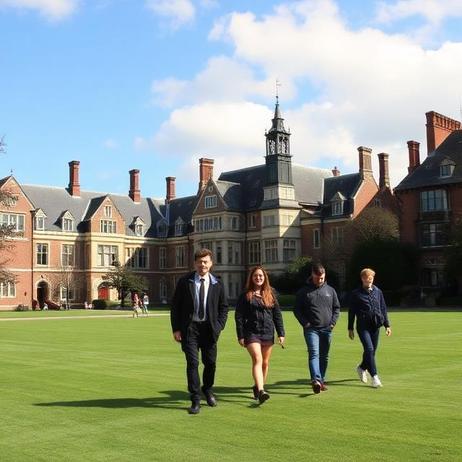
Military Schools Demystified: A Comprehensive Guide for Parents
This in-depth article explores the world of military schools, addressing common misconceptions and highlighting their unique benefits. It provides parents with valuable insights into why they might consider a military school, debunks prevalent myths, and offers a realistic view of life in these institutions. Whether you're just beginning to explore educational options or are seriously considering a military school for your child, this guide will help you make an informed decision.

Why Consider a Military School?

Military schools offer a unique educational experience that combines academic rigor with character development and leadership training. If you are thinking about a military school education for your child, then investigate residential military schools. It will be a 24/7 experience versus the after school experience available in most public day schools. Furthermore, if you are looking for a well-rounded, balanced approach to education together wth fulltime supervision, a military school is worth considering.

Here are some compelling reasons to consider a military school for your child.

Discipline and Structure
Military schools are renowned for their disciplined environment and structured daily routines.

This approach helps students develop:

  • Self-discipline
  • Time management skills
  • Respect for authority
  • Personal responsibility

As one military school puts it, "We always expect our cadets to do the right thing–acting with respect, responsibility, honor, and generosity."

Leadership Training

A key component of military school education is leadership development. Students learn:

  • Effective communication
  • Group dynamics
  • Decision-making skills
  • Goal setting
  • Ethical leadership

These skills are valuable in any career path, not just military service.

Academic Excellence

Contrary to popular belief, military schools prioritize academic achievement. They offer:

  • College preparatory curricula
  • Advanced Placement courses
  • SAT preparation
  • Small class sizes for personalized attention
  • Many military school graduates go on to attend prestigious colleges and universities.

Character Development

Military schools focus on developing well-rounded individuals. They emphasize:

  • Patriotism
  • Community service
  • Teamwork
  • Personal integrity

Potential Pathway to Military Academies

While attending a military school doesn't guarantee admission to a service academy, it can provide:

  • Familiarity with military culture
  • JROTC training
  • Strong academic preparation
  • Leadership experience
. . .read more

Considering a Military School?

Updated
|
Considering a Military School?
If you are looking for a college preparatory education with a military emphasis, then take a look at military schools.

One of the best things about boarding schools is that there is a school out there somewhere that is a good fit for your educational objectives, however varied those might be. As you begin to draw a picture of the kind of school that works for you and your child, you could discover that the structured environment and leadership training military boarding schools offer are attributes you are looking for.

As one parent to another, I'll raise my issues with military schools. Also, I want to disclose that my eldest daughter took part in the ROTC program at MIT while she was at Harvard. I had no idea she was interested in a military career until she announced she was in ROTC. No clue! So, don't hesitate to think outside the box. Assume nothing when looking at boarding schools. You and your child could visit one of our exemplary military school campuses and decide that it has everything you are looking for.

When are military schools a good option?

So, what about military schools? When might you consider sending your son or daughter to one? I'll answer those questions and more, but first, let's settle some things before proceeding.

  • Military schools are NOT places where you send a child with discipline or other behavioral issues.
  • Military schools are NOT reform schools or schools for troubled youth.
  • Military schools ARE genuine learning institutions with a specific focus, i.e., military training.

When a healthcare professional such as a psychologist

. . .read more

Are You a Good Fit for Our Job?

Updated
|
Are You a Good Fit for Our Job?
Here is some practical advice to help applicants stand out and increase their chances of securing an interview in the competitive boarding school job market.

In this article, we're going to do a little role-playing. I will assume the role of the boarding school advertising a position. I want you to see and understand what goes on behind the scenes as applications come in online, via email or snail mail. With that knowledge, I am confident you will take the extra time and care necessary to submit the application, which will make the first cut. After all, you want to get an interview. Otherwise, all bets are off.

In the following, I will present the school and its point of view. Then, I will follow that with editorial comments and advice based on my professional experience to determine which applicants get an interview and which don't meet the requirements.

The School: We expect to receive hundreds of applications and resumes when advertising a position. Some of these are from people we know; however, most applications are from people we do not know. So, tell me now, why should I look at your resume? Here are some reasons why your application will go into the "Review" folder.

1. You presented your application in the format we specified.

School: Following instructions is a trait most employers value. As a result, a simple thing like following the instructions on applying for the job opening at our school speaks well of you. Our school uses a standardized application form to comply with various legal requirements. So, if you use something other than the form we specify,

. . .read more

5 Tips for a Successful Boarding School Admissions Interview

Updated
|
5 Tips for a Successful Boarding School Admissions Interview
Discover essential tips for acing boarding school admissions interviews. Learn how to present your child in the best light without unnecessary stress.

5 Tips for a Successful Boarding School Admissions Interview

Visiting boarding schools that you and your child are seriously considering is an exciting step in the admissions process. During these visits, you'll meet with admissions staff and possibly even a dean or the head of school. It's natural to want to make a great impression. You will put your best foot forward when you meet with these people. However, you will be in unfamiliar surroundings.

When parents think about secondary school interviews, they tend to focus on prepping their child for the all-important, anxiety-inducing applicant interview. The parent interview, which usually takes place during the same visit, can seem less significant, and parents often neglect to prepare for it in the same way. However, with a little planning, the parent interview can be a real asset to your student's application. Source: Secondary School Admission: The Do's and Don'ts of The Parent Interview...The Fay School

So, my advice is to relax, stay calm, and, above all, not let your nerves get the better of you. Here are some tips to help you navigate the admissions interview successfully.

This video shows a day in the life of Exeter.

1. Be Mindful About Discussing Learning Challenges

While honesty is important, there's no need to highlight minor learning issues during the interview. Admissions staff are adept at interpreting academic records and test scores, so let those

. . .read more

International Students: Visas and More

Updated
|
International Students: Visas and More
In addition to the usual admissions requirements, international students must also obtain a student visa. Here are five tips to help you navigate the admissions process as an international student.

International Students: Visas and More

If you live overseas and are not an American citizen, and are considering sending your child to a boarding school in the United States, your child will need a student visa to enter the United States.

  • Your child will also need to show fluency in the English language as evidenced by passing the Test of English as a Foreign Language (TOEFL).
  • The process of applying for a student visa begins with an American boarding school issuing a Form I-20.

The I-20 Form

Not every boarding school is certified by the United States Immigration Service to accept foreign students. Why is that important?

  • Always confirm that the school you are interested in is a Student and Exchange Visitor Program (SEVP) certified school.
  • If the school is not SEVP-certified to accept international students, it cannot issue the I-20 form, which is the first step in applying for and obtaining a student visa from the U.S. Immigration Service.
  • Once you receive the I-20 from the school you chose to attend, you will pay the I-901 Student and Exchange Visitor Information System (SEVIS) Fee. As of May 2025 that fee is $350.
  • The Immigration Service will not allow your child to enter the United States as a student without the proper documentation.

Pay Attention to The Deadlines

Applying for admission to an American boarding school requires staying organized and on top of deadlines throughout the admissions process.

  • Hire a professional
. . .read more

Recent Articles

Balancing Boarding Life
A clear, practical guide to balancing boarding life and independence, offering transition tips for students and families in 2025.
Balancing Boarding Life and Independence: Student Transition Guide
A clear, practical guide to balancing boarding life and independence, offering transition tips for students and families in 2025.
Why Consider Boarding School in 2025: Updated Benefits & Realities
Explore why boarding school remains a compelling option in 2025—academic excellence, global exposure, personal growth, and evolving financial aid make it a powerful choice.