
This article has been updated to reflect 2026 data and recent developments
What makes a boarding school unique? I know some of you reading this will say, "the cost." No, what I have in mind are the characteristics of a boarding school that set it apart from private day schools and public schools. Back to cost, however. Let's get that out of the way. Most boarding schools have generous financial aid programs. No deserving applicant should assume that published tuition automatically puts boarding school out of reach, although aid policies and awards vary considerably by school.
In 2026, cost is certainly a more significant consideration than it was when this article was first written. Boarding School Review's Financial Aid for Boarding Schools: 2026 Guide notes that annual tuition at many boarding schools now ranges from $55,000 to $75,000 or more. Families should compare the actual net cost after financial aid rather than simply comparing published tuition.
On the other hand, if the tuition and fees are a tariff that you can handle using your own resources, then the cost is not an impediment.
It's an adventure.
I happen to think that The Association of Boarding Schools got it right when it describes the boarding school experience as something much larger than simply attending classes. Its current guidance emphasizes that students living on campus are surrounded by trained, caring adults who can guide and support them in school and in life.
You and I, as parents, know that learning will be an adventure. At least, that was always our intent when our daughters went off to boarding school. It's the new friends your child will make who will be part of the adventure. These are friends who will be with her 24/7 for weeks during school. These are classmates she will bring home for a weekend.
I still remember yesterday when my eldest daughter arrived home for an afternoon with one of her new friends. We lived about 10 miles from the school. Her classmate was from out of state. While their laundry was in the washer and dryer, the two girls were sharing a soft drink and cookies, freshly baked, of course, and kibitzing with their mother. All I heard were great peals of laughter as I hovered in the background.
Honestly, the friends factor in boarding school is enormous. Figure out how to make your reticent-to-leave-home daughter aware of that. From our point of view, these new friends are the right friends. Well, that is a slight exaggeration, but generally speaking, her classmates will be children who attend school because they want to learn. And their families are supportive of them. All the time. Not just when it suits them.
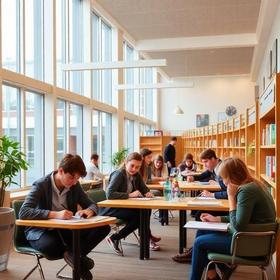
Boarding schools are friends for life. The bonds that boarding school students develop by living, learning, and playing together can last a lifetime. Boarding School Review's current look at Dorm Life at Boarding Schools describes how residential life in 2026 continues to emphasize friendships, independence, mentorship, wellness, and community building.
It's the complete package.
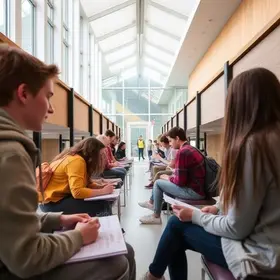
The academics were important to us when we sent our girls off to school. We both had been blessed with good K-12 educations and had earned our degrees back in the days when you wrote answers. I never filled in a bubble answer sheet once while I was at McGill. So, an excellent education mattered to us. We knew that the workload and variety of academic subjects offered would stretch our daughters in ways we couldn't imagine our perfect local public school system doing.
That emphasis remains relevant in 2026. The National Association of Independent Schools reports that independent schools emphasize intellectual curiosity, critical thinking, and personal growth. For the 2024-25 school year, NAIS schools had a median student-teacher ratio of 8.2 students per teacher, one indication of the opportunities these schools can provide for individual attention.
This video describes the effort system at Trinity-Pawling School in Pawling, New York.
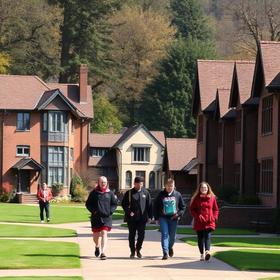
Academics, however, are just one part of the package you get when you send your child to boarding school. The sports programs are simply amazing. Our daughters' schools had so many fields that I never really knew how many there were. It seemed as though there were fields for every kind of sport. Soccer, lacrosse, football, and field hockey were all played. Then you had a hockey rink, indoor, naturally, an equestrian facility where you could board your horse, a natatorium, badminton and squash courts. I am sure I am leaving some sport out. If it existed, it was probably offered.
The other thing that I really liked and knew my daughters liked too was the fact that their coaches were usually their teachers. You see, in a boarding school, many teachers don't leave the campus when classes finish. Boarding school teachers may live on campus. They coach sports and supervise extracurricular activities in addition to and complementing their academic duties.
Families comparing today's programs can explore Boarding School Review's Boarding School Sports & Athletics: What Families Need to Know, which examines how athletics remain integrated into the daily rhythm of residential education.
It's a richly rewarding experience.
Miss Porter's website said it best: "Being a student at Porter's is richly rewarding in many different ways." I believe that one of the reasons boarding schools are special is because everyone matters.
That idea remains central to independent education. In 2025, the National Association of Independent Schools explored the concept of "mattering," arguing that the relationships between students and faculty and a student's sense of being seen, valued, and able to contribute are fundamental parts of a healthy school community.
Everyone matters because you cannot easily hide in a boarding school community. If you are hurting, it will be noticed. Right away. If you are ecstatic about winning a prize, it will be noticed. Right away. That is something we valued very much when our girls were at boarding school.
We had very demanding, fully booked professional lives. Under those circumstances, we both knew that it would have been very difficult to provide the high level of supervision any teenager needs. It's much less fitting in all those trips to games and events. That made sending our girls to boarding school a no-brainer.
The relationships between students and adults continue to be an important part of this model. NAIS reported in 2025 that independent school faculty described a strong sense of community and valued supportive relationships with students and colleagues, although schools also continue to face challenges involving compensation, housing affordability, and faculty retention.
It offers structure and discipline.
It's that 24/7 thing again that makes the structure and discipline of a boarding school work. There is a rhythm and a routine built into every day. In many ways, that is no different from a private day school or a public high school. Every institution has its structure and routine.
What makes boarding schools unique is that this structure and routine are integral to the whole experience. Everything is tightly interlocked. That develops self-confidence, leadership, and teamwork. Boarding schools focus on teaching the whole child. They don't just teach what they feel like teaching in the classroom. Those lessons flow across the curriculum and out onto the playing fields and auditorium stages.
Because the community operates 24/7, this kind of integration is so smooth and well-practiced that children are hardly aware of all the forces that are propelling them toward success.
Families who want a clearer picture of that structure can read Boarding School Review's Daily Life in a Modern Boarding School Schedule, which examines how academics, activities, wellness, dorm life, and student responsibilities fit into a typical residential school day in 2026.
It offers 24/7 supervision.
24/7 supervision does not mean a lockdown or prison-like atmosphere, far from it. Watching TV or listening to music after homework is done is the same as at home. Just like your children know that you are in the background somewhere doing your thing, students at a boarding school know that Miss B or Mr. K are just around the corner or perhaps outside walking the dog.
Boarding schools take their role as surrogate parents very seriously. The safety and well-being of your child is always of paramount importance. But, again, because the school has been doing it for so many years, the supervision is smoothly executed so that it supports and encourages our children instead of suffocating them.
The terminology may differ from school to school, but residential faculty remain central to this arrangement. Boarding School Review's A Day in the Life of a Dorm Parent explains how today's dorm parents may supervise students, mentor them, help resolve conflicts, support their well-being, and often teach or coach as well.
That makes boarding school a special place indeed.
So, put boarding schools on your list of private school options. Explore their websites. Visit a couple of schools. In 2026, families should also look beyond impressive facilities and course lists. Ask about residential supervision, faculty availability, financial aid, student wellness, athletics, academic expectations, and the ways the school builds community.
You will see why boarding schools are special, too.