
A student-safeguarding policy can be reassuring to find on a boarding school's website. It may describe background checks, mandatory reporting, professional boundaries, investigations and staff training. But the existence of a policy does not by itself demonstrate that students are well protected.
For families evaluating residential schools in 2026, the more revealing question is whether safeguarding rules shape everyday decisions. What happens when a student tells a dorm parent something concerning? Does an employee know how to report a colleague's boundary violation? Can a student bypass the normal chain of command? Are safeguarding expectations applied to coaches, volunteers, contractors and senior administrators as well as classroom teachers?
Understanding what a strong student-safeguarding policy looks like requires examining both the document and the system behind it.
Safeguarding Should Be Broader Than Emergency Response
Safeguarding is sometimes understood primarily as responding to suspected abuse. A strong framework begins much earlier.
The Centers for Disease Control and Prevention describes youth-serving organizations as important partners in preventing child sexual abuse and has developed resources addressing organizational prevention. Its approach considers policies, procedures and environments that can reduce risks before an incident occurs.
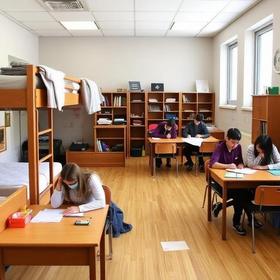
That distinction is particularly relevant to boarding schools. Students do not leave campus when classes end. They interact with adults in dormitories, athletic facilities, dining halls, transportation, rehearsals, trips and informal evening settings.
A school's safeguarding policy should therefore cover the full residential experience rather than focus exclusively on classroom conduct.
Families concerned about the broader emotional environment may also find Boarding School Review's guide to Mental Health & Wellness at Boarding Schools useful. Safeguarding and mental health are different responsibilities, but both depend on students having access to adults who recognize concerns and know what to do next.
A Strong Policy Defines Acceptable Adult-Student Boundaries
"Maintain professional boundaries" sounds sensible, but it leaves considerable room for interpretation.
A stronger policy translates that principle into recognizable situations.
It might address private meetings, transportation of individual students, physical contact, electronic messaging, social media, gifts, overnight activities and interactions in residential spaces. It should also make clear whether the rules change in emergencies and who must be notified when exceptions occur.
This matters because boarding-school relationships frequently extend across roles. A student's history teacher may also be a coach, adviser and residential faculty member.
The National Association of Independent Schools, working with The Association of Boarding Schools, convened a task force on educator sexual misconduct that emphasized prevention and institutional responsibility. Its recommendations are particularly relevant to independent and boarding schools because they focus on school culture, policies and systems rather than assuming individual professionalism is sufficient protection.
A useful question for parents is simple: "Can you give us examples of conduct your policy prohibits even if that conduct is not criminal?"
The answer reveals whether the school actively manages boundaries or intervenes only after an allegation becomes severe.
Students Need More Than One Reporting Route
A safeguarding policy should identify exactly how students can report concerns.
One reporting route is rarely enough.
Imagine that students are instructed to tell their dorm parent whenever they feel unsafe. That system becomes problematic if the concern involves the dorm parent, a close colleague or someone whom the student believes has influence over the reporting process.
Strong systems create alternatives. Depending on the school, students might be able to approach an adviser, counselor, dean, nurse, designated safeguarding lead or senior administrator. Schools may also provide confidential or anonymous reporting mechanisms.
RAINN provides prevention and response guidance and services for educational institutions, including independent and boarding schools. Its approach addresses areas such as staff training, student education, policy review and preparation for responding to reports.
Parents should ask not only whether reporting options exist, but whether students actually know about them.
A reporting procedure buried deep in a handbook is less useful than one explained during orientation, reinforced in dorm meetings and made easy to locate throughout the year.
The Policy Should Explain What Happens After Someone Reports
"Report concerns immediately" is only half a procedure.
What happens next?
A strong safeguarding document should establish responsibilities for receiving, recording and escalating concerns. It should distinguish between internal disciplinary or employment procedures and situations requiring reports to law enforcement, child-protection authorities or other outside agencies under applicable law.
The policy should also address immediate student safety.
That might involve changing supervision arrangements, separating individuals, arranging counseling or other support, preserving relevant records and determining whether an outside investigator is appropriate. The exact response will depend on the allegation, the student's circumstances and applicable law.
The same clarity should apply when a concern involves another student rather than an employee. Peer misconduct can create complicated questions involving immediate safety, investigation, support for affected students, disciplinary procedures and communication with families.
A strong policy does not need to prescribe the outcome of every case in advance. It should, however, make clear who has responsibility for deciding what happens next.
Staff Training Should Test Judgment, Not Just Compliance
Annual safeguarding training can look impressive on paper. Parents should ask what employees actually learn.
A presentation reminding staff to report abuse is different from training them to recognize grooming behavior, boundary concerns, problematic peer interactions or a student's indirect disclosure.
Scenario-based training can be particularly valuable because real situations are rarely phrased as neatly as written policies.
Consider an employee who notices that a colleague regularly communicates privately with one student late at night. Nothing explicitly abusive has been observed. Does the employee know whether the behavior violates policy? Do they know whom to tell? Are they expected to report a concern or investigate it themselves?
A strong safeguarding culture answers those questions before employees encounter them.
Families should also determine whether training reaches everyone who interacts with students. Residential staff, coaches, temporary employees and volunteers can occupy positions of considerable trust even when they are not classroom teachers.
Safeguarding Must Extend Into Residential Life
A boarding school's greatest safeguarding distinction is obvious: students sleep there.
Residential policies therefore deserve particular scrutiny.
Families should understand how dormitories are staffed overnight, who can access student rooms, what happens during room checks and how staff respond when a student is missing or distressed.
The rules should also cover situations that do not fit neatly into the school day, such as weekend activities, school vehicles, overnight trips and informal faculty-student interactions.
Parents can use Boarding School Review's article on How Often Should Parents Visit Boarding School Students? to understand how schools balance family connection with increasing student independence. Safeguarding should work within that independence rather than requiring parents to monitor daily campus life from a distance.
The school's systems should remain effective when parents are hundreds or thousands of miles away.
Students Should Understand Boundaries Too
Safeguarding education should not make students responsible for preventing adult misconduct. That responsibility belongs to adults and institutions.
Students should, however, know what appropriate relationships look like and where they can seek help.
Age-appropriate education can address consent, boundaries, peer behavior, digital interactions and how to respond when something feels concerning. It should also explain that students may report conduct even when they are uncertain whether a formal rule has been violated.
A student may recognize inappropriate behavior, but recognition has limited value if the reporting system is inaccessible or adults respond inconsistently. The school's responsibility is to make reporting understandable and to ensure adults know how to act when concerns are raised.
Parents Should Know How They Will Be Contacted
Safeguarding policies often become less clear when the question turns to parents.
Families should ask when they will be informed about a concern involving their child, who contacts them and whether circumstances could delay notification.
There may be legitimate reasons why information cannot immediately be shared. Legal requirements, an active investigation, student privacy or instructions from authorities may affect communication. Schools should be able to explain the general framework without discussing confidential cases.
Healthy parent-school communication also matters before a crisis. Boarding School Review's article How Recent Youth Mental Health Trends Should Influence School Selection encourages families to examine support systems rather than simply assuming that services listed on a website will meet a student's needs. The same principle applies to safeguarding.
Ask who would call you, under what circumstances and what information you could expect to receive.
Governance Matters When Senior Employees Are Involved
A safeguarding system needs somewhere for concerns to go when ordinary management structures are inappropriate.
What happens if an allegation concerns the head of school or another senior administrator?
A strong policy should contemplate this possibility. Depending on governance arrangements, the board chair, trustees, outside counsel, an independent safeguarding professional or an external investigator may become involved.
This is an important test because safeguarding systems cannot depend entirely on the authority of one individual.
Policies should also address recordkeeping. Schools need appropriate systems for preserving reports, documenting decisions and identifying patterns over time. A series of individually minor concerns can look different when considered together.
Watch for the Gap Between Policy and Practice
Families are unlikely to observe a safeguarding investigation during an admissions visit, nor should they expect access to confidential cases.
They can still test whether the policy is alive in the school.
Ask several people similar questions. Does the admissions officer know where a student would report a concern? Does a residential faculty member describe the same process? Do students know which adults they could approach?
Consistency matters.
Parents should also pay attention when answers depend heavily on personality. "Everyone knows Mr. Smith would handle that," for example, is less reassuring than a clearly defined procedure that would continue functioning if Mr. Smith left tomorrow.
If a student's experience eventually raises sustained concerns about safety or well-being, Boarding School Review's When to Pull Your Child Out of Boarding School explains why families should distinguish ordinary adjustment difficulties from persistent problems requiring more substantial intervention.
Questions Worth Asking Before Enrollment
Families do not need to become safeguarding specialists. A short set of questions can reveal whether a policy operates as a practical system:
- Who is responsible for safeguarding at this school, and who oversees that person?
- How can a student report a concern without going through their dorm parent, coach or adviser?
- What adult-student behaviors are prohibited even when they do not amount to criminal conduct?
- How often are employees trained, and does training include residential scenarios?
- What happens from the moment a concern is reported until the matter is resolved?
A school may not be able to discuss individual cases, personnel information or confidential investigations. That is different from being unable to explain its procedures.
What a Strong Student-Safeguarding Policy Ultimately Shows
No boarding school can write a policy capable of anticipating every situation, and no responsible school should promise that written safeguards eliminate all risk.
The more meaningful standard is whether multiple protections work together.
A strong student-safeguarding policy defines boundaries, provides several reporting routes, establishes escalation procedures, trains adults, educates students, addresses residential settings and creates oversight when ordinary chains of command are compromised. In practice, employees should know those procedures without searching for them during a crisis.
For parents, what a strong student-safeguarding policy looks like on paper and in practice comes down to alignment. The written rules, staff explanations, student understanding and institutional response systems should tell the same story.
When they do, safeguarding is more than a document on a website. It is part of how the school operates every day.