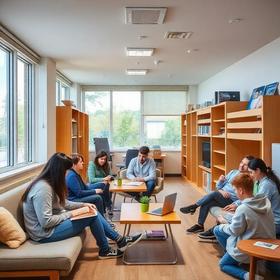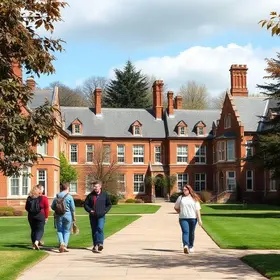

For decades, parents evaluating boarding schools have focused on familiar indicators of academic excellence: Advanced Placement courses, International Baccalaureate programs, class sizes, college matriculation lists, and faculty credentials. Increasingly, however, another feature is becoming a major point of comparison: Advanced research opportunities.
Many boarding schools now offer students the chance to conduct original research alongside faculty mentors, collaborate with universities, participate in independent studies, or even publish their findings in student journals. These programs often appear prominently in school marketing materials, leaving families wondering whether research opportunities should influence their school choice.
The answer depends largely on the student. For intellectually curious teenagers, authentic research experiences can be transformative, fostering critical thinking, creativity, and independence that extend far beyond college admissions. For others, research may simply be one of many ways to explore academic interests rather than an essential component of a successful high school education.
As Boarding School Review explains in Why Boarding School?, one of the defining characteristics of a boarding school education is the opportunity for students to engage deeply with their teachers both inside and outside the classroom. That close faculty mentorship provides an ideal environment for meaningful research projects that might be difficult to replicate in many traditional high schools.
Research Is About More Than College Applications
The growing popularity of high school research is closely tied to the evolution of college admissions. Selective universities increasingly seek students who demonstrate intellectual curiosity, initiative, and the ability to pursue complex questions independently.
That trend has led some families to believe research has become a prerequisite for admission to competitive colleges. Fortunately, that is not the case.
Most admissions officers do not expect every applicant to publish scientific papers or complete laboratory research before graduating from high school. Instead, they look for evidence that students have challenged themselves within the opportunities available to them.
For students who genuinely enjoy asking questions, solving problems, or investigating unfamiliar topics, research can become one of the most rewarding parts of their education. Rather than memorizing information for an exam, students learn how knowledge is created. They develop skills in analysis, communication, collaboration, and persistence, qualities that remain valuable throughout college and beyond.
The National Association for College Admission Counseling continues to emphasize that admissions decisions are based on multiple factors, including academic achievement, curriculum rigor, extracurricular engagement, and personal qualities, rather than any single accomplishment.
What Meaningful Research Actually Looks Like
When families hear the word "research," they often picture sophisticated laboratories filled with expensive equipment. While laboratory science certainly plays an important role at many boarding schools, meaningful research extends well beyond biology or chemistry.
Students may investigate historical archives, compose original music, analyze public policy, develop engineering prototypes, write computer software, conduct environmental field studies, or complete independent literary analyses. The common thread is that students move beyond learning existing knowledge and begin contributing original ideas or solutions.
The strongest programs encourage students to ask questions that genuinely interest them. Faculty mentors then guide students through the research process, teaching them how to evaluate evidence, organize information, revise their thinking, and communicate their conclusions effectively.
The College Board encourages students to pursue challenging academic experiences that align with their interests rather than simply selecting activities because they may strengthen a college application.
Faculty Mentorship Makes the Difference
Perhaps the greatest advantage boarding schools offer aspiring researchers is access to faculty.
Unlike many traditional schools, boarding school teachers often serve multiple roles throughout the day. They may teach classes, coach athletic teams, supervise dormitories, advise student organizations, and mentor independent projects. These daily interactions naturally foster relationships that make long-term research collaborations possible.
Students interested in marine biology might spend months working alongside a science teacher collecting field data. A student fascinated by constitutional law may undertake an independent legal research project under the guidance of a history instructor. Another student may collaborate with a mathematics teacher to develop statistical models or enter regional research competitions.
These experiences are possible because boarding school faculty typically have the time and accessibility to support projects that extend well beyond classroom assignments.
Boarding School Review's recent feature, What Boarding School Is Like in 2026: Life, Costs, Trends, highlights how the residential environment creates mentorship opportunities that continue long after the school day ends.
Not Every Student Needs an Independent Research Project
While research opportunities deserve attention during your school search, they should not overshadow every other consideration.
- A student who hopes to study engineering or molecular biology may benefit tremendously from early laboratory experience.
- Another student with interests in journalism, entrepreneurship, public policy, or the performing arts may find equally valuable opportunities through internships, creative projects, leadership experiences, or community engagement.
The best boarding schools recognize that there is no single definition of academic excellence. Rather than encouraging every student to complete a formal research project, they provide a wide variety of opportunities for intellectual exploration.
Research from the National Center for Education Statistics consistently demonstrates that student engagement and academic challenge contribute significantly to educational outcomes. What matters most is not whether every student completes research, but whether each student finds meaningful opportunities to grow intellectually.
Questions Families Should Ask
Instead of asking whether a boarding school offers research opportunities, ask how those opportunities actually work.
- For example, are research projects available only to seniors, or can younger students participate?
- Are projects integrated into the curriculum or pursued independently?
- How accessible are faculty mentors?
- Do students collaborate with nearby universities or research institutions?
- Most importantly, are these opportunities available to all interested students, or only to a select few?
The answers often reveal far more about a school's educational philosophy than a brochure highlighting a handful of impressive student accomplishments.
Families evaluating the broader academic experience may also find Boarding School Review's article on Boarding School Pros & Cons: History, Myths & 2025 Insights helpful, as it explores many of the factors that distinguish boarding schools from other educational options.
How Colleges Evaluate Research Experience
Parents sometimes assume that completing an advanced research project automatically gives students an advantage in highly selective college admissions. In reality, admissions officers tend to look beyond the title of the activity and examine what the student actually learned from the experience.
A summer spent conducting original environmental research, for example, may be highly impressive if the student can explain the questions they explored, the obstacles they encountered, and how the project shaped their intellectual development. By contrast, a research opportunity that consisted primarily of observing someone else's work or completing routine tasks may carry less weight, even if it took place at a prestigious institution.
This distinction explains why authenticity matters. Colleges are interested in students who demonstrate genuine curiosity and sustained engagement, not simply those who accumulate impressive-sounding activities. A thoughtfully designed research project at a boarding school can often be more meaningful than a brief summer program that offers limited student involvement.
The Common App encourages students to describe experiences that have had the greatest personal impact rather than attempting to build a résumé filled with activities that lack depth or significance.
Recognizing an Authentic Research Program
Not every school that advertises research opportunities provides the same level of academic engagement. As families compare boarding schools, it is worth looking beyond promotional materials to understand how research fits into the broader curriculum.
Schools with strong research programs typically emphasize the learning process rather than the final product. Students are encouraged to ask meaningful questions, revise their hypotheses when evidence changes, and communicate their findings clearly, whether through presentations, exhibitions, competitions, or written papers.
Faculty mentors also play an essential role. Because they know their students well, they can help shape projects that are appropriately ambitious while providing guidance when challenges inevitably arise. This mentorship often becomes one of the most valuable aspects of the research experience, teaching students resilience, critical thinking, and intellectual independence.
Another useful question concerns accessibility. Does the school reserve research opportunities for only a handful of top-performing students, or does it encourage participation across multiple grade levels and academic interests? Programs that are integrated into the school's educational philosophy generally provide broader opportunities for students to explore original ideas.
Research Supports Skills That Extend Beyond STEM
Although research is frequently associated with science laboratories, its educational benefits reach far beyond STEM disciplines.
Students pursuing the humanities may analyze historical documents, examine political movements, or complete original literary scholarship. Those interested in the arts might compose music, produce documentary films, or investigate artistic techniques from different cultures. Aspiring entrepreneurs may conduct market research before launching student-led ventures, while future social scientists may design surveys to better understand community issues.
In each case, students learn how to ask thoughtful questions, evaluate evidence, communicate complex ideas, and adapt when projects do not unfold exactly as planned. These are transferable skills that remain valuable regardless of a student's eventual college major or career path.
This broad approach reflects one of the defining strengths of many boarding schools. Rather than separating academic disciplines, they encourage students to pursue interdisciplinary learning that connects science, technology, the humanities, the arts, and public service.
Should Research Be a Deciding Factor?
For families comparing boarding schools, advanced research opportunities should certainly be considered, but they should rarely become the single deciding factor.
An outstanding research program cannot compensate for a school that is otherwise a poor fit academically, socially, or personally. Students are far more likely to succeed in an environment where they feel supported, challenged, and engaged than at a school chosen primarily because it offers sophisticated laboratory facilities or university partnerships.
Instead, view research as one component of a broader educational experience. Consider how it complements the school's curriculum, faculty mentorship, extracurricular offerings, residential life, and overall philosophy. Schools that integrate research naturally into everyday learning often provide richer educational experiences than those that treat research as an exclusive enrichment activity for a small number of students.
Families comparing schools can explore additional academic programs, campus culture, and student opportunities through Boarding School Review, which provides comprehensive profiles of boarding schools across the United States.
Looking Beyond High School
One of the greatest benefits of authentic research is that it prepares students not simply for college admissions, but for college itself.
Students who have designed experiments, evaluated conflicting evidence, managed long-term projects, and presented their findings often arrive on campus with greater confidence and independence. They are already familiar with many of the habits that universities expect of undergraduate researchers, including intellectual curiosity, persistence, collaboration, and effective communication.
Whether students eventually pursue medicine, engineering, law, business, education, or the arts, the ability to investigate complex problems thoughtfully is likely to remain one of the most valuable skills they develop during high school.
Conclusion
Advanced research opportunities can be an exceptional feature of a boarding school education, but they are most valuable when they grow naturally from a student's interests rather than serving as a strategy for gaining admission to a particular college. The strongest programs emphasize curiosity, mentorship, and intellectual growth, giving students the confidence to ask meaningful questions and pursue original ideas.
As you evaluate boarding schools, look beyond whether research opportunities exist and consider how they are structured, who can participate, and how closely students work with faculty mentors. When integrated into a supportive academic community, research becomes more than an impressive item on a college application. It becomes an experience that prepares students to think critically, solve problems creatively, and approach lifelong learning with confidence.