
Famous Boarding School Alumni and What They Teach Parents in 2026
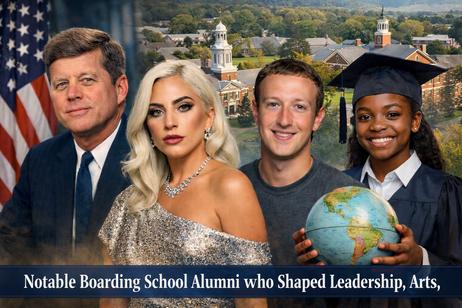
When parents research boarding schools, they often ask a practical question: What kind of outcomes can this education produce? One way to answer that question is to examine famous boarding school alumni. While celebrity success is never guaranteed, alumni stories provide insight into the long-term value of structure, independence, mentorship, and academic rigor.
From U.S. presidents to Academy Award winners and technology innovators, boarding school graduates often credit their formative years for shaping resilience and leadership. In 2026, as families weigh educational choices in a rapidly evolving world, these examples offer timely lessons.
Below, we examine notable alumni from leading boarding schools and explore what their journeys can teach parents today.
Leadership and Public Service: Character Before Credentials
Among the most frequently cited famous boarding school alumni are U.S. presidents.
John F. Kennedy, who attended Choate Rosemary Hall
Franklin D. Roosevelt, who attended Groton School
George H. W. Bush, who attended Phillips Academy
These leaders came of age in structured academic communities that emphasized public speaking, debate, service, and responsibility. Boarding schools historically prioritized honor codes and student leadership, experiences that prepared students for civic life.
According to the National Association of Independent Schools, independent schools continue to emphasize character education and ethical leadership alongside academic excellence. In 2026, this focus has expanded to include global citizenship and digital responsibility.
Lesson for parents: Academic rigor matters, but leadership development and ethical grounding are equally important. Boarding schools often integrate both into daily life through advisory systems, student governance, and community service.
Parents considering this path may find helpful guidance in Boarding School Review’s article on The Benefits of Boarding School.
Arts and Creativity: Structured Freedom Fosters Talent
Boarding schools are not solely pipelines to politics or finance. They also nurture creativity.
Lady Gaga attended Convent of the Sacred Heart.
Humphrey Bogart attended Phillips Academy.
Emma Watson attended Headington School.
Specialized institutions such as Interlochen Center for the Arts and Idyllwild Arts Academy continue to produce alumni who succeed in film, music, and design.
In recent years, arts programming at boarding schools has expanded to include digital media production, AI-assisted composition, and global arts exchanges. As reported by Education Week, schools are integrating creative thinking into core curricula, recognizing it as a critical workforce skill.
Lesson for parents: Structure does not stifle creativity. In fact, well-designed boarding environments often provide the time, mentorship, and facilities that allow artistic students to flourish.
Families exploring specialized programs can consult Boarding School Review’s guide to Top Arts Boarding Schools.
Entrepreneurship and Innovation: Independence Builds Initiative
The connection between boarding school and entrepreneurship is not accidental. Living away from home requires students to manage time, solve problems independently, and collaborate with diverse peers.
Mark Zuckerberg attended Phillips Exeter Academy.
Reid Hoffman attended The Putney School.
Many boarding schools now emphasize entrepreneurship through incubator programs, venture competitions, and partnerships with universities. According to the World Economic Forum, analytical thinking, resilience, and leadership remain top skills for the future of work, all qualities reinforced in residential school settings.
Lesson for parents: Independence during adolescence can cultivate initiative and confidence. Boarding school life, with its balance of freedom and accountability, mirrors aspects of college and early professional life.
Global Perspective: Preparing Students for a Connected World


Many famous boarding school alumni attribute their worldview to the international communities in which they studied.
Institutions such as United World Colleges were founded specifically to promote cross-cultural understanding. Today, numerous U.S. boarding schools enroll students from 20 to 60 countries, creating global classrooms.
The National Center for Education Statistics reports continued growth in international student enrollment at U.S. private secondary schools through 2025, reflecting strong global demand.
Lesson for parents: Exposure to diverse perspectives fosters adaptability and empathy. In 2026, with universities and employers prioritizing cross-cultural competence, global engagement is more relevant than ever.
Families interested in this dimension may wish to explore Boarding School Review’s article on International Students at U.S. Boarding Schools.
What Famous Boarding School Alumni Really Teach Parents
It is important to approach famous boarding school alumni with perspective. Not every graduate becomes a president or celebrity. However, patterns emerge across alumni success stories.
Common Themes
| Attribute | How Boarding Schools Reinforce It |
|---|---|
| Independence | Residential life builds self-management skills |
| Leadership | Student government, athletics, and service roles |
| Resilience | Academic rigor and structured accountability |
| Global Awareness | Diverse student bodies and travel programs |
| Mentorship | Close faculty-student relationships |
Research continues to support the long-term benefits of immersive educational environments. A longitudinal study published by the Association of Boarding Schools, available at TABS.org, highlights higher rates of advanced degree attainment and reported preparedness for college among boarding school graduates.
2026 Perspective: A Changing Definition of Success
The definition of success has broadened in recent years. Parents today prioritize:
Emotional intelligence
Mental health support
Digital literacy
Ethical leadership
Sustainability awareness
Boarding schools have adapted accordingly. Many campuses now feature wellness centers, technology ethics courses, and sustainability initiatives. The modern boarding experience looks different from decades past, even as it retains core strengths.
As you evaluate famous boarding school alumni, consider not only what they achieved but how their formative experiences shaped them. The structured independence of boarding school often becomes a rehearsal for adult life.
For families weighing this option, additional insights can be found in Boarding School Review’s comprehensive overview of How to Choose a Boarding School.
Final Takeaways for Parents
Famous boarding school alumni offer more than impressive headlines. Their stories illuminate deeper educational principles:
Environment influences character.
Independence accelerates maturity.
Mentorship matters.
Global exposure broadens opportunity.
Structured challenge builds confidence.
In 2026, boarding schools continue to evolve while preserving their central promise: to prepare students not only for college, but for leadership, creativity, and meaningful lives.
For parents considering this educational path, the question is not whether your child will become famous. The better question is whether the environment will help your child become capable, confident, and prepared for an unpredictable future.
That is the enduring lesson famous boarding school alumni teach us.