About Boarding Schools

Here you’ll find basic information on boarding schools and why they may be the best choice for your child. Get answers to some of the most frequently asked questions, dispel boarding school myths, and learn what separates a boarding school from other private school options.

View the most popular articles in About Boarding Schools:

What Parents Regret Not Asking Before Boarding School

Updated
|
What Parents Regret Not Asking Before Boarding School
Key questions parents should ask before choosing a boarding school, from academics and dorm life to wellness, costs, and college counseling.

Choosing a boarding school is one of the most consequential decisions a family can make. Parents often ask about tuition, academics, athletics, and college placement, but later realize they missed quieter questions that matter just as much: Who notices when my child is struggling? How structured are weekends? What happens if the school is not the right fit?

This guide, prepared in the style of Boarding School Review’s parent-focused resources, highlights the questions families most often wish they had asked earlier.

What Does Daily Life Actually Feel Like?

A school can look impressive during a tour, but daily life is what your child will experience. Parents should ask admissions officers and current students to describe a typical weekday and weekend.

Ask:

  • When do students wake up, study, exercise, and relax?
  • How much free time do students really have?
  • Are weekends structured, quiet, social, or activity-heavy?
  • What percentage of students stay on campus most weekends?

Families can compare answers with Boarding School Review’s guide to life at boarding school.

How Strong Is the Advisor System?

Many parents regret not asking who will know their child well. In boarding school, the advisor, dorm parent, coach, and teachers often form the support network.

Ask how often advisors meet with students, how parents are updated, and who coordinates concerns across academics, health, and residential life. A strong advisor system should not depend on luck or personality fit. It should be built into the school’s structure.

What Happens When a Student Struggles?

Every student

. . .read more

The First 30 Days at Boarding School

Updated
|
The First 30 Days at Boarding School
A week-by-week guide to what students and parents can expect during the first 30 days at boarding school.

The first 30 days at boarding school can feel exciting, overwhelming, structured, and surprisingly ordinary, often all at once. For students, the opening month is when a new campus becomes familiar, dorm routines begin to feel natural, and early friendships start to form. For parents, it is also the period when initial worries about homesickness, academics, roommates, and communication usually come into sharper focus.

While every school has its own traditions, the first month at most boarding schools follows a predictable rhythm. Orientation comes first, followed by classes, dorm expectations, activities, advisor meetings, and the gradual shift from being “new” to belonging.

Families preparing for this transition may also want to review Boarding School Review’s guide to how to prepare your child for boarding school life, which offers practical steps before move-in day.

Week 1: Arrival, Orientation, and Emotional Overload

The first week is usually designed to help students settle in before full academic pressure begins. Students move into dorms, meet roommates, unpack, attend orientation sessions, and learn basic campus routines.

Common activities include:

  • Dorm meetings
  • Technology and safety briefings
  • Advisor introductions
  • Campus tours
  • Placement testing or academic meetings
  • Team-building activities
  • Student handbook reviews
  • Opening assemblies

For many students, this week is emotionally intense. Even confident teenagers may feel homesick after parents leave. The American Academy of Pediatrics has long noted that homesickness is a normal response to separation, especially when young people are adjusting to a new environment.

Parents should expect mixed signals. A student may sound cheerful in

. . .read more

Boarding School Sustainability and Green Campus Planning

Updated
|
Boarding School Sustainability and Green Campus Planning
Explore boarding school sustainability initiatives and green campus planning, shaping eco-conscious education in 2026.

Boarding school sustainability initiatives and green campus planning are becoming central to how institutions design their campuses, deliver education, and prepare students for a changing world. As environmental concerns continue to shape global priorities in 2026, many boarding schools are aligning their operations and curricula with sustainability goals.

Unlike day schools, boarding schools operate as fully residential communities. This creates both challenges and opportunities. Energy use, food systems, transportation, and building design must all be managed on campus, but these same systems can serve as living laboratories for sustainability education.

For families evaluating boarding school options, understanding how schools approach environmental responsibility offers insight into both campus culture and long-term institutional values.

Why Sustainability Matters in Boarding Schools

Sustainability in education is no longer limited to classroom discussions about climate science. It increasingly involves operational decisions and campus-wide commitments.

Boarding schools are uniquely positioned to lead in this area because they manage:

  • Housing and dining services
  • Extensive physical campuses
  • Year-round resource consumption
  • Student behavior and community norms

According to the U.S. Environmental Protection Agency, schools that adopt sustainable practices can significantly reduce energy consumption and operational costs while improving student health and engagement.

In a residential setting, these benefits are amplified. Students see the direct impact of sustainability practices on their daily lives, from energy use in dormitories to food sourcing in dining halls.

Core Elements of Green Campus Planning

Green campus planning involves a comprehensive approach to designing and managing school environments with environmental impact in mind. Leading

. . .read more

Boarding School Residential Life Models Explained

Updated
|
Boarding School Residential Life Models Explained
Explore boarding school residential life models, supervision, and mentorship systems shaping student growth and community living.

Boarding school residential life models play a central role in shaping the student experience, often defining how young people grow academically, socially, and personally. While families frequently focus on academics and college placement, the structure of residential life deserves equal attention. The way students live, interact, and receive guidance outside the classroom can significantly influence their independence, well-being, and long-term success.

At its core, a boarding school is not simply about where students sleep. It is an immersive environment where supervision structures and mentorship systems create a continuous learning experience. As highlighted in foundational discussions of boarding education, the residential setting itself becomes an extension of the classroom, fostering responsibility, resilience, and community engagement.

Understanding how different schools design their residential programs helps families make informed decisions and align expectations with their child’s needs.

What Are Boarding School Residential Life Models?

Residential life models refer to how a boarding school organizes student housing, supervision, and daily living structures. These models determine:

  • Where and how students live
  • Who supervises them
  • How support systems are delivered
  • The level of independence students experience

Families beginning their search may also benefit from reviewing broader guidance on choosing a school environment at https://www.boardingschoolreview.com/blog/why-boarding-school.

Common Residential Life Models

Model Description Best Fit For
Traditional Dormitory Large dorms with multiple students per floor and shared spaces Students who enjoy social, active environments
House System Smaller, family-style houses with mixed ages Students seeking close-knit communities
Faculty-in-Residence Teachers live in dorms and supervise daily life Students who benefit from strong adult mentorship
Prefect or Student Leadership Model Senior students help oversee
. . .read more

How Boarding Schools Are Adapting Post-Pandemic in 2026

Updated
|
How Boarding Schools Are Adapting Post-Pandemic in 2026
Explore how boarding schools are adapting to post-pandemic education in 2026, from hybrid learning to student wellness and campus innovation.

How Boarding Schools Are Adapting to Post-Pandemic Education

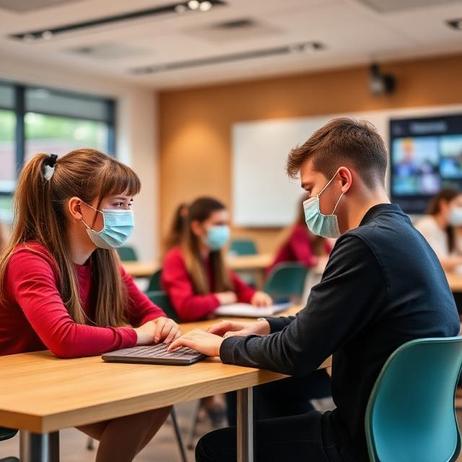
The conversation around how boarding schools are adapting to post-pandemic education has shifted significantly since 2020. What began as an emergency response has evolved into a long-term transformation of teaching, learning, and student life. In 2026, boarding schools are not simply recovering from disruption, they are redefining what a residential education looks like in a more flexible, health-conscious, and technology-driven world.

For families exploring options on Boarding School Review, understanding how boarding schools are adapting to post-pandemic education is essential. Today’s schools are blending academic rigor with resilience, prioritizing student well-being, and embracing innovation in ways that will shape the next generation of graduates.

A Shift Toward Hybrid and Flexible Learning

One of the most visible ways boarding schools are adapting to post-pandemic education is through hybrid learning models. While fully remote instruction is no longer the norm, the infrastructure built during the pandemic remains in place.

Many schools now offer:

  • Recorded lectures for review and reinforcement

  • Virtual office hours for additional academic support

  • Digital collaboration tools integrated into daily coursework

  • Contingency plans for temporary remote learning during disruptions

This flexibility benefits not only students who may face illness or travel constraints but also those who learn best at their own pace.

According to research from the U.S. Department of Education, schools that maintained blended learning environments saw improved student engagement and continuity during disruptions. Boarding schools have taken this insight further by embedding digital tools

. . .read more

Recent Articles

Homeschool to Boarding School Transition Guide
Learn how families can prepare for a successful homeschool to boarding school transition, from academics to social adjustment.
Boarding Schools With the Best University Placement Rates
Explore boarding schools with the best university placement rates in 2026 and learn what drives strong college admissions outcomes.
Technology Use in Boarding Schools: 2026 Parent Guide
Explore how boarding schools use technology in 2026, from AI learning tools to screen-time policies, digital wellness, and campus safety.