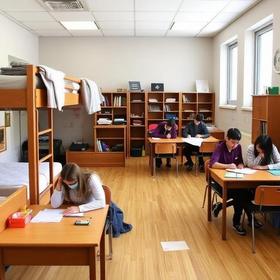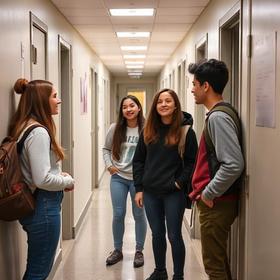

A boarding school dormitory is not simply another campus building. It is where students sleep, change clothes, shower, study, socialize and spend some of their least supervised hours. That makes adult access to dormitories an important question for families evaluating residential schools.
Adult presence is also essential. Dorm parents, nurses, maintenance employees, administrators and other authorized adults may have legitimate reasons to enter residential spaces. The issue is therefore not whether adults should have access. The more useful question is whether a school can explain who has access, why they have it, when they may use it and what safeguards govern their interactions with students.
In 2026, families should expect clear answers. Recent research and child-safety initiatives have placed renewed attention on professional boundaries, institutional accountability and prevention in schools and other youth-serving organizations. The strongest policies do more than restrict doors. They establish expectations that students, employees and parents can understand.
Why Adult Dormitory Access Deserves Specific Questions
Boarding schools are unusual educational environments because the distinction between school and home is deliberately narrow. Faculty members may teach during the day, coach in the afternoon and supervise students in a residence hall at night.
Those relationships can be one of residential education's strengths. As Boarding School Review's overview of dorm life at boarding schools explains, residential faculty frequently provide mentorship and support beyond classroom hours.
That closeness, however, makes clear boundaries especially important.
In July 2025, the Centers for Disease Control and Prevention highlighted its work with youth-serving organizations to develop evidence-informed resources for preventing child sexual abuse. The CDC's framework emphasizes organizational policies, safe environments and appropriate adult-youth interactions rather than relying exclusively on individual judgment.
For boarding schools, dormitory access is one practical place where those principles become visible.
Who Is Authorized to Enter Student Dormitories?
A family can begin with a deceptively simple question: Who has access?
Schools should be able to identify categories of adults who may enter student residences. Depending on the campus, these might include residential faculty, administrators, security personnel, health professionals, housekeeping employees and facilities staff.
The answer should distinguish between general building access and access to individual student rooms.
A maintenance employee who needs to repair plumbing does not necessarily require unrestricted access at all times. Similarly, a teacher who lives elsewhere on campus may have a legitimate reason to visit a residence hall without needing independent access to every student room.
Families may find it useful to ask:
- Which employees have keys, access cards or electronic credentials?
- Can the school determine who entered a dormitory and when?
- Are contractors and outside vendors escorted?
- Are access privileges reviewed when an employee changes roles or leaves the school?
Technology can support these safeguards, but technology alone is not a policy. An electronic access record is useful only if the school monitors exceptions and responds when something appears unusual.
When May an Adult Enter a Student's Room?
Schools should also explain the circumstances under which an adult may enter a student's private room.
There will be legitimate exceptions. A dorm parent may need to respond to illness, a safety concern, suspected prohibited behavior or an emergency. Facilities employees may need to complete repairs. Schools may also conduct announced or policy-authorized room inspections.
What matters is whether those circumstances are defined.
Parents can compare a school's answer with the broader questions they ask during a boarding school campus visit. A tour is an appropriate time to move beyond seeing what dorm rooms look like and ask how the building actually operates after classes end.
A strong policy should reduce unnecessary ambiguity. Students should not have to guess whether an adult's presence in their room is routine, unusual or inconsistent with school expectations.
Does the School Have a Two-Adult or Open-Door Expectation?
Not every interaction between an adult and student can take place with two adults physically present. Boarding schools operate around the clock, and students sometimes need confidential conversations with trusted faculty members.
Schools can nevertheless establish safeguards for situations involving one adult and one student.
For example, a school might require certain conversations to occur in visible common areas, keep doors open when circumstances permit, restrict private-room meetings or require another employee to know when an unusual one-on-one interaction is occurring.
The Rape, Abuse & Incest National Network works with educational institutions, including independent and boarding schools, on prevention and response strategies for sexual misconduct. Its work reflects a broader shift toward treating safeguarding as an institutional responsibility rather than expecting students to recognize and manage inappropriate adult behavior themselves.
The important question is not whether every school uses identical rules. It is whether the rules are specific enough to guide behavior consistently.
What Happens at Night?
Nighttime deserves particular attention because residential supervision changes after the normal academic day.
Parents should ask who is on duty, whether an adult is physically present in the dormitory and how students summon help. They should also ask whether adults who are not assigned to that residence may enter after certain hours.
Understanding staffing arrangements can be easier after learning how boarding schools assign dorms, advisors and schedules. Residential assignments are not merely administrative details. They determine which adults students encounter regularly and who carries responsibility for their care.
Families should also ask what happens when the normal dorm parent is unavailable. Substitute coverage should follow the same access and boundary standards as regular staffing.
Are Adult-Student Boundaries Written Down?
A school may have excellent practices that are understood informally by experienced employees. Informal understanding, however, is difficult for students, new employees and parents to evaluate.
Written expectations are stronger.
A 2025 report from World Childhood Foundation USA emphasized the role of educator codes of conduct in defining appropriate boundaries and noted significant variation among U.S. states in policies addressing educator misconduct and screening.
Parents can therefore ask to see the relevant employee code of conduct, residential-life handbook, or safeguarding policy.
Look for practical rules, not simply statements that employees must "behave professionally." Effective policies address situations adults actually encounter, including student bedrooms, bathrooms, transportation, electronic communication, physical contact, overnight trips and one-on-one meetings.
How Are Students Taught What the Rules Are?
A policy that only employees know is incomplete.
Students should understand which adults may enter their residence, what normal supervision looks like and how to respond if an interaction makes them uncomfortable.
That does not mean placing responsibility for preventing misconduct on students. Adults and institutions retain that responsibility. Student education provides an additional layer of awareness and gives young people vocabulary for identifying and reporting concerns.
Recent research published in 2025 in Children and Youth Services Review examined grooming behaviors reported by adult survivors of educator-perpetrated child sexual abuse. Although the study involved a small sample and should not be generalized to every school setting, it reinforces why organizations should pay attention to boundary-crossing behavior before conduct escalates.
What Should a Student Do if an Adult Breaks the Rules?
The reporting system may be as important as the access policy itself.
Students should have several ways to raise concerns. Requiring every complaint to pass through one dorm parent creates an obvious problem if that person is involved in the concern.
Ask whether students can report to a dean, counselor, administrator, safeguarding officer or another designated adult. Families should also understand whether confidential or anonymous reporting mechanisms exist and how allegations are escalated.
The U.S. Department of Education renewed national attention to this issue in 2026, emphasizing schools' responsibilities to respond appropriately to allegations of sexual misconduct and policies intended to prevent employees accused of misconduct from simply moving elsewhere without accountability.
Parents speaking with current families can also learn whether formal policies work in practice. Boarding School Review's guide to what current parents can tell prospective families offers a useful approach for asking questions that extend beyond the admissions presentation.
What Does a Good Answer Sound Like?
Families should not expect every boarding school to have the same architecture, staffing model, or access to technology. A small dormitory with a resident faculty family may operate differently from a large residence hall with several floors and multiple duty teams.
The quality of the answer matters more than uniformity.
A reassuring response is specific. The school can explain who has access, identify exceptions, describe nighttime procedures, show families written expectations and explain how concerns are reported and investigated.
A vague answer such as "our faculty know our students well" does not address the question. Strong relationships matter, but relationships and safeguards serve different purposes.
Boarding School Review's Boarding School FAQs can help families place these questions within the larger process of comparing residential schools.
Adult Access Policies Are Really About Institutional Culture
No access-control system can eliminate every risk, and a school should not imply that it can. The better objective is a residential culture in which appropriate adult presence is encouraged while unnecessary privacy, unexplained exceptions and ambiguous boundaries are minimized.
Parents considering boarding school should therefore ask about more than locked doors. They should ask who may open them.
The questions schools should answer about adult access to dormitories reveal how seriously an institution approaches student privacy, professional boundaries and accountability. A school that can discuss those subjects clearly gives families something more valuable than a general promise of safety. It gives them policies and practices they can evaluate.