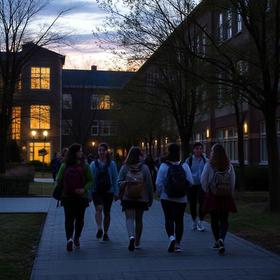

A day school is not an easy enterprise to run because, for one thing, it is dependent on the local economy and demographics. The closing of a major employer or the departure of young families from the area can challenge the existence of even the best-run private day school. In addition to those local conditions, a boarding or residential school is subject to national and global economic trends. Many American boarding schools have a significant percentage of their students drawn from outside the United States. Economic uncertainty, geopolitical instability, changing visa policies, or regional conflicts can all affect international enrollment. Likewise, fluctuations in the U.S. economy can make it more difficult for families to afford a boarding school education.
With these considerations in mind, let's look at five challenges facing American boarding schools and some common-sense solutions to those challenges.
1. The Natural Parental Resistance to Sending Children Off to a Residential School
It is hard enough for most American parents to send their children away to college, much less to boarding school. The idea of sending a fifteen-year-old away to a residential high school meets with serious resistance from many parents. There are many reasons for this reluctance, but the primary ones are the cost of boarding school and the feeling that the local public high school or private day school can do just as good a job of preparing their children for college. There's also a nagging concern that perhaps their son or daughter is not quite ready to leave home and that it would be best to postpone that separation until after high school.
The following short video gives an overview of Salisbury School in Salisbury, Connecticut.
This is why actively marketing your school is so critically important. Make a professionally designed website the hub of your marketing program, with dynamic, engaging social media platforms as the spokes.
Use Facebook, Instagram, YouTube, TikTok, LinkedIn, and other appropriate digital channels to draw prospective parents and students to your website, where they can find everything they need to know about your school and how to apply for admission.
Parents want to know about your financial aid programs. Make that information accessible and easy to understand.
Parents are also concerned about the quality of supervision, student wellness, and campus safety. Address those issues proactively and clearly through your website, campus visits, and admissions materials.
Happy, loving families that have strong connections make great boarding school families. And believe it or not, your connections to your family will probably grow even stronger when you're living away from them. According to the Association of Boarding Schools (TABS), strong communication between families and schools plays an important role in helping students thrive in residential education.
For additional guidance on communicating the value of residential education, families may also find Boarding School Review's What It Is Like at Boarding School: 2026 Guide for Parents & Students helpful.
2. Rising Costs of Operation
Boarding schools are businesses. True, they are established as nonprofit organizations. But let's not kid ourselves; boarding schools have to be run and managed like the substantial organizations that they are. That's why you need a skilled business manager to execute the board's short-term and long-term strategic plans.
Populate your board with experienced men and women who understand how to oversee the current year's activities as well as plan for the future of your school.
Anticipating rising operating costs and developing strategies for dealing with them are essential to your board's effectiveness. Organizing and running a successful capital campaign is another one of its responsibilities.
Here is a brief overview of Proctor Academy.
Experienced business leaders who meet regularly to review progress and plan for the future have an advantage that they bring to the table, namely, that they are not involved in the daily minutiae. They see the bigger picture from 10,000 feet. Heed your board's advice. And, yes, have a strategic plan in place. It will help keep everybody focused on where the school is going.
Sustainability and organizational efficiency remain strongly linked. Sustainable enterprises are more likely to succeed over the long term while using resources responsibly and controlling costs. According to YAROOMS, balancing environmental and financial goals has become an increasingly important part of long-term organizational planning.
School leaders should also regularly review enrollment trends, demographic changes, and operational efficiencies to ensure the institution remains financially healthy.
3. Development, Endowments, and Financial Aid
It can all be a bit daunting. One of your goals is to have as diverse a student population as possible. But that, in turn, means having a large enough financial aid pool to attract applicants from a wide variety of socioeconomic backgrounds. It makes sense to follow the example of many leading boarding schools and develop fundraising efforts specifically to support financial aid. You will need a professional advancement or development staff to execute your plan. Don't stint in this area of your school's operation.
The business officer reports to the head of school and works strategically with the head of school and the board of trustees to ensure the development and implementation of appropriate policies for the long-term financial management of the school.
Today's families increasingly compare schools based not only on tuition, but also on affordability after financial aid. Clear communication about scholarships, need-based assistance, payment plans, and endowment support can significantly strengthen recruitment efforts.
The National Association of Independent Schools (NAIS) continues to encourage independent schools to invest in long-term financial sustainability, strategic enrollment management, and philanthropic support to strengthen access and affordability.
Boarding School Review's 10 Facts About Boarding Schools also explains how financial aid has become an increasingly important part of the admissions process for many families.
4. Keeping Your Competitive Edge
In many ways, this is the most formidable challenge your school will face. Everybody in your school, from the head of school and the board of trustees down to the support staff, must keep your school in the vanguard of change. Read the Harvard Business Review article, Why Good Companies Go Bad, and understand that boarding schools are subject to changes they must anticipate and manage or risk losing market share. For a boarding school, that means figuring out not only how to fill the 100 seats available for next year but also how to attract significantly more qualified applicants than available spaces.
You all need to make your school such a desirable choice that you have many more applicants than places available. How do you accomplish that? Develop a strategic enrollment management plan, strengthen your school's brand, communicate your distinctive programs clearly, and continually invest in the student experience. Growth rarely happens without a thoughtful action plan tailored to your school's specific strengths and market position.
Today's families expect an admissions process that is informative, responsive, and easy to navigate. School websites, virtual tours, student testimonials, and personalized communication have become essential components of successful enrollment strategies.
Here is an interview with Rick Newberry, founder of Enrollment Catalyst.
Schools evaluating their admissions strategy may also benefit from Boarding School Review's How to Visit a Boarding School Campus: Parent Checklist, which highlights many of the factors prospective families consider when comparing schools.
5. Facing Uncertain Financial and Political Times
Economic conditions can change quickly. Inflation, fluctuations in financial markets, changes in interest rates, and broader economic uncertainty all influence family decisions about private education. A strong economy often supports enrollment, while economic slowdowns can reduce demand for tuition-based education.
Political and regulatory changes can also affect boarding schools. Immigration policies may influence international enrollment, while changes in tax law, nonprofit regulations, and education policy can affect fundraising, financial aid, and school operations.
Stay informed. Maintain relationships with local, state, and national policymakers. Support organizations such as the National Association of Independent Schools (NAIS) and your regional or state independent school association so your school remains informed about legislative and regulatory developments affecting independent education.
Membership in professional organizations provides school leaders with valuable research, advocacy, legal guidance, and best practices that can help boards make informed long-term decisions.
Demographic trends also deserve careful attention. According to the U.S. Census Bureau, declining birth rates in recent years are expected to affect school-age populations in many regions, increasing competition for student enrollment over the coming decade.
The best way to deal with any challenge is to meet it head-on. Ignore challenges at your peril. Use the experience and talents of your trustees and staff to develop creative, forward-looking solutions to the challenges your school encounters.
Boarding School Review's Choosing a School: Comparing Boarding Schools in 2026 offers additional guidance on how schools can distinguish themselves in an increasingly competitive marketplace.
Conclusion
Boarding schools continue to provide exceptional educational opportunities, but they also operate in an increasingly competitive and rapidly changing environment. Rising operating costs, evolving family expectations, increased demand for financial aid, demographic shifts, and economic uncertainty require school leaders to think strategically while remaining true to their missions.
Fortunately, many of these challenges also present opportunities. Schools that invest in thoughtful governance, strong financial management, effective enrollment strategies, student wellness, and clear communication are well positioned to thrive in 2026 and beyond.
By remaining adaptable, strengthening relationships with families, and continually demonstrating the unique value of residential education, boarding schools can continue preparing students not only for college but also for lives of leadership, responsibility, and lifelong learning.