
For many families considering boarding school, one question comes up repeatedly: Do boarding school students actually study more than their peers at traditional day schools?
The short answer is often yes, but not necessarily because students spend every waking hour doing homework. The difference lies in how boarding schools structure the day. Academic work is intentionally built into daily routines, creating an environment where studying becomes a regular and expected part of student life.
Unlike many day schools, where students return home to varying levels of supervision and distractions, boarding schools integrate study time, faculty access, extracurricular activities, and residential life into a carefully designed schedule. As a result, students often spend more consistent time focused on academics while also participating in sports, arts, leadership activities, and community life.
Families beginning their research may find it helpful to first read Boarding School Myths, which addresses many of the misconceptions families have about residential education.
Why Boarding School Schedules Are Different
One of the defining characteristics of boarding schools is structure. The school day does not end when classes finish. Students remain in an educational environment where learning, mentoring, and supervised study continue into the evening.
Boarding schools intentionally balance academics, athletics, social development, and personal wellness throughout the day. This structure helps students develop stronger time-management skills, academic accountability, and personal responsibility.
This does not mean students are constantly studying. Rather, boarding schools reduce many of the distractions and logistical challenges that can interfere with academic focus at home.
A Realistic Boarding School Weekday Schedule
Morning Routine
6:30 AM to 7:30 AM
Students wake up, prepare for the day, organize their rooms, and head to breakfast.
Many schools have residential advisors or dorm parents who help maintain routines and ensure students begin the day on time. In recent years, schools have also expanded wellness initiatives, mindfulness programming, and health resources as part of student life.
Academic Classes
8:00 AM to 3:30 PM
The majority of the day is dedicated to classroom instruction.
Students typically take:
- English
- Mathematics
- Science
- History
- Foreign Languages
- Electives
- Advanced Placement or International Baccalaureate courses
Boarding schools are known for smaller class sizes and greater access to faculty members. Many teachers live on campus, making academic support available well beyond normal classroom hours.
Families evaluating whether boarding school is the right fit may also benefit from reading Pros & Cons of Boarding School Education in 2025.
Afternoon Activities
3:30 PM to 5:30 PM
Most boarding schools require participation in extracurricular activities.
These may include:
- Competitive athletics
- Performing arts
- Student government
- Robotics
- Debate
- Community service
- Outdoor education
This portion of the day reflects the boarding school philosophy of educating the whole student, rather than focusing exclusively on academics.
Dinner and Community Time
5:30 PM to 6:30 PM
Students gather for dinner in a communal dining hall.
Unlike many day-school students who commute home after classes and activities, boarding school students continue interacting with peers, teachers, coaches, and residential staff throughout the evening.
These daily interactions help create strong mentoring relationships and a close-knit campus culture.
Evening Study Hall
6:30 PM to 8:30 PM
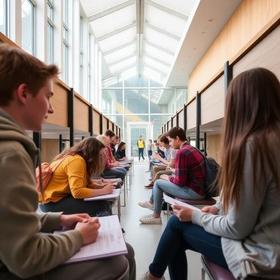
This is where boarding schools often differ most significantly from traditional schools.
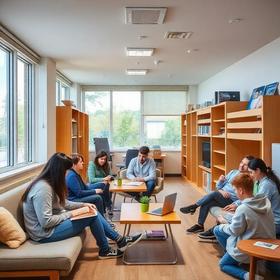
Nearly all boarding schools schedule dedicated evening study periods, often called "study hall" or "prep."
During this time:
- Students complete homework
- Faculty members are available for assistance
- Tutors may be accessible
- Dorm supervisors monitor productivity
- Academic expectations are reinforced
Because study time is protected and supervised, students are less likely to postpone assignments or become distracted by outside commitments.
Many boarding schools specifically design evening study hours to reinforce independent learning and college-preparation skills.
Social Time and Lights Out
8:30 PM to 10:30 PM
After study hall, students generally have time for:
- Socializing with friends
- Club meetings
- Dorm activities
- Relaxation
- Reading
Most schools maintain age-appropriate lights-out policies designed to support student wellness and healthy sleep habits.
Sleep and healthy routines also play an important role in academic performance. The American Academy of Pediatrics has emphasized the connection between adequate sleep, adolescent well-being, and educational outcomes.
Balancing structure with personal freedom remains one of the defining features of modern boarding school life.
How Many Hours Do Boarding School Students Actually Study?
When comparing total academic engagement, boarding school students often spend more structured time focused on schoolwork.
A typical day might include:
| Activity | Approximate Time |
|---|---|
| Classroom Instruction | 6-7 hours |
| Supervised Study Hall | 2 hours |
| Independent Review | 30-60 minutes |
| Teacher Support Sessions | As needed |
This means many students spend between 8 and 10 hours per day engaged in academic work.
The key distinction is consistency.
Rather than relying entirely on self-discipline after arriving home, students operate within a system designed to support regular academic habits.
Boarding School vs. Day School Study Time
While individual experiences vary, the comparison often looks like this:
| Factor | Boarding School | Day School |
|---|---|---|
| Scheduled Study Hall | Common | Less common |
| Evening Academic Support | Frequently available | Often limited |
| Teacher Accessibility | Extended hours | Primarily school hours |
| Academic Environment | Continuous | Varies by household |
| Study Accountability | High | Varies significantly |
Parents comparing educational options may also find useful insights in Parents' Key Concerns About Sending Their Child to Boarding School.
Does More Study Time Lead to Better Outcomes?
More study time alone does not guarantee academic success.
However, boarding schools create conditions that support stronger academic habits:
- Predictable routines
- Reduced commuting time
- Easier access to teachers
- Built-in accountability
- Structured study environments
Many boarding school graduates report feeling better prepared for college because they have already developed independent study skills, time-management habits, and personal responsibility.
Research from the National Association for College Admission Counseling (NACAC) consistently highlights the importance of time management, self-advocacy, and independent learning skills in preparing students for college success.
Students also learn how to balance competing responsibilities, a skill that becomes increasingly valuable in higher education and professional life.
According to The Association of Boarding Schools (TABS), graduates frequently cite independence, time management, and self-advocacy as key benefits that help them succeed in college and beyond.
What Families Should Ask When Visiting Boarding Schools
If academic rigor is a priority, ask schools specific questions about daily schedules.
Questions to Ask:
- How long is evening study hall?
- Is study hall supervised?
- Are teachers available during evening hours?
- How often do students meet with advisors?
- What support exists for students who are struggling academically?
- How much homework is assigned on average?
- How are extracurricular commitments balanced with academics?
Understanding these details often reveals more about a school's academic culture than rankings or test scores alone.
Families seeking broader answers about residential education may also appreciate Answers To Your Questions About Boarding School.
The Bottom Line
So, do boarding school students study more?
In most cases, yes. Boarding school students typically spend more structured and supervised time engaged in academics than many day-school students. The difference is not simply the amount of homework assigned. It is the intentional design of the boarding school day.
Classes, faculty support, study hall, extracurricular activities, and residential life work together to create an environment where learning remains a consistent part of daily life.
For many students, that structure builds stronger study habits, greater independence, and improved preparation for college. A realistic daily schedule breakdown helps explain why boarding schools are often associated with academic focus, personal growth, and long-term educational success.