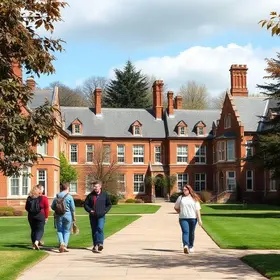

Independent study and research opportunities at boarding schools give motivated students a chance to move beyond standard coursework and pursue serious academic questions with faculty guidance. For students who are curious, self-directed, and ready for deeper learning, these programs can become one of the most valuable parts of the boarding school experience.
Because boarding schools combine academic life, residential life, and close faculty mentorship, they are often well positioned to support long-term research projects. Students may investigate a scientific problem, write a literary analysis, design an engineering prototype, study public policy, or complete a senior capstone project that reflects college-level expectations.
For families comparing schools, these opportunities can reveal a great deal about academic culture. A strong independent study program suggests that a school values curiosity, initiative, and disciplined inquiry.
Why Independent Study Matters at Boarding Schools
Personalized Academic Exploration
Traditional courses provide structure and essential knowledge. Independent study allows students to go further. A student interested in marine biology, constitutional law, artificial intelligence, architecture, or creative writing may not always find a standard course that fully matches that interest.
Through independent study, students can work with a faculty advisor to design a focused academic plan. This usually includes readings, research goals, regular meetings, written work, and a final product.
Families new to residential education may find useful context in Why Consider Boarding School?, which explains how boarding schools support academic and personal growth within a structured community.
Faculty Mentorship
One of the strongest advantages of boarding schools is access to teachers beyond the classroom. Faculty members may also serve as dorm parents, coaches, club advisors, and academic mentors. That access can make ambitious research more realistic.
Students often benefit from:
- Frequent feedback
- Help refining research questions
- Guidance on sources and methods
- Support with writing and presentations
- Encouragement during difficult stages of a project
This kind of mentorship helps students learn not only what to study, but how to study independently.
What Independent Study Looks Like
Common Program Structures
Independent study programs vary by school, but most include a formal proposal process. Students usually identify a topic, explain why it matters, choose a faculty advisor, and outline the work they plan to complete.
A typical independent study may include:
- A research proposal
- Weekly or biweekly advisor meetings
- Assigned readings
- Lab work, fieldwork, interviews, or data analysis
- Written reflections
- A final paper, presentation, exhibit, or portfolio
This structure gives students academic freedom while maintaining accountability.
Popular Areas of Study
In 2026, many students are pursuing research in areas shaped by technology, global challenges, and interdisciplinary thinking.
Common topics include:
- Artificial intelligence and ethics
- Environmental sustainability
- Neuroscience and public health
- International relations
- Creative writing and literary studies
- Economics and entrepreneurship
- Engineering design
- Political science
- Advanced mathematics
- Social justice and public policy
Students interested in college preparation may also benefit from How Boarding Schools Prepare Students for College, which discusses how boarding schools build independence, academic discipline, and readiness for higher education.
Research Opportunities Beyond the Classroom
Capstone Projects
Many boarding schools offer senior capstone projects. These projects often ask students to identify a question, conduct sustained research, and present their findings to faculty, peers, or the broader school community.
A capstone project may involve:
- Scientific experimentation
- Historical research
- Policy analysis
- Documentary film
- Engineering design
- Original creative work
- Community-based research
Capstones help students practice long-term planning and scholarly communication.
Laboratory and Field Research
Boarding schools with strong science programs may offer access to laboratories, environmental research sites, observatories, makerspaces, or partnerships with local universities.
Students might test water quality, study local ecosystems, build robotics projects, analyze genetic data, or conduct physics experiments. For students pursuing STEM fields, resources from institutions such as the National Science Foundation and the National Institutes of Health can support research literacy and scientific exploration.
Humanities and Social Science Research
Independent research is not limited to STEM. Students may examine literature, philosophy, history, economics, politics, religion, or culture.
A student might compare political movements, analyze a novelist’s body of work, study immigration policy, or research local history. These projects strengthen writing, argumentation, and critical reading skills.
Why Boarding Schools Are Well Suited for Research
Small Classes and Close Academic Relationships
Boarding schools often emphasize small classes and discussion-based learning. That environment can help students feel comfortable asking questions, challenging assumptions, and proposing original ideas.
The article 10 Top Reasons to Go to Boarding School highlights several features that support academic growth, including strong teachers, broad extracurricular options, and a culture where learning is taken seriously.
A Residential Academic Culture
Because students live where they learn, academic conversations can continue after class. A discussion that begins in history class may continue over dinner, in a dorm common room, or during an evening study period.
This immersive setting helps students see learning as part of daily life rather than something confined to a classroom schedule.
Peer Motivation
Research thrives in a community where students are surrounded by motivated peers. Boarding school students often see classmates preparing for debates, rehearsing performances, conducting experiments, publishing writing, or leading clubs.
That peer culture can encourage students to attempt more ambitious work.
How Independent Research Supports College Preparation
Evidence of Intellectual Curiosity
Colleges often look for students who show initiative and depth. A strong independent study or research project can demonstrate that a student is capable of sustained academic work.
Research experience may support:
- College essays
- Interviews
- Teacher recommendations
- Academic portfolios
- Scholarship applications
- Major selection
Families asking whether boarding school can strengthen admissions preparation may find additional context in Can Boarding School Improve College Admission Chances?.
College-Level Skills
Independent study teaches habits that students will need in college. These include managing deadlines, reading complex material, meeting with professors, revising work, and presenting ideas clearly.
Students also learn that research rarely follows a straight path. They must adjust questions, reconsider evidence, and respond to feedback.
Questions Parents Should Ask
Program Access
Not every school offers the same level of independent research support. Parents should ask:
- Are independent studies available to all students or only upperclassmen?
- Is there a formal proposal process?
- Are projects listed on the transcript?
- How are faculty advisors assigned?
- Are there limits on subject areas?
- How often do students complete independent studies?
Research Resources
Families should also ask about resources, including:
- Library databases
- Lab facilities
- Makerspaces
- University partnerships
- Writing centers
- Presentation opportunities
- Summer research options
Strong resources make it easier for students to complete meaningful work.
Student Support
Independent work requires maturity. Parents should ask how the school helps students stay on track. Advisor meetings, progress reports, research checkpoints, and presentation deadlines can help students complete ambitious projects successfully.
Potential Challenges
Time Management
Independent study can be rewarding, but it also requires discipline. Boarding students already balance classes, athletics, arts, clubs, residential life, and social commitments.
A well-designed program should help students manage time realistically.
Matching Students With the Right Mentor
The faculty advisor relationship matters. A strong mentor can help a student refine ideas and maintain momentum. Schools should be able to explain how they match students with advisors who have relevant expertise.
Maintaining Academic Rigor
Independent study should not be an easier substitute for regular coursework. The best programs require serious reading, research, writing, and presentation.
The Long-Term Value of Independent Study
Independent study and research opportunities at boarding schools help students become more confident learners. They learn how to ask better questions, evaluate evidence, work independently, and communicate ideas with clarity.
These skills matter in college, but they also matter beyond college. Whether a student becomes a scientist, entrepreneur, writer, physician, engineer, educator, or public servant, the ability to pursue a complex question with discipline is valuable.
Families concerned about outdated perceptions of boarding school may also want to read Boarding School Myths, which addresses common misconceptions about modern boarding school life.
Conclusion
Independent study and research opportunities at boarding schools can be a defining part of a student’s education. They give students room to explore serious academic interests, build close relationships with faculty mentors, and develop the habits of college-level scholarship.
For families evaluating boarding schools in 2026, these programs deserve careful attention. A school that supports independent research is not simply offering another academic option. It is helping students become curious, capable, and self-directed learners.