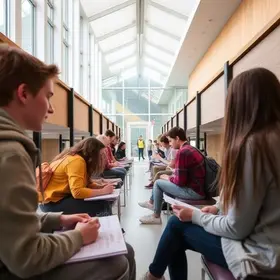

How Boarding Schools Are Adapting to Post-Pandemic Education
The conversation around How Boarding Schools Are Adapting to Post-Pandemic Education has shifted from crisis response to long-term transformation. In 2026, boarding schools are no longer reacting to disruption. They are building durable, future-ready models that integrate health security, academic flexibility, student wellness, and global connectivity.
For families considering boarding education, understanding How Boarding Schools Are Adapting to Post-Pandemic Education is essential. The changes implemented over the past several years have reshaped campus life, academic programming, and institutional strategy in ways that will likely define independent education for the next decade.
Below, we examine how boarding schools are adapting to post-pandemic education and what these changes mean for students, parents, and educators.
Health Infrastructure Is Now Permanent, Not Temporary
One of the most visible aspects of How Boarding Schools Are Adapting to Post-Pandemic Education is the integration of permanent health infrastructure.
During the height of COVID-19, boarding schools relied on guidance from the Centers for Disease Control and Prevention and the World Health Organization to design testing, quarantine, and mitigation strategies. In 2026, those temporary measures have evolved into comprehensive health and safety systems.
Today’s boarding campuses commonly include:
- Expanded campus health centers with upgraded ventilation systems
- On-site rapid testing capabilities
- Isolation housing that can be activated when needed
- Digital symptom monitoring tools
- Stronger partnerships with local hospitals
Rather than scaling these systems back, schools have institutionalized them. Health resilience is now viewed as part of risk management, similar to campus security or cybersecurity planning.
How Boarding Schools Are Adapting to Post-Pandemic Education increasingly includes proactive public health planning as a permanent operational priority.
Hybrid Learning as a Strategic Advantage
Before 2020, online learning in boarding schools was often considered supplementary. Now, hybrid capacity is foundational.
How Boarding Schools Are Adapting to Post-Pandemic Education includes investing in high-quality virtual platforms that allow learning continuity during travel disruptions, health emergencies, or global events. Many schools maintain fully equipped hybrid classrooms with:
- High-definition lecture capture systems
- Interactive digital whiteboards
- Cloud-based collaboration platforms
- Faculty trained in synchronous and asynchronous instruction
Importantly, hybrid learning is no longer viewed as a compromise. It has expanded opportunities for:
- Guest lectures from global experts
- International student integration
- Advanced coursework sharing between partner schools
- Flexible academic pacing
Research from the OECD has highlighted how blended learning environments can enhance personalization and resilience in secondary education. Boarding schools have embraced this insight.
How Boarding Schools Are Adapting to Post-Pandemic Education reflects a shift toward academic flexibility that benefits both domestic and international students.
Mental Health and Student Wellness at the Center
If there is one area where transformation has been most profound, it is student wellness.
The disruption of the pandemic exposed vulnerabilities in adolescent mental health worldwide. According to reports from UNESCO, prolonged school closures had measurable effects on student well-being and engagement.
In response, How Boarding Schools Are Adapting to Post-Pandemic Education now includes:
- Increased counselor-to-student ratios
- Expanded advisory programs
- Peer mentoring systems
- Mindfulness and resilience training
- Dedicated wellness curricula
Boarding schools, with their residential model, are uniquely positioned to provide wraparound support. Faculty living on campus can identify early warning signs of stress, burnout, or isolation.
In 2026, many schools report that wellness programming is no longer reactive. It is embedded into daily schedules, leadership training, and academic planning. How Boarding Schools Are Adapting to Post-Pandemic Education places emotional development on equal footing with academic achievement.
Reimagined Residential Life
Boarding life has also evolved.
How Boarding Schools Are Adapting to Post-Pandemic Education includes rethinking dormitory design and community engagement. Schools have introduced:
- Smaller residential cohorts
- Intentional dorm-based programming
- Outdoor community spaces
- Flexible visiting policies for families
The goal is to create tight-knit communities that can pivot quickly when necessary while maintaining strong social bonds.
Some schools have also redesigned common spaces to improve airflow and increase access to outdoor learning environments. These physical changes reflect lessons learned during periods of social distancing, but they also improve overall student experience.
How Boarding Schools Are Adapting to Post-Pandemic Education demonstrates that residential life is both a strength and a responsibility in times of global uncertainty.
Faculty Development and Professional Growth
Another key component of How Boarding Schools Are Adapting to Post-Pandemic Education is faculty training.
Teachers are now expected to be:
- Skilled in digital pedagogy
- Fluent in trauma-informed teaching practices
- Comfortable facilitating global virtual collaboration
- Responsive to rapidly changing health policies
Professional development budgets have expanded accordingly. Many schools partner with organizations such as the National Association of Independent Schools to stay informed about best practices in independent education leadership and governance.
In 2026, faculty recruitment increasingly prioritizes adaptability and technological fluency. Schools recognize that educational agility depends on well-supported educators.
How Boarding Schools Are Adapting to Post-Pandemic Education has elevated teaching as both a craft and a continuously evolving discipline.
Strengthened Global Engagement
Boarding schools have long attracted international students. However, travel restrictions and visa uncertainties during the pandemic forced schools to rethink global engagement strategies.
How Boarding Schools Are Adapting to Post-Pandemic Education includes:
- Remote admissions interviews
- Virtual campus tours
- Global alumni ambassador networks
- International academic partnerships
Even when travel resumes smoothly, many of these digital outreach tools remain in place because they broaden access.
Schools are also diversifying international recruitment markets to reduce geographic concentration risk. This strategy enhances cultural diversity while strengthening institutional stability.
How Boarding Schools Are Adapting to Post-Pandemic Education underscores the importance of maintaining global identity while building operational resilience.
Technology Infrastructure as Core Strategy
Technology spending has shifted from optional enhancement to essential infrastructure.
Here is a comparison of pre-pandemic and 2026 technology priorities:
| Area | Pre-2020 Focus | 2026 Focus |
|---|---|---|
| Classroom Tech | Smartboards, basic LMS | Hybrid-ready classrooms, lecture capture |
| IT Security | Basic firewall protection | Advanced cybersecurity, data privacy compliance |
| Student Devices | Bring-your-own-device | School-supported 1:1 device programs |
| Parent Communication | Email updates | Integrated communication platforms and dashboards |
How Boarding Schools Are Adapting to Post-Pandemic Education reflects a systemic commitment to digital reliability. Downtime is no longer an inconvenience; it is a strategic risk.
Parents now expect seamless access to schedules, grades, health updates, and campus announcements through secure platforms.
Financial Planning and Enrollment Strategy
The pandemic underscored the importance of financial resilience.
How Boarding Schools Are Adapting to Post-Pandemic Education includes:
- Diversified revenue streams
- Endowment growth strategies
- Expanded financial aid budgets
- Flexible tuition insurance options
Many schools have increased financial aid to address economic disruptions experienced by families. At the same time, boards are placing greater emphasis on scenario planning and long-term forecasting.
In 2026, transparency in financial communication has become part of trust-building with families.
How Boarding Schools Are Adapting to Post-Pandemic Education demonstrates that fiscal stewardship and educational mission are closely linked.
Experiential Learning Returns with Purpose
Extracurriculars and experiential programs have rebounded with renewed intentionality.
Outdoor education, international service trips, and leadership retreats have resumed, often with stronger risk management frameworks.
How Boarding Schools Are Adapting to Post-Pandemic Education includes reexamining why and how these experiences are offered. Schools now emphasize:
- Risk assessment protocols
- Clear contingency planning
- Local community partnerships
- Health screening standards for travel
Rather than scaling back experiential learning, schools are refining it. Families increasingly view these opportunities as essential to personal growth.
What This Means for Families in 2026
For prospective parents and students, How Boarding Schools Are Adapting to Post-Pandemic Education offers reassurance.
Boarding schools today are:
- More technologically sophisticated
- More attentive to student mental health
- More globally connected
- More transparent in communication
- More prepared for disruption
The boarding model, once challenged by global uncertainty, has demonstrated remarkable adaptability. Residential communities can respond quickly, maintain academic continuity, and provide structured support during instability.
Understanding How Boarding Schools Are Adapting to Post-Pandemic Education helps families make informed decisions about long-term educational investment.
Looking Ahead
As we move deeper into 2026, the narrative of How Boarding Schools Are Adapting to Post-Pandemic Education is less about recovery and more about reinvention.
Boarding schools have used a period of unprecedented disruption to modernize operations, strengthen student support systems, and deepen global engagement. The result is a model that is more resilient, more flexible, and more aligned with the demands of a rapidly changing world.
For families evaluating boarding options, the key takeaway is clear. How Boarding Schools Are Adapting to Post-Pandemic Education is not a temporary phase. It is an enduring evolution that positions boarding education as a leader in innovation, community, and global readiness.
In that sense, the most important chapter in How Boarding Schools Are Adapting to Post-Pandemic Education is still being written, but the foundation built over the past several years suggests that boarding schools are prepared for whatever comes next.