For Parents

This section covers issues and concerns for parents of boarding school students. Explore corporal punishment, get expert advice on preventing hazing, and read first-hand accounts from parents. Learn what to do if things go wrong, see what boarding school students do in the summer, and get words of wisdom from a reluctant parent.

View the most popular articles in For Parents:

What Happens When.....

Updated
|
What Happens When.....
From homesickness and financial aid to academic struggles and school transfers, learn how to handle 15 common boarding school situations in 2026.

This article offers answers to some of the more common concerns we parents have when our child goes off to boarding school. Most, but not all, of these questions and their answers come from my own personal experience.

While some admissions policies and educational practices have evolved since this article was originally written, the concerns parents face remain remarkably similar. Whether your child is applying to boarding school, currently enrolled, or preparing to graduate, understanding how schools typically respond to these situations can help you navigate challenges with greater confidence.

1. What Happens If Your Child Is Expelled?

Expulsion is a big deal.

You will have much explaining to do when applying to another private school. It may just be that you will have to send your child to public school for the rest of the academic year while you try to find a new school willing to take her.

I have always taken the view that it is how we handle failure which is the true measure of our character. Shall we learn from our mistakes and become the success we know we can be? Or do we blame others and retreat from reality?

Most schools today place considerable emphasis on restorative practices, counseling, and intervention before situations reach the point of expulsion. However, serious violations involving safety, substance abuse, academic dishonesty, or repeated disciplinary issues can still lead to dismissal.

I suspect some counseling for you and your child might also be helpful.
2. What Happens
. . .read more

Corporal Punishment is Still Legal in Many States

Updated
|
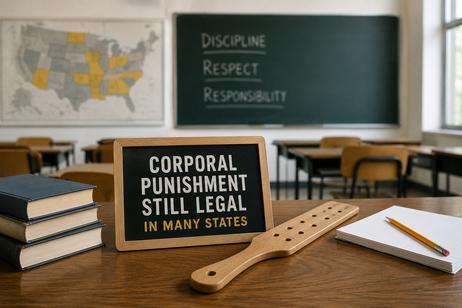
Corporal Punishment is Still Legal in Many States
Explore corporal punishment laws, boarding school discipline policies, and ways parents can advocate for safe, supportive learning environments.

This article has been updated to reflect 2026 data and recent developments.

Do you realize that there are still several states in which corporal punishment of students is still allowed? Merriam-Webster defines corporal punishment as "punishment that involves hitting someone: physical punishment." Yes, it is legal to discipline students by hitting them in states in the South, the Southwest, and the Midwest, including Alabama, Arizona, Arkansas, Florida, Georgia, Indiana, Kansas, Kentucky, Louisiana, Mississippi, Missouri, North Carolina, Oklahoma, South Carolina, Tennessee, Texas, and Wyoming. State and local restrictions apply. It is legal to paddle students with a wooden paddle; while it was much worse ten or twenty years ago, it is appalling that in the 21st century, the wealthiest nation in the world still has states that permit a child to be spanked by an adult in a classroom. Corporal punishment has no place in schools. The National Principals Association opposes it.

No boarding school anywhere in North America should permit hitting students. Period. Technically, New Jersey and Iowa are no longer the only states where corporal punishment is forbidden in nonpublic schools. The Maryland General Assembly expanded its prohibition in 2023. But our boarding schools should be enlightened exemplars of all that is good in education. Our boarding school Codes of Discipline and Conduct should not allow any form of physical abuse. For all kinds of good reasons. Most importantly, our boarding schools understand what is required to create a better

. . .read more

What Is Your Child Doing This Summer?

Updated
|
What Is Your Child Doing This Summer?
Explore the best summer options for students in 2026, including day camps, overnight camps, summer school, specialty programs, and educational travel.

When I was a youngster, sometime around Victoria Day weekend, my parents moved the family out to a cottage near the village of Chateauguay on the banks of Lac St. Louis. We were there until Labor Day. (In those days, school opened after Labor Day.) My brothers, sister, and I enjoyed swimming and sailing lessons, the occasional dance as we got older, and the usual organized summer activities. Dad worked in Montreal and came out to the cottage in the evenings. Mother stayed at home and supervised us.

When we were bringing up our daughters, it was a bit trickier. We both worked. We had to find things for them to do, both to keep them occupied and to keep them from getting into mischief. A trip, a keyboarding course, and even some tutoring helped make those long summer days in Connecticut move along at a good clip.

Nowadays, depending on where you live and the plans you have for your child's education, you have a variety of options to choose from. Let's look at some of them.

Day Camp

Basically, the idea behind a day camp is that you drop your children off in the morning and pick them up in the afternoon. The routine is similar to what you had when school was in session. The advantage to a day camp is that it is usually a local operation. If you are lucky enough to have an established day camp in your area and your children

. . .read more

Parents' Biggest Worries About Boarding School

Updated
|
Parents' Biggest Worries About Boarding School
Learn how boarding schools address safety, academics, college counseling, and student life concerns for families in 2026.

One of our parental prerogatives is to worry about our children. That's probably because your child never came with an instruction manual and, as a result, you have had to learn so many things about parenting simply by being a parent. No matter, worry is part of the parental landscape. Now, if you are thinking about sending your child off to boarding school, your worries will be quite specific. Probably along the lines of the following questions.

Many parents find the concept of sending a child to boarding school upsetting; a child's adolescence is such a distinctively affective period that entrusting it to others seems wrong. Yet boarding schools prosper, successors to institutions dating to medieval times.

In 2026, those worries are still understandable. Families are asking not only about academics and college placement, but also about safety, mental health, residential supervision, social adjustment, and cost. The good news is that today’s boarding schools are built around structure, accountability, and close adult guidance.

Will My Child Be Safe?

Boarding schools take your child's safety very seriously. Contractually, a boarding school functions in loco parentis, which is a legal way of stating that the school acts in the place of the parent when it comes to supervision of its students, your child included.

In many respects, your child is a whole lot safer at school, where she cannot drive or go to somebody's house and get into who-knows-what. Drugs, drinking, and smoking are not permitted in a boarding school.

. . .read more

Reflections on Sending Our Daughter to Boarding School

Updated
|
Reflections on Sending Our Daughter to Boarding School
A personal account of parents sending their daughter to boarding school in the 1980s, detailing their decision-making process, the challenges and benefits of boarding school education, and the positive outcomes observed in their child's personal and academic growth. The article offers encouragement and insights for parents considering boarding school for their children.

We took our eldest daughter off to boarding school in 10th grade. That was back in the 80s. While the times were certainly different from today, our motivation for making such a major decision would be the same in 2026 as it was back then. Let me tell the story that I hope will give you the courage to send your daughter (or son, for that matter) off to boarding school. It's well worth it.

Families today have access to far more information than we did decades ago, including virtual tours, online student panels, and detailed school profiles. Yet the fundamental reasons for choosing boarding school remain remarkably similar: academic opportunity, personal growth, independence, and preparation for college and life beyond high school.

Our Rationale

We were busy parents with careers and two children. The girls were five years apart. One was in junior high. The other was in elementary school. We lived in a little town in northwestern Connecticut. You had to drive ten miles to get to anything. Literally. While the regional high school was doing a good job, the number of academic courses and extracurricular opportunities it could provide for our daughter was limited. Not only that, she had to be driven everywhere to participate in sports or extracurricular activities.

With those factors looming large, we sat down one day with her and asked: "What do you think about going off to boarding school?" There was a rather enthusiastic acceptance of the idea. Probably because

. . .read more

Recent Articles

How Much Free Time Do Boarding Students Get?
How much free time do boarding students really have? Learn how to evaluate schedules, homework, weekend obligations, activity requirements, and everyday routines before choosing a school that fits your child.
Boarding School Support During a Family Crisis
Learn how boarding schools can support students during family illness, bereavement, divorce, or emergencies, and what parents should ask about communication, counseling, academic flexibility, travel, privacy, and ongoing care arrangements.
Boarding School for an Only Child: Social Adjustment
Considering boarding school for an only child? Learn which questions to ask about roommates, friendships, privacy, adult support, and family communication before choosing a school that fits your child’s needs.