
Narrowing Your List

You’ll find helpful tools and resources to aid in narrowing your list down to the best schools that meet your requirements. Determine the benefits of Quaker education, learn how girls benefit from single sex education and get 5 reasons to start your search early.

View the most popular articles in Narrowing Your List:

What is Progressive Education?

Updated
|
What is Progressive Education?
The promise of progressive education is as the students come to the solution, they’re active, they’re engaged, they’re motivated, and they’re learning. Most progressive schools encourage students to explore other areas of their development where young people find focus or uncover the contentment of stillness. It is about learning how to think, not what to think.

What is Progressive Education?

Picture your ideal classroom. What do you see? A line of desks, concentrated students diligently solving math problems? Or do you envision something different?

  • Perhaps you picture a classroom electric with energy.
  • Small groups of students stand on whiteboards around the classroom, debating, arguing, and trying to figure out the best approach to a difficult math problem.
  • A teacher circulates, asking questions and making observations.
  • And suddenly, there was a flash of celebration as the students arrived at the solution.
  • They’re active; they’re engaged; they’re motivated. And they’re learning.

This is the promise of progressive education.

What is Progressive Education?

Arising from the ideas of John Locke and Jean-Jacques Rousseau, the progressive educational movement focuses on the process of learning over the rote memorization of facts.

  • Beginning in the 19th century, progressive educators such as John Dewey, Rudolf Steiner, and Maria Montessori began to develop a philosophy of education that became progressive education as we know it today.
  • A true definition of progressive education is admittedly difficult to pin down – the field is broad and contains many schools of thought. However, several values are shared by the progressive education community.

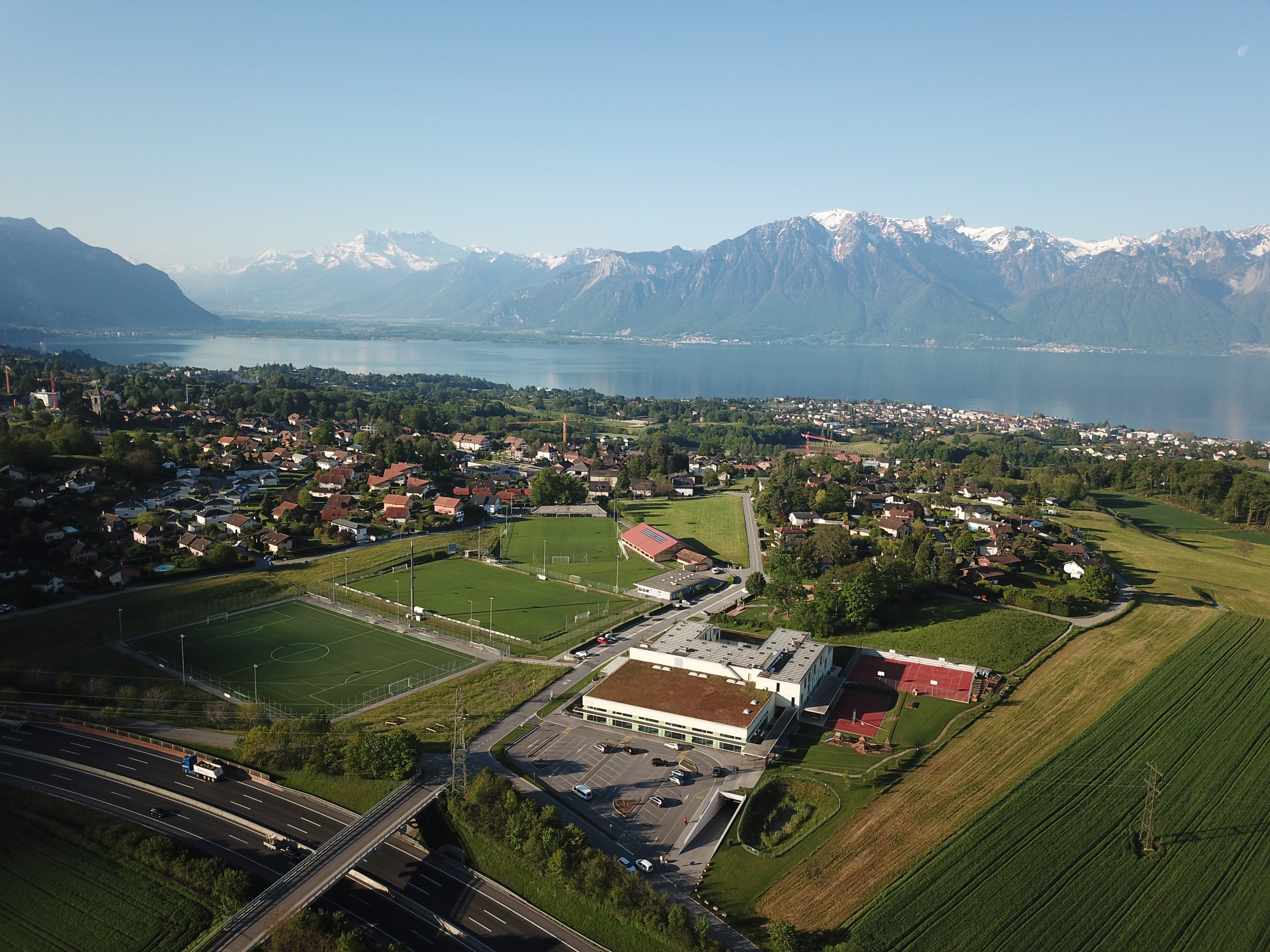
This video offers an overview of Ecole d’Humaité in Switzerland.

Attending to the Whole Child

Progressive educators are concerned with the holistic development of the child.

. . .read more

JROTC or Junior Reserve Officers Training Corps

Updated
|
JROTC or Junior Reserve Officers Training Corps
There are 17 military high schools in the United States. JROTC forms the backbone of the military training component at these schools. Here's what's involved.

The JROTC, or Junior Reserve Officers Training Corps, is an integral part of military high schools in the United States. While my daughters attended non-military boarding schools, my eldest daughter was enrolled in the ROTC program at MIT while she was at Harvard. I was very impressed at how the blend of military training and first-rate academics played out then and in her later life. Consequently, as I scanned the seventeen military schools' websites we have on Boarding School Review, I couldn't help but notice how seamlessly these schools weave the JROTC program into their school life. JROTC is not an add-on or an extracurricular activity. When you blend and integrate the JROTC program's proven training and goals with a military school's rigorous college-preparatory academic curriculum, you aim to produce graduates who understand service to their country, know how to lead and are confident in their personal path forward.

Here is a look at JROTC and what it entails.

What is JROTC?

Congress established the Junior Reserve Officers Training Corps (JROTC) in 1916. Each branch of the services has its own distinctive JROTC program. However, they all have the altruistic-sounding mission "To Motivate Young People to be Better Citizens."

The U.S. Army Junior Reserve Officers’ Training Corps (JROTC) is one of the world's largest character development and citizenship programs for youth. Source: JROTC

Some people think that JROTC is a recruiting program for the military. But it is

. . .read more

Are You Looking At The Wrong Schools?

Updated
|
Are You Looking At The Wrong Schools?
By "wrong schools", I mean schools that don't fit your needs and requirements. Finding the "right school' implies that the school meets 99% of what you require. More here.

Are You Looking At The Wrong Schools?

You've started the process of choosing a boarding school for your child.

  • You've done a bit of reading about the reasons for sending your child to a private school.
  • You've listened to the suggestions and recommendations of family and friends.
  • You've explored dozens of school websites.
  • None of this is challenging to do.
  • Chances are that you will find the right school for your needs and requirements.

Hopefully, you will. However, despite your reasonable efforts, here are five reasons you might be looking at the wrong schools.

1. They don't offer the kind of curriculum you require.

Think carefully about what the schools teach and how they teach it.

  • Think about this well before creating the shortlist of schools you want to visit.
  • The school's curriculum, how it's taught, and the quality of its faculty should be at the top of your checklist. That's how important an issue this is as you choose the right school for your child.

This part of the process is daunting because boarding schools are unique.

They won't all offer the same courses, and they will certainly not approach teaching them the same way. By now, you have a pretty good idea of your educational goals.

. . .read more

International Boarding Schools: Canada

Updated
|
International Boarding Schools: Canada
Spotlight on boarding schools in Canada.

The objective of this article is to give you a brief overview of boarding schools in Canada. Explore them. Contact them and ask questions. You will find all of the admissions staff at these schools most eager to assist you as you search for the right boarding school for your child. While Canada is a foreign country, most of these boarding schools are a short flight from most major American cities. Obviously, flight times from Asia or Europe are much longer. Canada enjoys a reputation as a progressive, welcoming nation. The educational standards are high in all of the schools listed below. The curricula vary from school to school, as is the case with all private schools. Research in depth what each school teaches as that can have a major impact on the college application process in the future.

Immigration matters

Lakefield College School spells out clearly what international students need to do in order to study in Cana. "When international students are planning to attend a school in Canada, there are Canadian governmental documents that must be completed during the application process. The student must apply for a Study Permit before enrolling in a Canadian school. International high school students studying in Canada are also required to have an adult legal guardian living in Canada. In addition, students will also need to arrange for health and dental coverage while attending a Canadian school." The immigration process takes a great deal of time. Do not leave this important

. . .read more

Why Choose a Boarding School in Florida?

Updated
|
Why Choose a Boarding School in Florida?
Explore 13 great reasons to benefit from choosing a boarding school in sunny Florida.

There are many benefits as to why students should attend boarding school, but what does Florida offer that other locations cannot? Well, if you’ve ever been to Florida you may be able to answer that question rather quickly. Here we list 13 reasons that may have you convinced to choose a boarding school in Florida.

In 2015, Florida became the first state ever to welcome more than 100 million out-of-state and international tourists. In addition, more people moved to Florida than California for the first time in nearly a decade. There’s a good reason, too. The weather. Year-Round outdoor activities. The cost of living. Job growth and opportunities. Sporting events. The cultural arts. Music festivals. The ever-improving infrastructure.

Not only is Florida a great state to visit and live, but it’s also an incredible place to learn. With 10 college-prep and boarding schools in Florida, the state offers a nice mix to choose from. But why is attending boarding school in Florida better than anywhere else? Here are just a few reasons:

The Weather

Sunny and Tropical

Nicknamed the “Sunshine State,” Florida boasts an average of 361 days of sunshine a year. Did you know that St. Petersburg holds a Guinness Book World Record with 768 consecutive sunny days? St. Petersburg is just one of many places in Florida where sunshine reigns supreme. giving students an opportunity to enjoy outdoor activities all year long.

No Snow

There are just 20 states that average less than 15 inches a

. . .read more

Recent Articles

What Boarding School Is Like in 2026: Life, Costs, Trends
Learn what boarding school life is like in 2026, including costs, routines, policies, trends, and planning tips for parents and students.
Famous Boarding School Alumni and What They Teach Parents (2026 Update)
Updated 2026 guide to notable boarding school alumni, trends in costs and enrollment, and what families should know when planning for boarding school.
How to Visit a Boarding School Campus: Parent Checklist
A step-by-step 2026 parent checklist for visiting a boarding school campus, from planning to post-visit evaluation.