School Life

For boarding school students, the campus is home. Explore dormitory living, get expert advice on learning and living away from home and learn more about what can be done to help your child transition to and succeed in boarding school.

View the most popular articles in School Life:

How Boarding Schools Prepare Students for Global Careers

Updated
|
How Boarding Schools Prepare Students for Global Careers
Discover how boarding schools today equip students with the academic skills, global mindset and career readiness necessary for international success.

In today’s interconnected world, preparing students for global careers goes beyond traditional academics. Boarding schools are uniquely positioned to equip young people with the mindset, the networks and the experiences that enable success on a global stage. This article explores how boarding schools build global-career readiness, with current-year examples and expert commentary.

The Global Career Imperative

The careers of the future increasingly demand cross-cultural competence, adaptability and lifelong learning. Students need more than subject knowledge; they need confidence in diverse settings, networks across borders and a readiness to navigate complex workplaces worldwide. Boarding schools are stepping up to this challenge.

What Makes Boarding Schools Different?

Boards of education, parents and students often identify several advantages in boarding-school settings:

  • Residential communities foster independence, self-management and maturity.
  • Small classes and 24/7 supervision provide tailored academic and personal support.
  • A diverse student body from multiple countries creates a living global ecosystem.

For instance, a recent review noted that 78% of boarding-school graduates felt well prepared for the non-academic aspects of university life — far more than students at public schools. Similarly, boarding schools are described as cultivating “well-rounded generations for global success” thanks to extracurricular breadth and international exposure.

Core Elements of Global-Career Preparation

Here are the key ways boarding schools prepare students for global careers:

  1. Academic Excellence & Rigour

    High academic standards remain foundational. Boarders benefit from:

    • Smaller class sizes and more individual attention. EF
    • Curriculum offerings that include global perspectives (International Baccalaureate, dual-language courses, cross-discipline electives).
    • Structured study environments where the transition
. . .read more

Corporal Punishment in U.S. Boarding Schools: 2025 Update

Updated
|
Corporal Punishment in U.S. Boarding Schools: 2025 Update
A current look at the use of corporal punishment in U.S. boarding schools, legal status, research findings and what parents should watch for in 2025.

Every parent, student and educator considering a boarding school needs to understand how discipline is applied and legally regulated. While much attention focuses on day schools, boarding schools must also navigate discipline practices—including the controversial use of physical punishment. This article explores the current status of corporal punishment in U.S. schools (including private and boarding settings), touches on boarding-school specific issues, updates the 2025 policy landscape, presents new research, and offers insights for families evaluating boarding school environments.

What we mean by “corporal punishment”

In the context of K-12 schools, corporal punishment is defined as any physical force exerted on a student by school personnel intended to correct behaviour—traditionally paddling, spanking, or striking with an object. Historically, this has been applied in both public and private schools in certain states. While most schools today rely on suspension, expulsion, restorative practices or behaviour contracts, corporal punishment remains legal in some jurisdictions.

For boarding schools—where students live on site and are under supervision 24/7—the discipline environment can differ from day schools and requires particular scrutiny. The boarding context raises questions about oversight, residential rules, staff training and the overall culture of discipline.

Legal and policy landscape in 2025

As of 2025, the legal status of corporal punishment varies significantly by state. According to the National Education Association (NEA), 17 states currently permit corporal punishment in public schools, and additional states have not explicitly banned it. A map by the Intercultural Development Research Association (IDRA) shows that many of

. . .read more

Boarding School Sports & Athletics — What Families Need to Know

Updated
|
Boarding School Sports & Athletics — What Families Need to Know
Discover how boarding school sports programs shape student-athletes: key benefits, trade-offs, choosing the right fit and questions for families.

Boarding School Sports and Athletics: What Families Need to Know

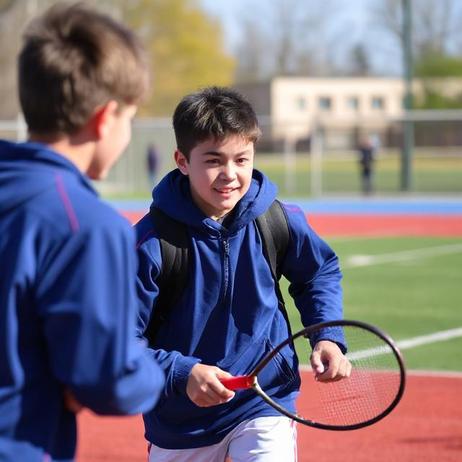
When families explore boarding school options, questions around academics tend to dominate. Yet for many students, the athletics or sports program is just as pivotal—especially at boarding schools where sport is often integrated into the daily rhythm of campus life. In this article, we will look carefully at boarding school sports and athletics: how they operate in 2025, what unique advantages and considerations exist, and how parents, students, and educators can evaluate programmes and make good decisions.

Why athletics matter at boarding schools

The boarding school environment offers a distinctive setting for student-athletes. Living on campus means proximity to coaches, teammates, and training venues — and often a blended rhythm of academics, practice, competition, and recovery.

Key benefits

  • Enhanced access and structure – On-campus residence gives students easier access to training facilities, scheduled practices, and team events. One review noted this advantage when comparing boarding versus day environments for student-athletes.

  • Holistic development – Participation in athletics supports not just physical fitness, but important life skills: time-management, teamwork, discipline, leadership. Research in Ontario found student-athletes scored higher on key developmental assets and reported greater engagement at school.

  • Academic correlation – A 2024 study from the University of Sydney found that continual sports participation during school years correlated with higher academic performance, better attendance, and increased likelihood of university enrolment. The University of Sydney

  • Team culture and camaraderie – Boarding school teams often serve as

. . .read more

Recent Articles

What Strong Student-Safeguarding Policies Look Like
Learn what strong student-safeguarding policies should include, how boarding schools put protections into daily practice, and which questions families should ask about reporting, boundaries, training, supervision, and accountability.
Reading a Boarding School’s Disciplinary Record
Learn how to evaluate a boarding school’s disciplinary record, distinguish serious incidents from routine enforcement, identify missing context, compare policies fairly, and ask schools better questions before enrolling.
The Questions Schools Should Answer About Adult Dorm Access
Parents evaluating boarding schools should ask who may enter student dormitories, when access is permitted, how adults are supervised, and what safeguards protect privacy, boundaries, reporting, and accountability.