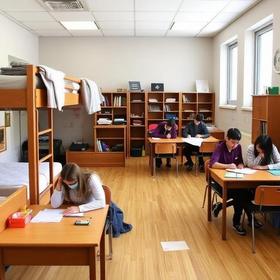

The first boarding school visit is usually about discovery. Families tour classrooms, see dormitories, meet admissions staff, and begin imagining what life at the school might look like. A second boarding school visit has a different purpose. This time, you are not deciding whether you like the school. You are determining whether you are ready to choose it.
For admitted students, this return trip may take the form of a formal revisit day, an accepted-student program, or an individually arranged campus visit. Boarding School Review's 2026-2027 admissions timeline notes that many schools hold revisit programs after admission decisions and before enrollment deadlines.
Use that opportunity differently from your first visit. Spend less time admiring facilities and more time investigating what an ordinary week would actually feel like.
Why Your Second Boarding School Visit Should Feel Different
On a first tour, nearly everything is new. That makes it easy to focus on impressive buildings, enthusiastic tour guides, signature programs, and the excitement of the admissions process.
By the second visit, you know the basics. You should arrive with unresolved questions.
Start by reviewing your notes from the first visit. Identify the three or four issues that could genuinely change your decision. One family might need to understand advanced math placement. Another may be concerned about weekend life, learning support, travel logistics, or financial aid.
The goal is not to collect more information simply because it is available. It is to test the assumptions on which your decision will depend.
Check the Ordinary Academic Experience
During a second boarding school visit, look beyond the school's most distinctive courses and academic facilities.
Ask what a typical student at your child's grade level actually experiences. How many classes will the student take? How much homework is normal? How difficult is it to move into or out of an advanced course? What happens when a student falls behind?
If possible, sit in on a regular class. Pay attention to who participates and how teachers respond when students are confused or disagree. A small class is useful only if the environment encourages students to participate and ask for help.
For students who need accommodations, organizational coaching, tutoring, or other academic assistance, verify exactly what the school can provide. Boarding School Review's guide to verifying learning-support services before enrollment explains why families should clarify staffing, frequency, costs, and limits rather than relying on broad promises of individualized support.
Look at the Dorm as a Home, Not a Facility
On the first visit, you probably saw a dorm room. On the second, investigate residential life.
Who is present in the dorm at night? How well do dorm adults know students? What happens when roommates have problems? How are homesickness and social isolation noticed? What are the rules governing phones, visitors, study hours, lights-out, and leaving campus?
Then watch students.
Do common rooms appear genuinely used? Do younger and older students interact naturally? Do students greet dorm faculty comfortably? Can your child imagine spending a quiet Sunday afternoon there, not merely attending an exciting accepted-student event?
For a deeper framework, see Boarding School Review's guide to evaluating a dorm's social climate.
This deserves particular attention because belonging is more than a pleasant extra. A February 2026 research advisory from the National Association of Independent Schools describes student belonging as being associated with engagement, safety, and persistence through academic and personal challenges.
Ask Current Students Better Questions
Current students can be one of your best sources of information, particularly when you move beyond questions that invite predictable answers.
Instead of asking, "Do you like it here?" try asking:
- What was hardest about your first semester?
- When you have a bad day, whom do you talk to?
- What do students complain about?
- What surprised you after you enrolled?
- What would you change about the school if you could?
Do not expect uniformly positive responses. In fact, thoughtful criticism can be reassuring because no school is perfect.
Listen for consistency instead. If several students independently describe accessible teachers, active weekends, or intense workloads, you are learning something about the school's actual culture.
The Centers for Disease Control and Prevention defines school connectedness as students feeling that adults and peers care about them and their learning. Its November 2024 guidance links stronger school connectedness with academic and health benefits, making student relationships an important part of assessing school fit.
Examine Evenings and Weekends
Boarding school is a 24-hour environment. A school that looks excellent at 10 a.m. on Tuesday still needs to work for your child at 8 p.m. on Saturday.
Ask how many students remain on campus during a typical weekend. Find out whether activities are optional or required, how transportation works, and whether day and boarding students mix socially after classes.
Consider your child's temperament. A highly social student may enjoy a campus with extensive organized programming. Another may need sufficient unstructured time and quiet space.
Also investigate evening routines. When is study hall? How much freedom do older students receive? Where can students seek academic help at night? Understanding these ordinary details is often more valuable than seeing another showcase facility.
Verify Health, Wellness, and Safety Procedures
A second boarding school visit is an appropriate time for practical questions that may have seemed premature during the initial tour.
Find out when the health center is staffed, how counseling appointments work, who responds to an overnight illness, and how parents are notified about significant health concerns.
Ask about emergency procedures as well. The U.S. Department of Education emphasizes comprehensive emergency operations plans, regular review, staff preparation, exercises, and planning for recovery.
Parents do not need to interrogate schools about every possible scenario. They should, however, leave knowing who is responsible when something goes wrong and how communication with families works.
Recheck the Financial Commitment
An acceptance letter can shift attention away from finances toward celebration. Before signing an enrollment contract, return to the numbers.
Compare the aid award with the complete expected cost of attendance. Ask about technology charges, uniforms or dress requirements, books, athletics, trips, transportation, spending accounts, health-related expenses, and other recurring charges.
If financial aid is essential, clarify whether families must reapply annually and what circumstances could affect future awards. Boarding School Review's 2026 financial aid guide provides additional context for evaluating need-based aid and affordability.
Recent sector research from the National Association of Independent Schools also tracks tuition, financial aid, enrollment, and other financial indicators across participating independent schools, reinforcing why cost belongs in the final comparison rather than being treated as an afterthought.
Let Your Child Experience the School Without You
Parents and students often notice different things.
Whenever the school permits it, allow your child to attend classes, eat with students, participate in an activity, or spend time with prospective classmates without a parent alongside them.
Afterward, resist immediately asking, "Did you love it?"
Try questions such as, "Where did you feel most comfortable?" "Was there anywhere you felt out of place?" and "Could you see yourself asking these people for help?"
Then compare impressions later. A parent's confidence in the academic program cannot substitute for a student's discomfort with the community. Likewise, a student's excitement about new friends should not prevent parents from resolving serious questions about finances, academics, or support.
Make a Final Comparison After You Leave
Do not make your decision in the admissions office parking lot.
Once you are home, give each family member time to reflect independently. Then compare the finalists using the same criteria rather than allowing the most recent visit to dominate the discussion.
Consider academics, residential life, student culture, support, activities, location, travel, affordability, and the student's overall sense of belonging. Boarding School Review's guide to choosing the right boarding school location can help families account for airport access, travel demands, climate, and surrounding communities when two schools otherwise appear closely matched.
A simple question can also be revealing: If the schools had the same reputation and cost the same amount, which one would your child choose?
The answer can expose how much prestige, price, or outside opinion is influencing the decision.
The Second Boarding School Visit Is About Reality
The strongest second boarding school visit is not necessarily the one that produces the most excitement. It is the one that replaces assumptions with evidence.
Look closely at ordinary classes, dorm relationships, evening routines, adult support, health procedures, costs, and the way students interact when they are not performing for visitors. Ask questions that uncover imperfections as well as strengths.
By the time you leave, your family should be able to imagine more than move-in day. You should be able to picture a rainy Monday in November, a difficult exam week, a roommate disagreement, a Saturday with no major event, and the people your child would turn to when help is needed.
That is the real purpose of your second boarding school visit. Before making a final decision, determine not simply which school impresses your family most, but which community your child can realistically call home.