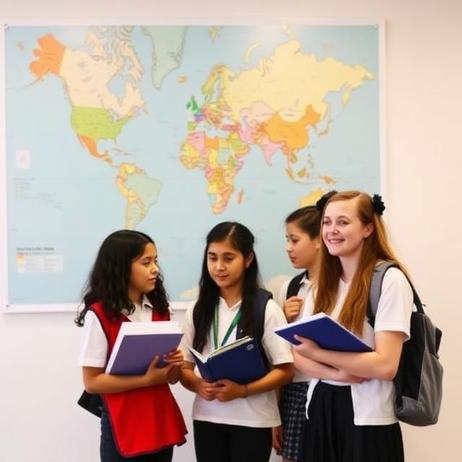
For Students

Here you’ll gain knowledge about student life at boarding school. User our glossary of terms to learn boarding school jargon, discover the importance of a partnership between school, parent and child, and find great gift ideas for the boarding school graduate.

View the most popular articles in For Students:

International Students Guide to Boarding School Culture Shock

Updated
|
International Students Guide to Boarding School Culture Shock
A 2026 guide helping international students adjust to boarding school culture shock with practical strategies and expert-backed insights.

For international students, enrolling in a boarding school is both an exciting opportunity and a significant transition. Alongside academic challenges, many students face an often-overlooked hurdle: boarding school culture shock.

This International Students Guide: Adjusting to Boarding School Culture Shock offers practical strategies, expert insights, and updated 2026 perspectives to help students and families navigate this transition with confidence.

Understanding Boarding School Culture Shock

Culture shock refers to the emotional and psychological adjustment required when entering a new cultural environment. In boarding schools, this extends beyond national culture to include institutional traditions, social norms, and daily routines.

International students often encounter several layers of adjustment:

  • Academic expectations that differ from home systems
  • Social norms around communication and independence
  • Residential life routines, including shared living spaces
  • Language barriers, even for fluent English speakers

According to the Institute of International Education, international student mobility continues to grow globally, with younger students increasingly choosing boarding schools. As a result, schools have expanded support systems, but adjustment still requires time and active effort.

Common Challenges International Students Face

1. Academic Adjustment

Boarding schools, particularly in the United States and the United Kingdom, emphasize critical thinking, discussion-based classes, and independent learning.

Students may need to adapt to:

  • Participation-heavy classrooms
  • Essay-based assessments instead of exams
  • Continuous evaluation rather than final tests

The National Center for Education Statistics highlights that U.S. private schools often prioritize student engagement and project-based learning, which may differ from more exam-focused systems abroad.

2. Language Nuances

Even students with strong English
. . .read more

Balancing Boarding Life and Independence: Student Transition Guide

Updated
Balancing Boarding Life and Independence: Student Transition Guide
A clear, practical guide to balancing boarding life and independence, offering transition tips for students and families in 2025.

Balancing Boarding Life and Independence: Transition Tips for Students

Balancing boarding life and independence is one of the most meaningful developmental steps a young person can take. The transition introduces students to a structured residential community that encourages responsibility, self-management, and personal growth. At the same time, it requires learning new routines, navigating social and academic expectations, and developing confidence away from home.

This guide examines how students can approach balancing boarding life and independence with clarity and resilience. It incorporates updates relevant to 2025, insights from educators, and strategies that help families prepare for the move.

Throughout this article, the phrase boarding life and independence is used regularly to reflect a central theme for students entering residential school environments.

Understanding the Transition to Boarding Environments

Moving into a residential community represents a significant shift from day-to-day home routines. Students stepping into boarding life and independence often encounter new expectations around time management, study habits, and social interactions. The transition can be exciting, but it may also bring uncertainty.

Boarding schools emphasize community responsibility, academic rigor, and personal accountability. Parents and students can explore the structure of boarding programs in more detail through resources offered on BoardingSchoolReview, which outlines what students can expect in their first year.

Key elements of the transition include:

  • Learning to manage schedules without parental reminders
  • Navigating shared living spaces
  • Establishing healthy sleep and meal routines
  • Building supportive friendships
  • Advocating for academic and personal needs

These factors shape how students experience boarding life and independence, especially

. . .read more

A Day in the Life of a Boarding School Student

Updated
|
A Day in the Life of a Boarding School Student
Explore a realistic boarding school day in 2025—from morning wake-up to lights-out—offering expert insights for students and parents.

Boarding School Life: A Day in the Life of a Student

Introduction

For many families considering residential education, understanding what a typical day looks like at a boarding school is a key decision factor. In 2025, boarding school life continues to offer a structured environment where academics, co-curriculars, social development, and residential routines blend in daily rhythm. This article walks through a representative “day in the life” of a boarding student, highlights current trends, offers expert commentary, and provides practical insights for parents, students, and educators.

Morning: Wake-up and Academics

A boarding school student typically begins the day early. At many schools, the routine starts around 7:00 a.m., when boarders rise, prepare for the day, and head to breakfast. For instance, one source notes breakfast in a communal dining hall followed by classes beginning around 8:30 a.m. or 9:00 a.m. in boarding-school settings. BoardingSchools.com

Typical morning schedule

TimeActivity
7:00–7:30Wake up, morning hygiene, dorm check-in
7:30–8:15Breakfast with peers and faculty
8:15–9:00Preparatory time, review assignments
9:00–12:00Core academic classes

During morning classes, boarding students are immersed in a college-preparatory curriculum—courses such as Algebra II, English literature, global studies, or world languages. One school profile describes a morning class then a study hall right away, allowing students to ask questions and stay ahead. Salem Academy

Midday: Lunch, Free Block, Activities

By midday, the schedule transitions to lunch and a mix of academic support or co-curriculars. Lunch has both a nutritional role and a social one—boarders have structured

. . .read more

Famous Boarding School Graduates 2025

Updated
|
Famous Boarding School Graduates 2025
Discover the most influential boarding school graduates of 2025, from world leaders to innovators, and learn how boarding schools shape success.

Famous Boarding School Graduates (Updated October 2025)

Graduates of boarding schools have long gone on to shape culture, politics, science, and business on a global scale. Many continue to give back to the schools that nurtured their early ambitions—whether through service on boards of trustees, philanthropic support, or mentorship of current students.

The point of this article is simple: the dream of becoming something extraordinary often begins with the right foundation. Boarding schools equip students with independence, discipline, and confidence—qualities that help them realize their ambitions, whether on the stage, in the boardroom, or in public service.

While some boarding school graduates come from families of privilege, many started with modest means. What unites them is not wealth, but families who believe in the transformative power of a rigorous, well-rounded education.

Notable Boarding School Alumni Across Fields

Below is a cross-section of well-known figures who once walked boarding school hallways before becoming household names:

  • Dan Brown – Bestselling author, Phillips Exeter Academy (Exeter, NH)
  • Chelsea Clinton – The Clinton Foundation, Sidwell Friends School (Washington, D.C.)
  • George W. Bush – 43rd U.S. President, Phillips Academy Andover (Andover, MA)
  • Glenn Close – Academy Award-winning actress, Choate Rosemary Hall (Wallingford, CT)
  • Mark Zuckerberg – Founder of Meta, Phillips Exeter Academy (Exeter, NH)
  • Jacqueline Kennedy Onassis – Former First Lady, Miss Porter’s School (Farmington, CT)
  • Michael Douglas – Academy Award-winning actor, Choate Rosemary Hall (Wallingford, CT)
  • Owen Wilson – Actor and screenwriter, St. Mark’s School of Texas (Dallas, TX)
  • Tucker Carlson – Media commentator, St. George’s School (Newport, RI)
  • Uma Thurman
. . .read more

Mental Health & Wellness at Boarding Schools

Updated
|
Mental Health & Wellness at Boarding Schools
Explore how boarding schools support student mental health—practical resources for parents, current best practices, and guidelines for 2025.

Introduction

Boarding schools present a distinctive environment: students live, study, and socialize in a residential community away from home. This immersive setting offers opportunities for growth, independence, and deep peer connection—but it also places heavy responsibility on schools to nurture students’ emotional and psychological well-being. In 2025, as awareness of youth mental health rises globally, parents increasingly expect boarding schools to offer robust mental health resources, not only in crisis but as an ongoing wellness commitment.

This article guides parents through understanding mental health dynamics in boarding settings, assesses exemplary resources and strategies, and offers practical questions to ask schools as you evaluate options.

The Mental Health Landscape in Boarding Schools

Why boarding life can pose unique stressors

While many students thrive in residential communities, certain factors make boarding life especially fertile ground for mental health challenges:

  • Separation from family support systems. Being physically distant from parents and siblings can heighten feelings of homesickness, isolation, or emotional stress, especially in the early months.

  • Constant social exposure. Students live in proximity to peers, which can amplify interpersonal conflict, social pressure, or difficulties “switching off” from peer dynamics.

  • Academic and co-curricular intensity. Boarding schools often combine rigorous academics with many extracurricular demands; the risk of burnout increases when rest and emotional support are not built in.

  • Sleep, nutrition, and schedule constraints. Communal living means less control over personal routines, while institutional schedules may not sufficiently account for downtime and restorative practices.

These stressors don’t guarantee problems—but they do raise the bar for

. . .read more

Recent Articles

Boarding School Size vs. Class Size: What Matters More?
Does boarding school size matter more than class size? Explore how enrollment affects friendships, dorm life, activities, academic support, and student belonging before choosing the right boarding school environment.
Teacher Office Hours and Academic Help at Boarding Schools
Explore how boarding school students access teachers, office hours, evening tutoring, and academic support. Learn what parents should ask about availability, supervision, scheduling conflicts, and help when students struggle academically.
Boarding School Academic Schedule Flexibility
Discover how boarding schools handle full classes, scheduling conflicts, waitlists, and alternative courses. Learn what parents should ask to protect academic progress, graduation requirements, and college preparation before enrolling their child.