
For Students

Here you’ll gain knowledge about student life at boarding school. User our glossary of terms to learn boarding school jargon, discover the importance of a partnership between school, parent and child, and find great gift ideas for the boarding school graduate.

View the most popular articles in For Students:

Independent Study and Research Opportunities at Boarding Schools

Updated
|
Independent Study and Research Opportunities at Boarding Schools
Explore independent study and research opportunities at boarding schools, including mentorship, capstone projects, and college preparation benefits.

Independent study and research opportunities at boarding schools give motivated students a chance to move beyond standard coursework and pursue serious academic questions with faculty guidance. For students who are curious, self-directed, and ready for deeper learning, these programs can become one of the most valuable parts of the boarding school experience.

Because boarding schools combine academic life, residential life, and close faculty mentorship, they are often well positioned to support long-term research projects. Students may investigate a scientific problem, write a literary analysis, design an engineering prototype, study public policy, or complete a senior capstone project that reflects college-level expectations.

For families comparing schools, these opportunities can reveal a great deal about academic culture. A strong independent study program suggests that a school values curiosity, initiative, and disciplined inquiry.

Why Independent Study Matters at Boarding Schools

Personalized Academic Exploration

Traditional courses provide structure and essential knowledge. Independent study allows students to go further. A student interested in marine biology, constitutional law, artificial intelligence, architecture, or creative writing may not always find a standard course that fully matches that interest.

Through independent study, students can work with a faculty advisor to design a focused academic plan. This usually includes readings, research goals, regular meetings, written work, and a final product.

Families new to residential education may find useful context in Why Consider Boarding School?, which explains how boarding schools support academic and personal growth within a structured community.

Faculty Mentorship

One of the strongest advantages of boarding

. . .read more

Do Boarding School Students Study More? Daily Schedule Breakdown

Updated
|
Do Boarding School Students Study More? Daily Schedule Breakdown
Discover how much boarding school students really study with a realistic daily schedule breakdown and comparison to traditional day schools.

For many families considering boarding school, one question comes up repeatedly: Do boarding school students actually study more than their peers at traditional day schools?

The short answer is often yes, but not necessarily because students spend every waking hour doing homework. The difference lies in how boarding schools structure the day. Academic work is intentionally built into daily routines, creating an environment where studying becomes a regular and expected part of student life.

Unlike many day schools, where students return home to varying levels of supervision and distractions, boarding schools integrate study time, faculty access, extracurricular activities, and residential life into a carefully designed schedule. As a result, students often spend more consistent time focused on academics while also participating in sports, arts, leadership activities, and community life.

Families beginning their research may find it helpful to first read Boarding School Myths, which addresses many of the misconceptions families have about residential education.

Why Boarding School Schedules Are Different

One of the defining characteristics of boarding schools is structure. The school day does not end when classes finish. Students remain in an educational environment where learning, mentoring, and supervised study continue into the evening.

Boarding schools intentionally balance academics, athletics, social development, and personal wellness throughout the day. This structure helps students develop stronger time-management skills, academic accountability, and personal responsibility.

This does not mean students are constantly studying. Rather, boarding schools reduce many of the distractions and logistical challenges that can interfere with academic focus

. . .read more

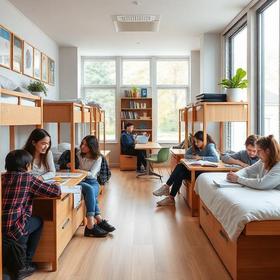
Dorm Life at Boarding Schools: What Students Can Expect

Updated
|
Dorm Life at Boarding Schools: What Students Can Expect
Explore dorm life at boarding schools in 2026, including roommates, routines, supervision, wellness support, and residential life trends.

For many families considering a boarding school, dorm life is one of the biggest unknowns. Academics often drive the school search, but the residential experience shapes a student's daily life just as much. Dormitories are where students build friendships, learn independence, manage responsibilities, and develop the social skills that prepare them for college and adulthood.

In 2026, dorm life at boarding schools looks different from the stereotypes many parents remember. Modern residential programs place greater emphasis on student wellness, mentorship, safety, community building, and healthy independence. Faculty members often live alongside students, counseling services are more accessible, and residential programs are increasingly designed around whole-student development.

Understanding what daily dorm life actually looks like can help families determine whether boarding school is the right fit.

What Is Dorm Life Like at a Boarding School?

Dormitories serve as much more than student housing. They function as residential learning communities where students live, study, socialize, and grow together.

Most boarding schools organize students into residence halls, houses, or smaller residential communities supervised by faculty members known as dorm parents, houseparents, or residential advisors. These adults help maintain structure while providing guidance and support outside the classroom.

As discussed in Boarding School Review's guide to Boarding School Residential Life Models Explained, schools vary significantly in how they structure residential life, from traditional dormitories to family-style house systems.

Typical Dorm Features

Most boarding school dorms include:

  • Shared student rooms or doubles
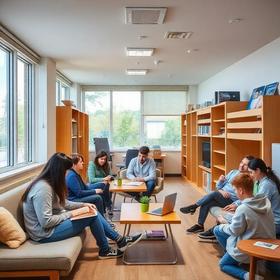
  • Common lounges and study spaces
  • Laundry facilities
  • Faculty apartments within the dorm
  • Kitchens or
. . .read more

Roommate Matching at Boarding Schools

Updated
|
Roommate Matching at Boarding Schools
How roommate matching at boarding schools works, what students can expect, and how families can prepare for dorm life.

Roommate matching at boarding schools is one of the first steps in helping students adjust to residential life. For many families, the roommate assignment feels almost as important as the academic program itself. A positive roommate experience can help students feel more comfortable, supported, and connected during the transition to boarding school.

Most schools approach roommate assignments carefully, but the goal is not necessarily to create instant best friends. Instead, schools aim to create living situations where students can study, sleep, communicate, and coexist successfully within a residential community.

How Boarding Schools Match Roommates

Most boarding schools begin the roommate assignment process after enrollment is complete, usually during late spring or summer. Students are often asked to complete a housing questionnaire covering topics such as:

  • Sleep schedules
  • Study habits
  • Cleanliness preferences
  • Social personality
  • Extracurricular interests
  • Noise tolerance
  • Previous dorm or camp experience

Residential life staff then review the information and attempt to create balanced pairings. Some schools also consider grade level, international status, language background, or whether a student is new or returning.

At Phillips Exeter Academy, dorm life is structured around close residential communities supported by faculty advisers and dorm staff. Phillips Academy Andover uses a residential cluster model that connects students with advisers, house counselors, and peer leaders. Deerfield Academy emphasizes shared living experiences as part of student growth and independence.

These residential systems are designed to help students adapt both socially and academically.

What Schools Usually Look For

Boarding schools generally focus on compatibility instead

. . .read more

Unwritten Rules of Boarding School Life

Updated
|
Unwritten Rules of Boarding School Life
Discover the unwritten social rules that boarding school students learn outside the classroom, from dorm etiquette to community expectations.

Every boarding school has a student handbook filled with official policies, dorm regulations, academic expectations, and schedules. Yet ask almost any boarding school graduate what they remember most, and many will point to something else entirely: The unwritten rules.

These are the social expectations, routines, habits, and cultural norms students absorb simply by living in a residential community. They are rarely taught directly, but they shape daily life as much as academics do.

Students quickly learn that boarding school is not only about classes and grades. It is also about learning how to live with others, manage independence, communicate respectfully, and contribute to a shared community.

For families considering residential education, understanding these informal lessons can provide a more realistic picture of what boarding school life actually looks like beyond admissions brochures and campus tours.

Boarding School Is a Community First

Unlike traditional day schools, boarding schools function as full communities. Students eat together, study together, compete together, and live together. That constant interaction creates its own culture and expectations.

As discussed in Boarding School Review’s article on why students choose boarding school, many graduates describe the residential experience itself as one of the most transformative aspects of their education. The life lessons learned outside the classroom often become just as important as academic instruction.

Within the first few weeks, students begin learning that personal choices affect other people in immediate ways. A messy dorm room affects roommates. Being late impacts teammates or classmates. Noise during study

. . .read more

Recent Articles

Boarding School Size vs. Class Size: What Matters More?
Does boarding school size matter more than class size? Explore how enrollment affects friendships, dorm life, activities, academic support, and student belonging before choosing the right boarding school environment.
Teacher Office Hours and Academic Help at Boarding Schools
Explore how boarding school students access teachers, office hours, evening tutoring, and academic support. Learn what parents should ask about availability, supervision, scheduling conflicts, and help when students struggle academically.
Boarding School Academic Schedule Flexibility
Discover how boarding schools handle full classes, scheduling conflicts, waitlists, and alternative courses. Learn what parents should ask to protect academic progress, graduation requirements, and college preparation before enrolling their child.