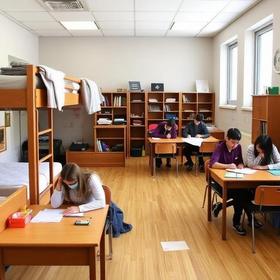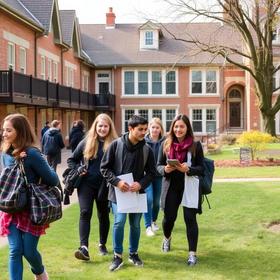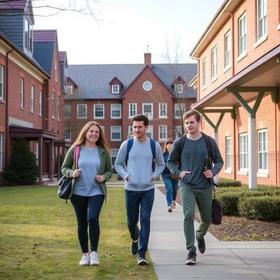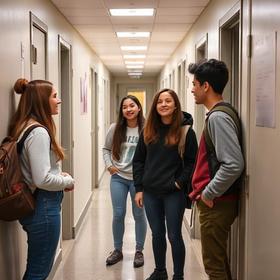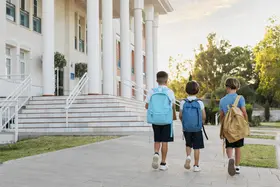

A dormitory can look impressive on a campus tour and still tell you very little about what it feels like to live there.
For families choosing a boarding school, evaluating a dorm’s social climate before enrolling deserves the same attention as academics, athletics, college counseling, and facilities. Students do not simply sleep in dormitories. They spend evenings there, navigate roommate relationships, study with peers, relax after demanding days, and learn how to live within a community.
That makes residential culture an important part of school fit. A healthy dorm should offer more than rules and supervision. Students should have opportunities to form friendships, seek help, resolve disagreements, and participate in a community without feeling that they must conform to a narrow social type.
Recent research reinforces the importance of belonging. The National Association of Independent Schools reported in 2026 that students who feel connected to their school are more likely to engage in learning, feel safe, and persist through challenges.
Here is how families can look beyond the dorm tour and assess the social environment their child would actually experience.
Why a Dorm’s Social Climate Matters
Residential life intensifies the ordinary social experiences of adolescence. A disagreement with a classmate does not necessarily end when the school day finishes because that classmate may also live down the hall. At the same time, boarding offers unusual opportunities for close friendships, mentorship, independence, and community.
The Centers for Disease Control and Prevention defines school connectedness in terms of students feeling that adults and peers care about them and their learning. Its research summary links stronger connectedness with better attendance and academic outcomes, as well as lower risks for several negative health and behavioral outcomes.
For boarding students, much of that connectedness develops after class.
Families unfamiliar with residential education can begin by reviewing what students can expect from dorm life at boarding schools. The routines, roommate arrangements, supervision, and community expectations surrounding dorm life provide useful context for evaluating an individual school.
Evaluate a Dorm’s Social Climate by Watching Students
Admissions officers can explain a residential program. Students show you how it works.
During a campus visit, pay attention to informal interactions. Notice what happens when students pass one another in hallways or enter a common room. Do they acknowledge each other? Are different groups mixing? Are younger students comfortable around older students?
Do not expect constant laughter or energetic conversation. A quiet dorm is not necessarily an unhappy one, particularly during study periods. What matters is whether interactions appear comfortable and natural rather than tense or highly segmented.
Common rooms can be especially revealing. Look at who uses them and how. A healthy shared space might contain several kinds of interaction at once, such as students talking, studying, playing a game, or simply sitting together.
Families can prepare for these observations with Boarding School Review's 2026 guide to questions to ask during a boarding school visit. It specifically encourages families to examine residential life, student culture, supervision, weekends, and conflict resolution rather than concentrating exclusively on academics.
Ask Students Questions That Require Real Answers
Questions such as "Do you like your dorm?" tend to produce predictable answers.
Instead, ask questions that require students to describe what happens.
Try:
- What happens when someone is new and does not know many people?
- Where do students usually spend time after study hall?
- What happens when roommates do not get along?
- Who would you talk to if something happened in the dorm?
- What is one thing you would change about residential life?
Listen for specificity. "Everyone is really close" tells you less than a student explaining how prefects invite new students to dinner or how dorm parents check in with residents who seem withdrawn.
Also notice whether several students give broadly compatible accounts. Their opinions need not be identical, but major inconsistencies may identify an issue worth exploring further.
Look at Who Holds Social Power
Every adolescent community develops informal social structures. The relevant question is not whether a boarding school has popular students or friendship groups. It almost certainly does. The more useful question is whether students can move among groups and find a place without having to possess a particular status, talent, background, or personality.
Ask which students tend to become dorm leaders. Are leadership opportunities concentrated among prominent athletes or established social groups, or do students with different interests and personalities participate?
The CDC's guidance on peer connection and support notes that students who feel supported and respected by peers demonstrate greater school engagement and connectedness. Although its recommendations focus substantially on classroom practice, the principle is useful when examining residential communities as well.
Families should therefore consider whether the dorm seems to provide multiple routes into the community. Athletics may be one route, but music, theater, clubs, student government, service, cultural organizations, and informal dorm activities can create others.
Examine the Role of Dorm Parents
A positive peer culture needs effective adults.
Dorm parents, houseparents, residential faculty, or house advisers help establish expectations for how students treat one another. Their role becomes particularly important when students experience homesickness, exclusion, roommate problems, academic stress, or interpersonal conflict.
Ask who lives in the dorm, how frequently adults are present, and how well they know individual students. Boarding School Review's look at the daily responsibilities of dorm parents illustrates how residential faculty can function simultaneously as supervisors, mentors, educators, and problem-solvers.
Then move beyond staffing numbers.
Ask a residential faculty member, "How would you know if a student was becoming socially isolated?"
The response can be illuminating. Strong programs should be able to explain how adults notice changes in behavior, communicate concerns, and connect students with appropriate support.
Find Out How Conflict Actually Gets Resolved
A dorm without conflict does not exist.
Roommates will disagree about noise, sleep schedules, cleanliness, visitors, belongings, and personal boundaries. Friends will argue. Social groups will change. A school's ability to manage these ordinary difficulties tells families more than assurances that the community is "like a family."
Ask for the process.
Who handles an initial roommate disagreement? When does a dorm parent become involved? Are prefects or student leaders expected to mediate? When is counseling staff involved? Under what circumstances can a room assignment change?
Families should also distinguish between ordinary interpersonal friction and bullying, harassment, or serious misconduct. Ask how students report concerns privately and what protections exist against retaliation.
A thoughtful answer should demonstrate that the school recognizes different levels of conflict and responds proportionately.
Ask How the Dorm Includes Students Who Are Different
A socially healthy dorm should not require every student to be highly extroverted.
Ask how residential programming works for quieter students, international students, students entering in later grades, and students whose interests fall outside dominant campus activities.
Recent NAIS research based on student responses from dozens of independent middle and upper schools has examined well-being, engagement, and belonging as related but distinct aspects of the student experience. The National Association of Independent Schools report also examines variations in students' experiences across demographic groups, underscoring why families should ask who feels included, not simply whether a school describes itself as welcoming.
Consider the physical environment, too. Does the dorm have spaces where students can socialize in small groups rather than only large common areas? Can a student take quiet time without effectively disappearing from community life?
Healthy residential culture leaves room for different ways of belonging.
Pay Attention to Evenings and Weekends
A Tuesday morning tour provides only a narrow view of residential life.
Ask students what Friday night actually looks like. Find out how many students remain on campus during weekends, which activities attract participation, and whether transportation is available for off-campus opportunities.
Structured programming matters, but so does unstructured time. Students need opportunities to decide whom to spend time with and what to do.
Boarding School Review's overview of life at boarding school can help families understand how academics, activities, meals, downtime, and residential routines combine to create the broader student experience.
When evaluating a school, compare that general picture with what current students describe.
Watch for Green Flags and Warning Signs
No single observation should determine a family's decision. Look for patterns.
| Encouraging signs | Questions worth investigating |
|---|---|
| Students comfortably interact across groups | Social groups appear unusually rigid |
| Dorm adults know students by name | Students struggle to identify an adult they trust |
| New students receive intentional support | Students are expected to "figure it out" socially |
| Conflict procedures are clearly explained | Answers about roommate problems are vague |
| Common spaces are genuinely used | Shared spaces look staged or consistently empty |
| Students can describe dorm traditions positively | Participation appears driven primarily by pressure |
| Different personalities have ways to participate | One social type seems to dominate residential life |
Remember that an admissions visit is a snapshot. One quiet common room or awkward student conversation proves very little. Several consistent observations are much more meaningful.
Consider Your Child, Not an Imaginary "Typical" Student
A dorm can have an excellent social climate and still be the wrong environment for a particular student.
A highly independent teenager may enjoy a residential program with substantial freedom. Another student may benefit from more structured evening routines and frequent adult check-ins. A student energized by large-group traditions may love a highly communal house system, while someone who needs regular solitude may prefer a dorm that balances community activities with privacy.
This is why social fit is different from simply asking whether a school has a "good" culture.
Before enrolling, parents and students should separately identify what conditions help the student feel comfortable. Compare those answers afterward. Differences can lead to useful conversations about expectations, independence, and support.
Make the Dorm Part of the Enrollment Decision
When families compare boarding schools, dormitories can easily become secondary to academic programs, college outcomes, and impressive facilities. Yet students will experience residential life every day.
To evaluate a dorm’s social climate before enrolling, look beyond furnishings and floor plans. Observe how students interact. Ask who notices isolation. Find out how roommate conflicts are handled. Examine whether different types of students have genuine opportunities to belong. Most importantly, listen to current students and residential faculty rather than relying entirely on admissions descriptions.
The sample Boarding School Review approach to residential education emphasizes that boarding is an education beyond the classroom, with independence, friendships, faculty relationships, and community forming central parts of the experience. A dorm's social climate is where much of that education takes place.
Families who evaluate it as carefully as they evaluate academics are better positioned to choose not simply an impressive boarding school, but a residential community in which their child can live, learn, and develop with confidence.