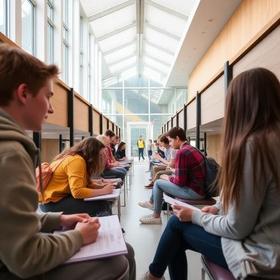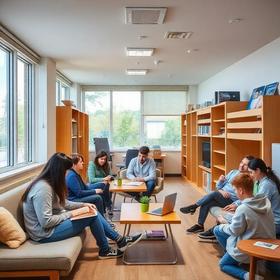

Boarding school dormitories are designed to provide more than accommodation. They create residential communities where students develop friendships, learn independence, and establish relationships that often continue long after graduation. However, living alongside classmates does not automatically guarantee a sense of belonging. Some students discover that they are consistently excluded from social activities, group conversations, or informal gatherings within their dormitory.
For parents, this situation presents a particular challenge. Their child may be academically successful and participate in school activities while feeling isolated in the very place that is supposed to provide comfort and security. Unlike day school students, boarding students cannot simply leave difficult peer relationships behind at the end of the school day.
When your child feels excluded from their boarding school dorm community, the central question is not simply how to help them make friends. It is whether the residential environment is functioning appropriately and what responsibilities the school has when exclusion becomes persistent. Understanding how to document concerns, communicate with dormitory staff, and evaluate the school's response can help families address the problem constructively.
How Social Exclusion Develops Within Boarding School Dormitories
Social exclusion in a boarding school dormitory often develops through everyday interactions rather than obvious confrontations. Students may establish friendship groups early in the academic year, leaving others outside the social routines that gradually define residential life.
A student might repeatedly discover that dormmates have organized weekend activities without including them. Others may be excluded from group messaging conversations, informal study sessions, or shared meals. In some cases, roommates maintain close relationships with neighboring students while consistently overlooking another resident.
These experiences become particularly difficult when they occur repeatedly. A single missed invitation may be disappointing, but a continuing pattern can leave a student feeling unwelcome in their own living environment.
Parents should distinguish between normal friendship preferences and behavior that creates an unhealthy residential atmosphere. Students are entitled to choose their friends, but coordinated exclusion, humiliation, or deliberate attempts to isolate someone require closer attention.
The distinction matters because effective intervention depends on understanding the behavior rather than assuming that every social disappointment represents bullying.
Recognizing When Dormitory Exclusion Requires Intervention
Parents often learn about residential exclusion through telephone calls, messages, or conversations during school breaks. Their child may describe eating alone, spending weekends in their room, or feeling uncomfortable entering shared spaces when certain classmates are present.
The frequency and circumstances of these experiences are more informative than any single incident. Parents should ask whether exclusion involves the same students, occurs in particular locations, or follows a recognizable pattern.
The Centers for Disease Control and Prevention identifies school connectedness as an important factor in student well-being. Although belonging extends across the entire school, residential relationships are especially significant for students who live on campus.
When exclusion begins interfering with a student's willingness to use common areas, participate in activities, or remain in their residence hall, the concern deserves attention from school staff.
Parents should avoid immediately contacting other students or their families. Direct confrontation can complicate relationships and may unintentionally increase the child's discomfort. A more effective approach begins with gathering information and involving the adults responsible for residential supervision.
How Parents Can Document Repeated Social Exclusion
Documenting exclusion does not mean treating every disappointing interaction as a formal complaint. Instead, parents should establish a clear record when concerning behavior becomes persistent.
Encourage your child to describe specific incidents, including when they occurred, who was involved, and how the situation affected them. For example, a student might report being repeatedly removed from dormitory group chats or deliberately excluded from activities advertised as open to all residents.
A brief written record can help parents distinguish isolated disagreements from a broader pattern. Screenshots of relevant messages may also be useful when exclusion involves digital communication, provided they are collected appropriately and shared only with responsible school personnel.
The U.S. Department of Health and Human Services' StopBullying.gov explains that bullying generally involves unwanted aggressive behavior, a real or perceived power imbalance, and repetition or the likelihood of repetition. Social exclusion can become bullying when these characteristics are present.
Parents should focus on accurate descriptions rather than assigning labels prematurely. This approach gives school administrators the information needed to investigate concerns fairly.
What Dorm Parents Should Do When a Student Is Consistently Excluded
Dorm parents are often best positioned to recognize exclusion because they observe students during meals, evenings, weekend activities, and informal gatherings. Their responsibility extends beyond enforcing residential rules to maintaining an environment where students can participate safely and comfortably.
Boarding School Review's article on the daily responsibilities of dorm parents explains how residential faculty supervise students, provide mentorship, and respond to interpersonal difficulties.
When parents report persistent exclusion, dorm staff should investigate discreetly, speak privately with the student, and observe relevant interactions. They should also distinguish between established friendship groups and conduct that violates residential expectations.
Appropriate responses might include facilitating smaller group activities, reviewing dormitory expectations, or connecting the student with a trusted faculty adviser. Staff should avoid publicly identifying the excluded student or forcing classmates to become friends.
Parents should request a designated contact person and a clear explanation of how the school intends to address the situation. Effective intervention requires more than reassuring families that students will eventually work things out.
When to Request Mediation or a Dormitory Change
Some residential conflicts can be addressed through structured conversations, particularly when students have experienced misunderstandings or disagreements. However, mediation is not appropriate for every situation.
The Centers for Disease Control and Prevention describes restorative practices as approaches that strengthen relationships, encourage accountability, and help repair harm within school communities.
A supervised conversation may be useful when students are willing to participate, and there is no significant intimidation or safety concern. When bullying or coercion is suspected, staff should investigate and protect the affected student rather than requiring immediate reconciliation.
Parents may also consider requesting a room or dormitory change. This can be appropriate when the current arrangement has become consistently uncomfortable or when earlier interventions have failed.
However, relocation should not automatically become the responsibility of the excluded student. Administrators should consider whether changing rooms addresses the underlying problem or merely moves the student away from inappropriate behavior.
Boarding School Review's guide to evaluating a dormitory's social climate discusses the importance of understanding conflict resolution and residential expectations.
How Schools Can Rebuild Inclusion Without Forcing Friendships
An effective residential response should create opportunities for students to develop genuine connections rather than requiring artificial social arrangements.
Dormitory staff might organize smaller activities around shared interests, rotate responsibilities during community projects, or encourage participation in supervised weekend programs. These arrangements allow students to interact naturally without making one individual's social difficulties the focus of attention.
The American School Counselor Association revised its position on peer support programs in 2026, emphasizing their role in developing social connections, community belonging, and student well-being.
A peer mentor or student leader may help an excluded resident become more involved in dormitory activities. However, these students should receive appropriate guidance and should not replace adult supervision.
Parents can support this process by encouraging their child to participate in activities they genuinely enjoy. The objective is not universal popularity but the development of dependable relationships and a residential environment where the student feels respected.
How Parents Can Evaluate Whether the School's Response Is Working
Once administrators introduce an intervention, parents should establish a reasonable period for reviewing progress. For less serious situations, an initial follow-up after approximately two weeks may provide useful information. More serious concerns require faster action.
Improvement should be assessed through observable changes rather than general assurances. Parents might ask whether their child is participating more comfortably in communal activities, using shared spaces without anxiety, or developing positive relationships with other residents.
The Centers for Disease Control and Prevention emphasizes the role schools play in creating environments where students feel supported and included.
If exclusion continues, parents should request a meeting with the director of residential life or another senior administrator. The discussion should review the original concerns, actions taken, and remaining problems.
Boarding School Review's article on what parents are told about boarding school dorm incidents provides additional context about reporting responsibilities and communication between schools and families.
When exclusion involves serious harassment, threats, or ongoing distress, parents should not wait for an informal review period. Immediate intervention and appropriate professional support may be necessary.
When a Boarding School's Response Is Not Enough
Occasionally, a school's efforts fail to produce meaningful improvement. A student may continue avoiding communal spaces, expressing fear of particular classmates, or feeling unable to participate in ordinary residential activities.
In these circumstances, parents should evaluate whether administrators have adequately investigated the concerns and whether proposed solutions address the actual behavior.
A formal written complaint may be appropriate when repeated reports have not resulted in meaningful action. Parents should consult the student handbook to identify escalation procedures and request a documented response.
If the residential environment remains harmful despite reasonable interventions, families may need to consider alternative accommodation or a school transfer. Such decisions should reflect the student's circumstances rather than an expectation that children must tolerate persistent mistreatment to develop resilience.
Conclusion
When your child feels excluded from their boarding school dorm community, the most effective response involves identifying specific behaviors, documenting recurring incidents, and working with residential staff to establish practical solutions.
Parents should distinguish ordinary friendship difficulties from deliberate isolation while expecting schools to maintain respectful residential environments. Dorm parents and administrators should investigate concerns discreetly, encourage healthy peer connections, and monitor whether interventions produce meaningful improvement.
The goal is not to guarantee that every student becomes friends with every dormmate. It is to ensure that no child feels consistently unwelcome in the place they call home during the school year.
By maintaining clear communication, establishing appropriate expectations, and holding residential programs accountable for their response, families can help their children develop a stronger sense of belonging without allowing persistent exclusion to become an accepted part of boarding school life.