
This article has been updated to reflect 2026 data and recent developments.
Is online learning not working for you and your son? Are you concerned about his missing out on enrichment and other activities? During these unsettling times when the pandemic keeps reappearing, when you thought it had abated, maybe boarding school is a good educational solution for your child. But you will never know until you explore the idea thoroughly. Before beginning your research into boarding schools, tune out the negative things you read about boarding schools. After all, the media tends to focus on sensational stories that don't show boarding schools as they are. See for yourself. A quick call or an email is all it takes to make an appointment for a visit. Cost is another consideration that keeps many parents from considering boarding school education. But boarding school may be more affordable than you think. That's because most schools offer very generous financial aid programs. Any boarding school's admissions staff will be too happy to explain how financial aid works.
Although the pandemic-era circumstances described above reflect the article's original publication period, the broader questions about academic engagement, extracurricular opportunities, and educational fit remain relevant in 2026. Families exploring affordability can consult Boarding School Review's boarding school financing options and review individual schools' current financial aid policies.
Now that those considerations are out of the way, answer these questions to help you make the important decision about sending your child to a residential school.
1. Want to "stretch" your child?
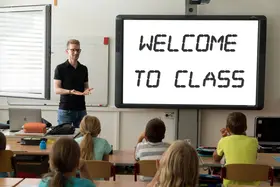
If you are content with the status quo, boarding school is probably not a good idea. Why? Your child will embark on an incredible adventure by going to boarding school. She will be exposed to all kinds of new ideas and different points of view. She can select academic courses that will enrich and challenge her. She will be in small classes where she cannot hide in the corner. Her opinion and ideas will matter. Her strengths will be expanded. Her weaknesses will be addressed in a positive environment.
The stretching occurs because she will do more academic work at a boarding school than in a public school with its large classes. Moreover, the students who attend boarding school want to be there. She will be surrounded by highly motivated students who wish to learn.
In 2026, families should compare actual class sizes, course offerings, and academic support services rather than assuming that every boarding school provides the same experience. The National Association of Independent Schools provides information about independent education and the importance of finding an appropriate school environment.
2. Want her to have sports opportunities in fall, winter, and spring?
This is a major difference between public and private schools. Stories about public school budgets being cut are everywhere. The first things to get cut are sports, arts, and extracurricular programs, which are often considered extras, but not at a boarding school.
The athletics program at Woodberry Forest School is an example of what I am talking about.
Boarding schools have long subscribed to the idea that education works best when there is a balanced approach to a child's education. Academics, sports, and extracurricular activities are part of every boarding school's program, making this philosophy work very well.
For 2026, parents should examine each school's actual athletics calendar, participation requirements, facilities, and extracurricular offerings. Woodberry Forest School's athletics program provides an example of how sports can be integrated into residential school life. Opportunities vary considerably between schools, making direct comparisons important.
3. Do you want him to be with other young people who are serious about achieving something?
A parent's worst nightmare is that their child will fall in with the wrong crowd. While things like substance abuse and inappropriate behavior of all kinds are worrisome enough, so is the idea that your child will hang out with kids who have no goals, no dreams, and no aspirations. Boarding school offers a haven for your child, to be sure. But it also puts him in the company of children who want to achieve something in life, be the best, and aspire to greatness. Boarding schools educate the whole child. They don't just teach them how to solve an algebra equation or how the stock market works. They educate the whole child and strive for a balanced approach to accomplish that objective.
Boarding schools can attract young people who want to learn because they have selective admissions. Students have to meet the school's requirements before they are offered a place. The admissions requirements vary from school to school, as each school is a separate corporate entity with its board and administration and, most importantly, its unique approach to education.
In 2026, families can learn more about the admissions process through Boarding School Review's guide to competitive boarding school admissions. Admissions selectivity alone, however, does not determine whether a particular school will provide the right academic or social environment for a child.
4. Do you want her to develop a network of friends she will have for life?
We adults understand the importance of networks more than ever in these tough economic times. Networks of friends and acquaintances who know you, understand you, and can vouch for you are one of the lasting benefits of a boarding school experience. When you live with your classmates 24/7, you get to know them. You also appreciate them and, even more importantly, learn to get along with them. The diverse nature of most boarding school populations these days means your child has the potential for a network of friends that could stretch around the world.
In 2026, these relationships remain an important aspect of residential education. Families can explore Boarding School Review's article on friendships, cliques, and social fit to understand how to evaluate a school's community before enrollment.
5. Do you want her to be taught by talented, experienced teachers who are passionate about their subject?
Boarding schools seek out talented, experienced teachers who have first and second degrees in their subject or subjects instead of having a degree in education. A teacher who has majored in French and Spanish and graduated summa cum laude is the sort of teacher most boarding schools will snap up rather than the teacher who did an education degree with a couple of French courses as electives.
'Education lite' is not what boarding schools want. This brief video from Exeter Academy explains this concept succinctly.
Consequently, you will see schools proudly advertising that 80% (or whatever the specific percentage) of their faculty have advanced degrees.
In 2026, families should verify individual schools' faculty qualifications rather than assume that every boarding school follows the same hiring practices. At Phillips Exeter Academy, the Harkness teaching method continues to emphasize student participation, collaborative discussion, and active engagement in learning.
You are in the right place if you have gotten this far and want to learn more about boarding schools. Boarding School Review offers hundreds of profiles for you to explore. Take the virtual tours. Look at the pictures. Then visit the schools that appeal to you. You will be glad that you did.
For families considering boarding school in 2026, Boarding School Visits 101 offers practical guidance on evaluating campuses, meeting faculty, and determining whether a school is the right fit for your child.