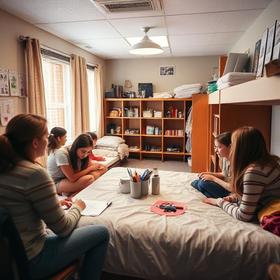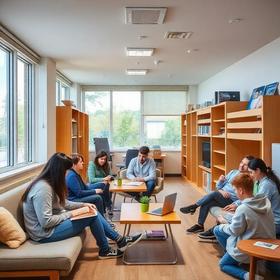
There is a tendency in boarding school scheduling to see ‘residential life’ as those parts of the week to keep students simply ‘happy, busy, and good. However, a strong residential life program typically provides students with far more growth opportunities than they encounter at home and that is a primary aim of the residential life curriculum at Besant Hill School. Indeed, the school labels it a ‘curriculum’ as it is carefully designed to capture the imaginations, motivations, needs and community spirit that the school seeks to foster.
A program that builds in expectations for participation and a strong focus on community service - not least celebrating student involvement - opens young eyes to the sense of accomplishment, personal well-being, and creation of community that is attained from a Saturday morning planting trees or fixing trails for the local Land Conservancy, or preparing and providing food packages for those in need. Indeed, studies report that volunteering in the local area increases students’ emotional intelligence, crucial at a time when it is reported (Dolby, 2013) that student empathy has declined by 40% in the last 50 years. Besant Hill School offers Community Service opportunities each weekend, and students regularly present in group gatherings on their experiences and the sense of achievement attained from their volunteering activities.
Make no mistake - waking sleepy teens early on a Saturday morning to go to their selected Community Service option is sometimes needed, and a motivated teacher/chaperone is paramount for maintaining student participation in