
This article has been updated to reflect 2026 data and recent developments.
Sending your child off to boarding school raises all sorts of important questions for your child. After all, she is a teenager. Leaving home is a major step for kids going off to college, much less a kid going off in ninth or tenth grade to boarding school. And those college kids are four and five years older than she is. So be patient and proactive. Anticipate her questions and concerns. What I strongly recommend is that you try to think about what your child's questions and concerns will be. You know her like the back of your hand anyway.
Almost all the schools on your shortlist will have websites that can answer most of her questions. For answers to her remaining or more detailed questions, email the admissions offices. They will be very happy to help.
What’s the food like?
Food is important to teenagers. As it should be. Truth is that boarding schools have dealt with teenagers for years. They understand the kind of nutrition growing bodies need. Indeed, teaching students about nutrition is something boarding schools have baked into their programs.
Great food and excellent service are the hallmarks of Dining Services at St. Timothy’s School. We meet the wide range of tastes and meal preferences of our student body with healthy, varied, and wholesome meals. Many items are made from scratch, and homemade pastries and desserts are made fresh daily.
The Dining Hall at Salisbury School, Connecticut, is open for breakfast, lunch, dinner, and morning break. Everything from nutritious soups and salads to sandwiches and hot entrees is served. There is a selection of meals and desserts large enough to suit everyone. Most meals are cafeteria-style, with traditional sit-down lunches on Mondays and Thursdays. During sit-down meals, boys dine with their faculty advisor and fellow advisees.
For 2026, confirm current menus and dietary accommodations directly with each school, particularly if your child has food allergies or special dietary requirements.
What are the dorms like?
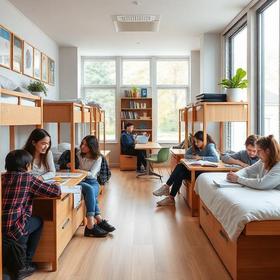
Boarding schools place just as much importance on dorms as on food. Your daughter's room at home is her special place. All the posters, her bed, colors, and stuff reflect who she is. Suddenly she will not have her own room or any of her stuff. Read about the dorms at The Madeira School, McLean, Virginia. This kind of setup is fairly typical.
If you have never seen a boarding school dorm, don't despair. They are not going to look like something out of Architectural Digest. They will be compact, clean, functional living quarters for two or three students. Resist the temptation to do what one mother did a few years ago when she saw her daughter's dorm room for the first time. She demanded to see the head of the school. The parent stated that her daughter's accommodation was unacceptable when she met him. It was not up to their standards. She was prepared to write a check for $100,000, so the school could make some refurbishments. I don't recall how the matter was settled, although I think the school repainted the dorm.
Here is a tour of a dorm at Randolph-Macon Academy, Port Royal, Virginia.
Student dorms are what they are. Students have a knack for making any space habitable. She will be just fine. To get her used to the idea, arrange an overnight for her. Most schools will be happy to do that.
For additional information about shared rooms and residential routines, Boarding School Review's guide to dorm life explains what students can expect in 2026.
Who will be my friends?
Eventually, she will know everybody at her boarding school. Most boarding schools are small to medium-sized institutions with 300-400 students. It won't take her long to know everybody by sight. Friends? Making friends takes time, as we both know, but a boarding school tends to speed up the process. The time frame of everything shrinks in a boarding school simply because you are living with your classmates 24/7.
The American Academy of Pediatrics offers practical guidance on helping teenagers develop friendships. Families can also consult Boarding School Review's article on roommate matching to understand how schools help students adjust to shared living.
Can I take French?
Finally, we are out of the weeds and sailing in clear water! Those highly subjective and personal subjects like food, dorms, and friends must be handled with all the adroitness and parental acumen you can muster. But academics? You will have clear sailing here. Boarding school academics offer so many choices and options that it will be like going on a shopping trip with her mother. I can almost hear the excited conversations. "Mom! They offer three years of French. And the teacher went to the Sorbonne. What do you think? I wanted to take physics too...." It's just like going into a store to buy jeans; they have every brand and style you could ever want. Take time to explore each school's curriculum. Then you can affirm your daughter's choices as she makes them.
What about my horse?
She started riding in sixth grade. Because you live in the country, you have a barn and access to lots of riding trails. Now what? Not every boarding school has equestrian facilities. But many do. So if bringing her horse with her to boarding school is important, go for it. The school will explain how its program works.
What about my singing lessons?
Your daughter began taking singing lessons in middle school. New England Conservatory and Juilliard are in her sights. Now she must give up the singing teacher she has been working with. Some boarding schools offer music and performing arts programs that rival those found at some colleges. But finding a good singing teacher should be on your list of questions to ask the school. If they can't offer instruction in-house, they will probably be able to help you find quality instruction locally. Ask.
What about my allergy meds?
Your daughter has had allergies since she was a toddler. Her doctors have found the proper medications to keep them under control. However, she needs the reassurance that she can cope with the inevitable onset of an allergic event. Boarding schools know how to handle their students' medications and medical needs. Professionally and sensitively. Have that conversation with the school nurse. Understand how the school manages these situations. Make sure your daughter understands as well.
For 2026, confirm medication storage, administration procedures, and emergency response arrangements before enrollment. The Centers for Disease Control and Prevention provides guidance on managing food allergies in schools.
You and your daughter will probably have other questions to add to this list. These questions will get you started. The important takeaway I want you to have from reading this article is to ask questions and get answers directly from the schools. Assume nothing. When you do that, a boarding school will be a wonderful experience for your child. Just as it was for my children.
For more information about student health, safety, and residential support, Boarding School Review's guide to parents' concerns discusses additional questions families should ask before enrollment.