Updated
|
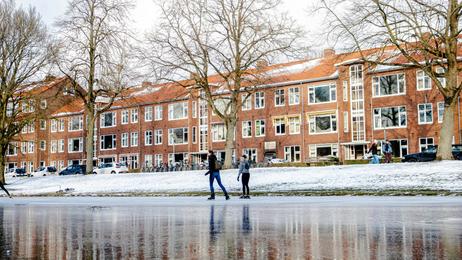
Boarding Schools Leading in Climate & Environmental Education
How residential boarding schools are pioneering climate education, sustainability practices, and immersive environmental leadership.

Boarding Schools & Climate/Environmental Education: Are Residential Schools Leading the Way?

Introduction

In an era of accelerating climate change, schools bear a growing responsibility to prepare students not only academically but also environmentally. Among educational models, residential or boarding schools are uniquely positioned to integrate climate education deeply into campus life. But do boarding schools truly lead in environmental education, or is the advantage overstated?

This article examines how, in 2025, many boarding schools are taking leadership roles in climate and environmental education—through curriculum, operations, student empowerment, and institutional partnerships. We also assess constraints and outline best practices that day schools and public systems might emulate.

Why Boarding Schools Might Have an Edge

Boarding schools often enjoy structural advantages that make ambitious environmental programs more achievable:

  • 24/7 campus life — Students live on site, so sustainable practices in dorms, dining, energy use, and waste management become part of daily life, not just a classroom add-on.

  • Integrated scheduling flexibility — With students available beyond class hours, schools can embed hands-on labs, evening projects, and weekend field expeditions tied to climate education.

  • Control over infrastructure — Many boarding schools own large campuses and can renovate or build with sustainability in mind (solar, green buildings, greywater systems).

  • Cohesive community culture — Shared values, house systems, dorm rituals can reinforce environmental stewardship in

. . .read more

Preparing Students for Boarding School After Summer

Updated
|
Preparing Students for Boarding School After Summer
Expert tips on academic and social readjustment for boarding school students after long summer breaks in 2025.

Preparing Students for Boarding School After Long Summer Gaps: Academic & Social Readjustment Tips

The transition back to boarding school after a long summer break can be both exciting and challenging for students. For many, summer represents unstructured time, family travel, jobs, or relaxation. Returning to the structured academic and social environment of boarding school requires a thoughtful adjustment process. With the 2025 school year underway, parents, educators, and students alike are seeking effective strategies to bridge the gap between summer freedom and the rigor of boarding school life.

This article explores academic and social readjustment tips to help students thrive, ensuring the return to campus is smooth and successful.

Why Summer Gaps Matter

Long summer breaks can significantly affect student readiness for boarding school. Research shows that students lose between one to three months of academic progress during summer—commonly referred to as the “summer slide.” According to the National Summer Learning Association, learning loss is most noticeable in math and reading. In addition, time away from peers and structured routines can make reentering the social environment of a boarding school more daunting.

Boarding school students often face:

  • Academic challenges: Reacclimating to advanced coursework, homework schedules, and test preparation.

  • Social challenges: Rebuilding friendships, adjusting to dorm life, and reestablishing routines.

  • Emotional challenges: Homesickness after being with family for an extended time, or

. . .read more

Boarding Schools’ 2025-26 Cell Phone & Social Media Policies: What’s Changing

Updated
|
Boarding Schools’ 2025-26 Cell Phone & Social Media Policies: What’s Changing
Explore the latest shifts in boarding school cell phone and social media policies for 2025-26, with expert analysis and examples from the U.S. and abroad.

Boarding Schools and Cell Phone / Social Media Policies: What’s Changing in 2025-26

In 2025-26, boarding schools across the U.S. and around the world are increasingly revising their policies on cell phones and social media use. Growing concerns over student mental health, academic focus, cyberbullying, and digital distraction are driving changes. This article examines what’s shifting, with examples, expert commentary, and guidance for parents, students, and educators.

Key Drivers of Policy Change

Several interrelated factors are prompting boarding schools to update their cell phone and social media policies in 2025-26:

  • Mental health concerns: Surveys show rising levels of anxiety, depression, and social isolation among youth, often tied to social media use. Boarding schools are responding by restricting or more closely managing access.

  • Academic focus and distractions: There is growing evidence that cell phones during instructional or study times degrade attention spans, disruption, and academic outcome.

  • Legislation & regulation: At the state and national levels, new laws address age limits, platform responsibilities, and school obligations regarding social media and device use.

  • Parental and community pressure: Parents increasingly expect schools to set boundaries on screen time. Students too are vocal in some settings about needing “phone-free” times.

  • Equity and fairness: Ensuring all students have similar access, and that device rules don’t unfairly disadvantage those without resources or accommodating special needs, is a growing focus.

U.S. Trends & Legislative / Regulatory Moves

While much of what follows comes from public or day schools, many trends are relevant for boarding schools preparing updates

. . .read more

How Boarding Schools Are Using Generative AI: Rules, Risks & Rewards (2025)

Updated
|
How Boarding Schools Are Using Generative AI: Rules, Risks & Rewards (2025)
Explore how boarding schools are balancing generative AI with integrity, policy, and opportunity in 2025—rules, risks, rewards for students and educators.

How Boarding Schools Are Using Generative AI: Rules, Risks, and Rewards for Boarding Students

In 2025, generative AI is no longer a distant concept in academia—it is a reality being woven into boarding school life. From homework help to creative exploration, generative AI tools offer both tremendous promise and serious challenges. In this article, we examine how boarding schools are adapting: the rules they are putting in place, the risks they face, and the rewards available to students, educators, and institutions.

What We Mean by Generative AI in the Boarding School Context

Generative AI refers to computer systems—including large language models (LLMs), image-generation tools, chatbots, etc.—that create new content (text, images, audio) rather than simply processing or retrieving existing content. Examples include tools like ChatGPT (for text generation), DALL·E or Midjourney (for images), and tools that assist with coding, translation, and summarization.

In boarding schools, generative AI can appear in many contexts:

  • Academic work: essays, problem sets, lab reports

  • Creative work: art, music, storytelling

  • Learning aids: summarization, tutoring, revision

  • Administrative or support roles: scheduling, feedback generation, mental health chat support

Why Boarding Schools Are Taking Note in 2025

Some key trends and developments:

  • Policy urgency: A UNESCO survey found that fewer than 10% of schools or universities globally had formal guidance or policies around generative AI as of early 2024.

. . .read more

Boarding School Pros and Cons 2025

Updated
|
Boarding School Pros and Cons 2025
Explore the pros and cons of boarding schools in 2025—history, myths, tuition trends, and what families should know today.

Boarding School Pros and Cons: History and Common Misconceptions (Updated February 2025)

In an era shaped by social media soundbites and misinformation, boarding schools are often misunderstood. For many families, perceptions are shaped by outdated stereotypes or dramatized portrayals in film and television. Yet today’s boarding schools are more diverse, accessible, and innovative than ever before.

This article explores the history of boarding schools, highlights their benefits, addresses common misconceptions, and provides a realistic picture of what life is like in 2025 for students who choose this unique path.

A Brief History of Boarding Schools

Boarding schools in the United States trace their origins to the colonial era, when religious groups established institutions for the children of wealthy families. By the 18th and 19th centuries, schools such as Phillips Andover Academy and Phillips Exeter Academy became models of rigorous academics and moral instruction.

A darker chapter emerged in the 19th century with the creation of government-run Native American boarding schools, which sought to assimilate Indigenous children by prohibiting native languages and traditions. This legacy has prompted ongoing reflection and reconciliation efforts.

By the 20th century, progressive education philosophies reshaped boarding schools. Rigid, single-gender structures gave way to coeducation, broader course offerings, and an emphasis on character development, leadership, and personal growth. Today, boarding schools serve a wide range of students—from aspiring artists to STEM innovators—offering both structure and flexibility.

Pros of Boarding School Education Academic Excellence

Boarding schools consistently provide small class sizes, low student-teacher

. . .read more

Recent Articles

Boarding School Glossary: Key Terms for Families
A comprehensive 2026 boarding school glossary explaining key terms, traditions, academics, and student life for parents and students.
Choosing a School: Comparing Boarding Schools in 2026
Learn how to compare boarding schools in 2026 with data-driven strategies, campus visits, and key academic and financial factors.
How Boarding Schools Are Adapting Post-Pandemic
Explore how boarding schools are adapting to post-pandemic education in 2026 through wellness, hybrid learning, and global innovation.