School Life

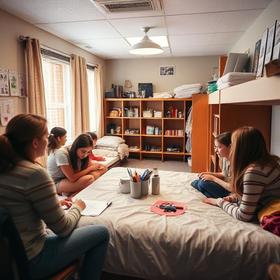
For boarding school students, and many teachers, the campus is home. Explore dormitory living, get expert advice on learning and living away from home and learn more about what can be done to help your child transition to and succeed in boarding school. Find resources for parents, teachers and students. We’ll cover sustainability, boarding school jargon, and corporal punishment. Read first-hand accounts from parents of boarding school students, find graduation gift ideas, and learn why small classes are effective.

View the most popular articles in School Life:

A Partnership of Three

Updated
|
A Partnership of Three
This article explores the three-way partnership between the school, parents, and students in boarding school education. It outlines the obligations and responsibilities of each party, emphasizing the importance of mutual support and commitment to ensure a successful boarding school experience.

Sending your child to boarding school is not as simple as dropping him off at school, giving him a teary hug and kiss, and then driving back home. Sending your child off to boarding school requires that you honor the contractual commitment that you signed when you decided to accept the school's offer of a place. Remember that binding, legal document called a contract? In it, you agreed to a partnership of three: the school, you, and your child. Let's look at what this arrangement involves.

The School's Obligation

The school spells out its obligations in great detail both on its website and in the various printed brochures and catalogs. The admissions staff will also discuss the school's various programs and school life with you when you visit and have your admissions interview. Most importantly, the school lists its obligations in the contract you and the school signed.

1. The school will offer the academic instruction spelled out in its various materials. And it will ensure that the teaching is of the highest order. You expect nothing less. Private schools take academics very seriously. You won't have to worry about what will happen if the French teacher suddenly takes sick and has to withdraw. Her replacement will be in place quicker than you can say, "Je ne sais quoi".

2. The school will act in loco parentis while your child is in its care. It takes its responsibility very seriously. Their students' safety and well-being are

. . .read more

Why Small Class Sizes Work

Updated
|
Why Small Class Sizes Work
Learn why small class sizes at boarding schools improve academic performance, student engagement, and social development.

Small class sizes work. In fact, small class sizes are one of the main reasons why you send your child to boarding school. Here are some reasons why small class sizes are so important.

1. There's nowhere to hide in a small class.

Imagine your child is in a large high school class of 30-35 students. She's not good at math. Most of the students in her class don't understand math and could care less about it. So your daughter hangs out in the back of the class, keeps quiet and tries to pay attention. The distractions and cutting up going on around her mitigate against any meaningful learning. Your daughter falls further and further behind in math. Sadly, public school class sizes continue to increase in many districts as schools struggle with staffing shortages and budget pressures in 2026. Class sizes of 30-35 students remain common in many public high schools.

Contrast that learning environment with 12-14 students seated around a Harkness Table in a boarding school. A Harkness Table is an oval table. The teacher sits at the table with his students. Immediately students are placed in a situation where they have no choice but to engage and interact with each other and with their teacher. A Harkness table creates a climate for learning.

Implicit in the small teaching groups is a climate of tolerance. The views of each individual are expressed. Critical thinking skills are practiced and polished precisely because the small group allows time for that. Large groups make

. . .read more

Parents' Biggest Worries About Boarding School

Updated
|
Parents' Biggest Worries About Boarding School
Learn how boarding schools address safety, academics, college counseling, and student life concerns for families in 2026.

One of our parental prerogatives is to worry about our children. That's probably because your child never came with an instruction manual and, as a result, you have had to learn so many things about parenting simply by being a parent. No matter, worry is part of the parental landscape. Now, if you are thinking about sending your child off to boarding school, your worries will be quite specific. Probably along the lines of the following questions.

Many parents find the concept of sending a child to boarding school upsetting; a child's adolescence is such a distinctively affective period that entrusting it to others seems wrong. Yet boarding schools prosper, successors to institutions dating to medieval times.

In 2026, those worries are still understandable. Families are asking not only about academics and college placement, but also about safety, mental health, residential supervision, social adjustment, and cost. The good news is that today’s boarding schools are built around structure, accountability, and close adult guidance.

Will My Child Be Safe?

Boarding schools take your child's safety very seriously. Contractually, a boarding school functions in loco parentis, which is a legal way of stating that the school acts in the place of the parent when it comes to supervision of its students, your child included.

In many respects, your child is a whole lot safer at school, where she cannot drive or go to somebody's house and get into who-knows-what. Drugs, drinking, and smoking are not permitted in a boarding school. Zero tolerance is the rule. Does

. . .read more

Sustainable Schools

Updated
|
Sustainable Schools
Discover how boarding schools are embracing sustainability in 2026 through responsible financial planning, environmental stewardship, global citizenship, innovative programs, and diverse communities that prepare students for the future.

By now, two decades into the 21st century, it is obvious even to the most jaded, cynical people out there that we must rethink how we live and function on this planet, which we call Earth. We are discovering that Earth's resources are finite. We are finally realizing that we must conserve energy. We are rethinking the cost of goods and services regarding their carbon footprint. Sustainability is no longer a theory. It is a concept that is being put into daily practice. In 2026, sustainability has also become a strategic priority for many independent and boarding schools, influencing everything from campus operations to curriculum and long-term planning.

That's why it is very encouraging to see so many private schools making progress towards developing sustainable schools. For schools, sustainability involves the wise use of energy and foodstuffs, the prudent management of a school's fiscal resources, and more. The National Association of Independent Schools (NAIS) published an excellent white paper, Sustainability: Creating 21st Century Sustainable Schools. Let's look at the five areas of sustainability that this document puts forth. The NAIS calls these "dimensions," which is an apt description. "Area" implies a confined space. "Dimension" speaks to the challenge's vastness and the solution's scope.

Financial Sustainability

Financial sustainability is all about drawing a line and setting responsible limits. It doesn't matter whether you have $100,000 in the bank or $900 million in your savings account. Schools need to use all the expertise and tools available to

. . .read more

Reflections on Sending Our Daughter to Boarding School

Updated
|
Reflections on Sending Our Daughter to Boarding School
A personal account of parents sending their daughter to boarding school in the 1980s, detailing their decision-making process, the challenges and benefits of boarding school education, and the positive outcomes observed in their child's personal and academic growth. The article offers encouragement and insights for parents considering boarding school for their children.

We took our eldest daughter off to boarding school in 10th grade. That was back in the 80s. While the times were certainly different from today, our motivation for making such a major decision would be the same in 2026 as it was back then. Let me tell the story that I hope will give you the courage to send your daughter (or son, for that matter) off to boarding school. It's well worth it.

Families today have access to far more information than we did decades ago, including virtual tours, online student panels, and detailed school profiles. Yet the fundamental reasons for choosing boarding school remain remarkably similar: academic opportunity, personal growth, independence, and preparation for college and life beyond high school.

Our Rationale

We were busy parents with careers and two children. The girls were five years apart. One was in junior high. The other was in elementary school. We lived in a little town in northwestern Connecticut. You had to drive ten miles to get to anything. Literally. While the regional high school was doing a good job, the number of academic courses and extracurricular opportunities it could provide for our daughter was limited. Not only that, she had to be driven everywhere to participate in sports or extracurricular activities.

With those factors looming large, we sat down one day with her and asked: "What do you think about going off to boarding school?" There was a rather enthusiastic acceptance of the idea. Probably because

. . .read more

Recent Articles

Homesickness or a Poor School Fit? How Parents Can Tell the Difference
Learn how to distinguish normal homesickness from signs that a boarding school may not be the right fit, and discover practical strategies for supporting your child through the transition.
Does Boarding School Spending Reduce What Families Can Save for College?
Discover how boarding school tuition can affect college savings, explore financial planning strategies, compare long-term educational investments, and learn how financial aid and careful budgeting can help families balance both important goals.
Four-Year Cost Forecasting for Boarding School Families
Learn how to build a realistic four-year boarding school budget, anticipate future costs, and plan for tuition, travel, and financial aid.

Featured Schools

Featured Schools

School Life

FOR PARENTS
This section covers issues and concerns for parents of boarding school students. Explore corporal punishment, get expert advice on preventing hazing, and read first-hand accounts from parents. Learn what to do if things go wrong, see what boarding school students do in the summer, and get words of wisdom from a reluctant parent.
FOR STUDENTS
Here you’ll gain knowledge about student life at boarding school. User our glossary of terms to learn boarding school jargon, discover the importance of a partnership between school, parent and child, and find great gift ideas for the boarding school graduate.
FOR TEACHERS
The articles in this section are related to teaching at a boarding school. Learn more about what is being taught, why small class sizes work, and the impact of sustainability on boarding schools. You’ll find a list of eBooks about boarding schools, be able to view pictures of boarding school life, and explore course offerings.