School Life

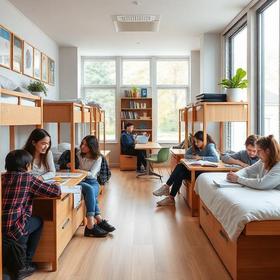
For boarding school students, and many teachers, the campus is home. Explore dormitory living, get expert advice on learning and living away from home and learn more about what can be done to help your child transition to and succeed in boarding school. Find resources for parents, teachers and students. We’ll cover sustainability, boarding school jargon, and corporal punishment. Read first-hand accounts from parents of boarding school students, find graduation gift ideas, and learn why small classes are effective.

View the most popular articles in School Life:

Top 5 Reasons To Study Dance At A Boarding School

Updated
|
Top 5 Reasons To Study Dance At A Boarding School
From meeting world-renowned guest artists to balancing busy rehearsal schedules, students share how boarding school is preparing them to dance professionally.

For dance students with dreams of pursuing their art form professionally, the high school years are a crucial time of preparation. Whether they go to dance camps over the summer or attend competitive dance high schools, many students use this time to take important steps to prepare for higher levels of dance. You may be wondering if you’ve outgrown your local dance studio, or whether you want to continue juggling a hectic schedule that requires you to commute back and forth between your school and your studio. If you’re looking for other options, here are five reasons why you should consider attending a boarding school for dance.

Professional training

The top reason to join a dance boarding high school is the rigor of training you’ll receive. The best dance boarding schools have programs specially designed for students who are interested in dancing in college and/or professionally. The boarding school difference is evident in the caliber of the material you learn, the faculty who work with you, and the fellow students who become your peers.

“My local company was somewhat intense, but I definitely felt that I could be pushed more and I could be challenged more,” says Maxwell Pfluger, a junior at Interlochen Arts Academy majoring in Dance. “I wanted to go to a place that could meet my needs.”

Lindy Sloan, a freshman studying dance at Interlochen, explains another major difference: the opportunity to work with dancers at higher levels.

“Because it's such

. . .read more

Preventing Teen Suicide

Updated
|
Preventing Teen Suicide
An essential guide for boarding school communities on preventing teen suicide. This comprehensive article explores warning signs, prevention strategies, and actionable steps for parents, teachers, administrators, and students to create a supportive environment and save young lives. Teen suicide is the 3rd largest killer of young adults between the ages of 15-24. You and I can prevent it.

Teen suicide is preventable. Boarding school communities have both the opportunity and responsibility to create an environment in which students feel supported, understood, and empowered to seek help. Recent research shows that school-based prevention programs are making a measurable difference - students at schools with comprehensive prevention programs are 25% less likely to attempt suicide, 13% less likely to make a suicide plan, and 10% less likely to have suicidal thoughts.

Understanding the Current Landscape

Every year, there are reports of high school students taking their own lives.

  • Suicide casts a terrible pall over any school community. It just seems so pointless, so senseless.
  • If only members of the community acted on the signals the young person was most likely sending, that suicide could have been prevented.
  • The academic work in boarding school is heavy.
  • The pressures to succeed, get into the best college, and not let parents and others down, combined with the reality of adolescent uncertainties, can create a climate for depression.
  • Depression can lead to suicide.

However, suicide is preventable.

Warning Signs and Risk Factors

Suicide is the 3rd largest killer of young adults between the ages of 15-24. But teen suicide is preventable. Know the warning signs.

The following information from Kids Health tells you what to look for.

"Suicide among teens often happens after a stressful life event, such as problems at school, a breakup with a boyfriend or girlfriend, the death of a loved one, a divorce, or a major
. . .read more

The Importance of Strong Connections with Family & School

Updated
|
The Importance of Strong Connections with Family & School
Learn how parents, students, and boarding schools work together to create a successful boarding school experience in 2026.

Ideally, a boarding school education is a partnership. The school, parents, and student comprise this partnership. What makes this relationship unique is that all partners must work together in the best interests of the student. In addition, each partner has a specific role to play and responsibilities to fulfill. Understanding those expectations is one reason families continue to see boarding school as a valuable educational investment in 2026.

Today’s boarding schools place even greater emphasis on communication, student well-being, and residential support systems than in previous decades. Many schools now offer expanded counseling services, structured residential life programming, and parent communication portals that help strengthen the partnership between home and school. Schools are increasingly prioritizing mental health support, digital wellness, and community-building initiatives.

School

Motivation

Obviously, the school wants the partnership to succeed for several reasons. First, student successes enhance the school's reputation. The academic marketplace remains highly competitive, and families have more educational choices than ever before. Parents conduct extensive research online, compare schools carefully, and frequently rely on both reviews and campus visits before making a decision.

As explained in The Future of Boarding Schools: What Parents Should Watch, boarding schools today are adapting to evolving parent expectations by strengthening wellness initiatives, residential life programs, and academic flexibility.

Schools such as Phillips Academy Andover, Choate Rosemary Hall, and The Hotchkiss School continue to expand wellness and leadership programming to meet the changing needs of students and families.

Contractual

The

. . .read more

Academics: Advanced Placement

Updated
|
Academics: Advanced Placement
A comprehensive guide to Advanced Placement (AP) programs in boarding schools, covering curriculum structure, scoring systems, and how AP courses compare to other academic programs like IB and progressive education.

This article has been updated to reflect 2026 data and recent developments.

At some point in your evaluation of boarding schools, you will examine the academics.

  • You've done a bit of reading about the reasons for sending your child to a private school.

  • Academics broadly include teaching style and philosophy, the number and depth of subjects offered, and curriculum.
  • Let's discuss curriculum and specifically one of the most commonly used, Advanced Placement (AP), as it is known colloquially.

The Advanced Placement logo is a trademark of the College Board and it's in the Public domain, via Wikimedia Commons.

What is AP?

AP or Advanced Placement Program is a high school program offered by the College Board in 40 subject areas.

AP courses provide college-bound high school students with a level academic playing field. It doesn't matter whether you are a high school student in Dubuque, Iowa, or Darien, Connecticut, because AP courses and their end-of-course examinations follow common course frameworks regardless of where they are offered.

  • The course content follows established AP frameworks.
  • The teaching objectives are the same.
  • The preparation for the final examinations is the same.

College admissions professionals can compare student academic achievements with confidence because the AP program provides common course and examination standards.

  • They know precisely what AP means when they see it on your transcript.
  • They know exactly what your AP scores represent.

That is the intrinsic value of AP Courses and their examinations from a

. . .read more

Wait A Year Before Going to College

Updated
|
Wait A Year Before Going to College
This article explores the benefits of taking a gap year or a postgraduate year before attending college. It discusses how these options can provide students with additional time to refine their academic skills, gain practical experience, and mature before entering higher education. The article highlights the advantages of both paths, including improved college readiness and enhanced personal growth.

As you approach the end of high school, you might be considering whether to head straight to college or take a different path.

  • For many students, the idea of diving into college right away can be daunting, especially given the significant investment of time and resources.
  • If you're currently at a residential school, you might wonder if staying for an additional year or taking a gap year could be beneficial.

Your experience at a boarding school has likely taught you the importance of structure and community, which can be valuable as you consider your next steps.

  • However, college campuses are often much larger and more open, which can present different challenges compared to the secure environment of your current school.
  • Additionally, the transition to college life involves adapting to new academic demands, social environments, and personal responsibilities.
  • If you're unsure about what to do next, staying at your school for an additional year or taking a gap year might be worth considering.
  • Both options offer unique benefits that can help you prepare for college and beyond.

Let's explore these possibilities in more detail.

This TedTalk explains why everybody should take a year off before going to college.

A Post-graduate Year

Staying put in your present school for another year has several advantages. First of all, you know the school and its faculty intimately.

  • A postgraduate year will allow you to explore
. . .read more

Recent Articles

When Your Child's Closest Boarding School Friend Leaves
Discover how to support your child when their closest boarding school friend leaves midyear, including emotional adjustment, maintaining friendships, rebuilding social connections, and working with school staff for support.
When Your Child Feels Excluded From Boarding School Dorm Life
Learn how parents can address boarding school dorm exclusion, document repeated incidents, communicate with residential staff, request appropriate interventions, and determine whether their child's living environment is improving over time.
Boarding School Closes Midyear: Tuition Refund Guide
Learn what happens to boarding school tuition when a school closes midyear, including refund rights, enrollment contracts, insurance coverage, financial aid, transfer costs, and practical steps parents should take immediately.

Featured Schools

Featured Schools

School Life

FOR PARENTS
This section covers issues and concerns for parents of boarding school students. Explore corporal punishment, get expert advice on preventing hazing, and read first-hand accounts from parents. Learn what to do if things go wrong, see what boarding school students do in the summer, and get words of wisdom from a reluctant parent.
FOR STUDENTS
Here you’ll gain knowledge about student life at boarding school. User our glossary of terms to learn boarding school jargon, discover the importance of a partnership between school, parent and child, and find great gift ideas for the boarding school graduate.
FOR TEACHERS
The articles in this section are related to teaching at a boarding school. Learn more about what is being taught, why small class sizes work, and the impact of sustainability on boarding schools. You’ll find a list of eBooks about boarding schools, be able to view pictures of boarding school life, and explore course offerings.